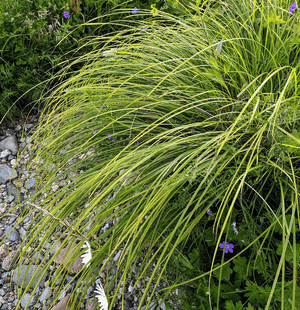
Berkeley sedge (Carex tumulicola)
Also known as: Splitawn sedge, Split awn sedge
Berkeley Sedge (Carex tumulicola) is a suitable drought-tolerant ornamental grass. It typically reaches a height of around 30 cm and spreads gradually via rhizomes. This species thrives in shaded areas and is frequently utilized as ground cover.
In This Article
Attributes of Berkeley sedge
Lifespan
Perennial
Plant Type
Grass
Plant Height
30 cm to 61 cm
Spread
60 cm to 90 cm
Leaf Color
Green Blue
Flower Size
6 mm to 8 mm
Flower Color
Green White Yellow Cream Brown
Images of Berkeley sedge
Quickly Identify Berkeley sedge
1
Semi-evergreen, tufted clumping posture
2
Dark green, narrow leaves resembling grass
3
Stout rhizomes for slow-spreading growth
4
Height ranges from 8 to 12 inches (20-30 cm)
5
Resilient to dry periods once established
Scientific Classification of Berkeley sedge
Phylum
Vascular plants
Class
Monocotyledons
Order
Poales
Family
Sedge
Genus
True sedges
Species
Berkeley sedge
Planting and Growing of Berkeley sedge
Care Difficulty
Easy
Watering Schedule
Every 2 days
Sunlight Requirements
Partial sun
Sunshine Duration
4-8 hours
Ideal Temperature
45-75℉
Soil Type
Potting Mix, Peat Mix
Soil pH
6.5-7.5
Fertilizer Type
Balanced
Pruning Season
Spring, Summer
Pruning Area
Branches, Leaves
Pruning Frequency
Once a year
Repotting Season
Spring
Pot Type
Plastic, Ceramic
 How to Water Berkeley sedge?
When watering Carex tumulicola, aim to provide around 500 milliliters each time. Ensure the soil is moist but not waterlogged. The goal is to allow the top 1-2 inches of soil to dry out between waterings. Use your finger to check soil moisture before adding more water.
What are the symptoms of an underwatered Berkeley sedge?
›
What should I do if my Berkeley sedge is not getting enough water?
›
What are the symptoms of an overwatered Berkeley sedge?
›
How to save an overwatered Berkeley sedge?
›
 What Are the Sunlight Requirements for Berkeley sedge?
Partial sun for Carex tumulicola means 4 to 6 hours of filtered or morning sunlight. This light condition promotes balanced growth, enhances foliage color, and maintains the plant's health and aesthetic value.
More About Sunlight Requirements Techniques→
Ideal Growth Question 1
›
Ideal Growth Question 2
›
Ideal Growth Question 3
›
 What Is the Ideal Temperature Range for Berkeley sedge?
The ideal temperature range for Carex tumulicola is between 45°F and 75°F. These temperatures provide a conducive environment for optimal photosynthesis and growth. Maintaining this range ensures that the plant can develop its foliage and root system effectively, leading to a healthy and robust plant.
 What Soil is Best for Berkeley sedge?
Carex tumulicola thrives in well-draining soil. Good drainage prevents root rot and promotes healthy growth. Making sure the soil isn't waterlogged mimics its natural bog-like habitat, serving this grass-like perennial well. A nutrient-rich soil composition supports the vigorous growth of Carex tumulicola. Soil enriched with organic matter like compost aids in moisture retention and provides essential nutrients, which keep the plant lush and vibrant. Carex tumulicola prefers soil with moderate moisture levels. Consistent moisture keeps the plant healthy without the risk of waterlogging. Balancing irrigation allows it to flourish without stress from excessive drought or saturation.
More About Soil→
 How to Fertilize Berkeley sedge?
For Carex tumulicola, it's crucial to administer the right amount of fertilizer. Generally, use 1/4 to 1/2 strength of a balanced liquid fertilizer monthly during the growing season. Avoid over-fertilizing as this can stress the plant.
More About Fertilizing Techniques→
 How to Prune Berkeley sedge?
Begin by removing any brown, dead, or damaged foliage. These sections of the plant not only look unsightly but can also harbor pests or disease. Cut these parts off close to the base to promote healthier growth. Determine the shape you want your Carex tumulicola to maintain. Gradually trim back the foliage evenly around the plant, ensuring you don't cut more than one-third of the plant at a time to prevent stress.
More About Pruning Techniques→
 How to Propagate Berkeley sedge plant?
1
Collect seeds from mature Carex tumulicola plants in late summer. Ensure seeds are fully developed for higher germination rates. Clean and dry the seeds thoroughly before storing them for later use to prevent mold and deterioration.
2
In early spring, identify overcrowded Carex tumulicola clumps. Use a garden fork to gently lift and separate the clumps into smaller sections. Replant the divisions with sufficient spacing to encourage robust growth.
3
In late spring, sow seeds in starter trays filled with well-draining soil. Cover with a thin layer of soil and maintain consistent moisture. Place in a location with indirect sunlight to encourage germination.
 How to Repot Berkeley sedge plant?
1
Repotting should be considered when you observe roots emerging from the drainage holes, or when growth appears stunted. These are signals indicating the plant requires more space to continue thriving. Ideally, repot in spring or autumn when the plant experiences less stress and can adjust well to the new environment.
2
Select a pot that is one size larger than the current one, ensuring adequate drainage holes for excess water escape. A slightly larger pot helps avoid excessive soil moisture, which can harm roots. Terracotta pots are beneficial as they allow breathability and prevent waterlogging.
3
Opt for a well-draining sandy soil mix with organic matter to mimic natural conditions. Such a mix allows for sufficient aeration while retaining essential moisture and nutrients, promoting healthy growth and preventing root rot.



