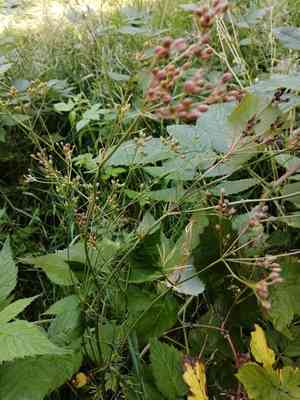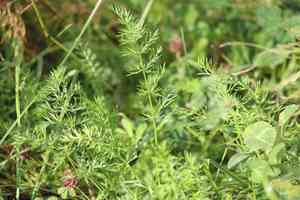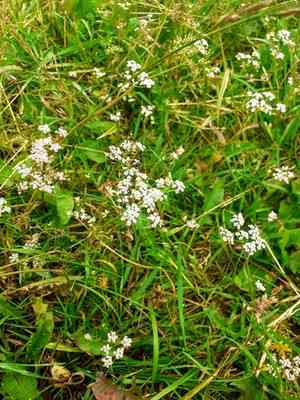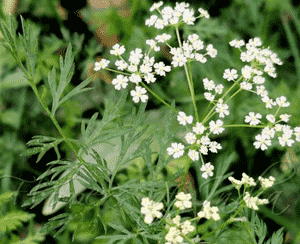
Annual caraway(Carum carvi)

Annual caraway (Carum carvi)

Also known as: Caraway, Meridian Fennel, Persian Cumin

The annual caraway (Carum carvi) originates from Western Asia, Europe, and North Africa but is now grown globally. Its seeds are commonly used as a spice, and an essential oil can be derived from the plant. Additionally, extracts from caraway are utilized as preservatives in various foods. Despite its culinary uses, the plant's leaves can induce vomiting or diarrhea if ingested and are toxic to cats, dogs, and horses.

Attributes of Annual caraway

Lifespan
Biennial, Perennial, Annual
Plant Type
Herb
Plant Height
30 cm to 70 cm
Spread
30 cm
Leaf Color
Green
Flower Size
3 mm to 5 mm
Flower Color
White

PlantJoy - Identify plants with a snap

Identify and diagnose plants, get toxicity alerts, and explore safety guides for all types of fungi.

Try for Free

Images of Annual caraway

Annual caraway(Carum carvi)

Quickly Identify Annual caraway

1
Delicate, feathery foliage resembling carrot leaves, finely divided and feather-like.
2
Flowering stem reaching up to 30 inches (76 cm) with small white or pinkish flowers.
3
Crescent-shaped seeds around 0.2 inches (5 mm) in length with elongate, tapering roots.
4
Clusters of 8 to 15 small, symmetrical flowers on stems 8 to 12 inches (20 to 30 cm) tall.
5
Distinct brown, crescent-shaped seeds measuring approximately 1/16 of an inch (1.6 mm).

Scientific Classification of Annual caraway

Phylum
Vascular plants
Class
Dicotyledons
Order
Apiales
Family
Umbellifers
Genus
Carum
Species
Annual caraway

Planting and Growing of Annual caraway

Care Difficulty
Easy
Watering Schedule
Every 4 days
Sunlight Requirements
Full sun
Sunshine Duration
6-12 hours
Ideal Temperature
60-70℉
Soil Type
Potting Mix, Peat Mix
Soil pH
6.5-7.5
Fertilizer Type
Balanced
Pruning Season
Spring, Summer
Pruning Area
Branches, Leaves
Pruning Frequency
2 times a year
Repotting Season
Spring
Pot Type
Plastic, Ceramic

water icon How to Water Annual caraway?

Carum carvi prefers its soil to be kept moderately moist. It is essential to strike a balance where the soil is neither completely dry nor overly saturated. Water it with about 250 milliliters each time, ensuring the top inch of soil is moist without waterlogging the roots. This helps the plant thrive without the risk of rot.
What are the symptoms of an underwatered Annual caraway?
What should I do if my Annual caraway is not getting enough water?
What are the symptoms of an overwatered Annual caraway?
How to save an overwatered Annual caraway?

sunlight icon What Are the Sunlight Requirements for Annual caraway?

Sunlight Requirements: Full sun, Partial sun
Duration of light: 6 to 8 hours
Carum carvi thrives in environments offering six to eight hours of sunlight, ideally in full sun conditions. This range ensures hearty growth and maximizes seed production and aroma, critical for its traditional uses.
What are the best lighting conditions for Carum carvi?
How to achieve ideal light for Carum carvi?
What happens when Carum carvi receives ideal lighting?

temperature icon What Is the Ideal Temperature Range for Annual caraway?

Ideal Temperature: 60 ~ 70℉
The ideal temperature range for Carum carvi (caraway) is between 60°F and 70°F. This temperature range provides a balanced environment that supports optimal growth and development. In this range, the plant is most effective at photosynthesis, ensuring healthy foliage and robust seed production.

soil icon What Soil is Best for Annual caraway?

Soil type: Sandy soil, Loam, Calcareous soil
Soil PH: 6.5 ~ 7.5
Carum carvi thrives best in well-drained soil that prevents waterlogging, ensuring the roots don't rot. With proper drainage, the plant can absorb essential nutrients more efficiently. This plant benefits from moderately fertile soils, allowing it access to sufficient nutrients while avoiding over-fertilization that can stunt its growth. Carum carvi prefers soils that can retain moisture but still promote good air circulation around the roots, crucial for maintaining healthy plant respiration and growth.

fertilize icon How to Fertilize Annual caraway?

Fertilizer type: Balanced
Carum carvi, commonly known as caraway, typically requires modest fertilization. When using liquid fertilizers, apply a well-balanced 10-10-10 or 20-20-20 formula. Mix at half the manufacturer’s recommended rate to prevent over-fertilization.

prune icon How to Prune Annual caraway?

Pruning Time: Spring, Summer
Start by identifying any dead, yellowing, or damaged stems. These should be your primary focus for removal as they can harbor pests and diseases. By mid-summer, your caraway plant might develop flowering stems. It's beneficial to trim these to encourage leaf growth unless seed production is your primary goal. Gently trim excess growth to shape the plant and maintain airflow between stems. This helps in reducing humidity levels around the plant, deterring fungal issues.

propagate icon How to Propagate Annual caraway plant?

Propagate Time: Spring, Early spring
1
Choose healthy, viable caraway seeds for propagation. This step is essential to ensure successful germination and robust seedling development.
2
Sow caraway seeds thinly over the surface of the prepared tray, lightly covering them with soil. Keep the soil consistently moist until germination occurs, usually within 2-3 weeks.
3
Once seedlings have emerged and are about 2 inches tall, thin them to allow sufficient space for each plant to develop. This reduces competition for resources, leading to healthier plants.

repot icon How to Repot Annual caraway plant?

Repotting frequency: Annually or biennially
1
Carum carvi signals it's time for repotting when roots start protruding from drainage holes, or if growth seems stunted despite proper care. Aim for repotting during spring or autumn to capitalize on optimal growing conditions, allowing the plant to settle and flourish.
2
Select a pot that's one size larger than the current one with sufficient drainage holes to prevent waterlogging. A slightly larger pot will provide the necessary space for roots to expand, promoting vigorous growth while preventing water retention that can lead to root rot.
3
Opt for a well-drained, loamy soil that retains moisture yet allows excess water to escape. This type of soil ensures that Carum carvi has access to necessary nutrients without the risk of root rot, promoting vibrant and healthy growth in its new home.

PlantJoy - Identify plants with a snap

Find the best spots for them to optimize their health, simply using your phone.

Try for Free

Toxicity of Annual caraway

Is Annual caraway toxic to humans?

The foliage of the annual caraway plant is known to possess mild toxicity for humans. Other plant parts do not raise any significant concerns. Consuming the leaves could lead to symptoms such as vomiting and diarrhea. The likelihood of unintentional poisoning is relatively high since the leaves are utilized in various culinary dishes, though the severity of symptoms is mild, making it a limited concern. Handling the plant poses no risks, and it does not produce airborne allergens.

Is Annual caraway toxic to cat?

The annual caraway plant poses a moderate level of toxicity to cats if ingested. It includes carvone, a naturally occurring pesticide, and limonene, a citrus oil known to be particularly harmful to felines. Symptoms of ingestion may include vomiting, diarrhea, and excessive drooling. If you believe your cat has consumed any part of the annual caraway, it is crucial to reach out to your veterinarian.

Is Annual caraway toxic to dog?

The annual caraway plant, a widely used culinary herb, poses a mild toxicity risk to dogs. Every part of the annual caraway, particularly its seeds, contains volatile oils and limonene that can disturb a dog's digestive system. Typically, the ingestion of annual caraway results in an upset stomach, which may be accompanied by diarrhea or vomiting.

Identify toxic plants for your safety

Learn which plants are harmful to you and your pets, and make informed choices for a safer home!

Try for Free
WARNING
The judgment on toxicity and danger is for reference only. We DO NOT GUARANTEE any accuracy of such judgment. Therefore, you SHALL NOT rely on such judgment. It is IMPORTANT TO SEEK PROFESSIONAL ADVICE in advance when necessary.