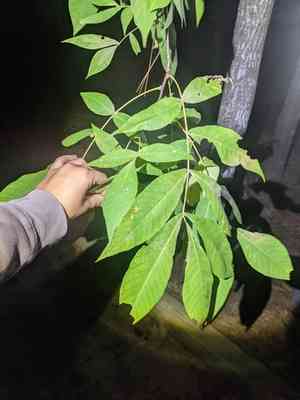
Sand hickory (Carya pallida)
Also known as: pallid hickory
The pecan tree (Carya illinoinensis), native to the southeastern United States, can reach heights of up to 24 meters and yields edible nuts.
In This Article
Attributes of Sand hickory
Lifespan
Perennial
Plant Type
Tree
Plant Height
24 m
Spread
18 m
Leaf Color
Green Yellow
Flower Size
2.5 cm
Flower Color
Yellow Green
Images of Sand hickory
Quickly Identify Sand hickory
1
Towering height up to 100 feet (30 meters) with straight trunk and dense crown.
2
Distinct male and female monoecious flowers; male catkins reach 4 inches (10 cm).
3
Oval, dark-brown nuts serve as a food source, distinguishing trait.
4
Alternate, pinnately compound leaves with serrated, silvery-scaled undersides emitting spicy fragrance.
5
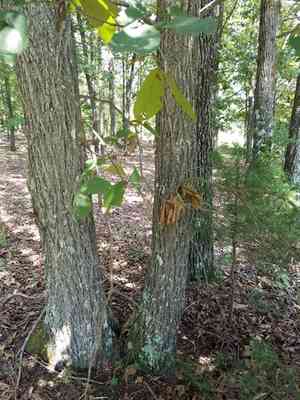
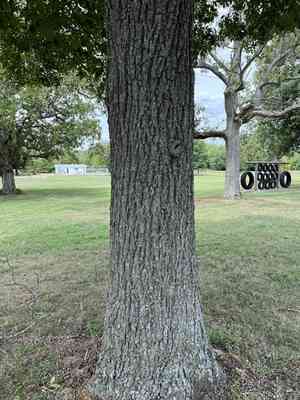
Textured trunk bark transforms with age into deep furrows, scaly ridges in diamond pattern.
Scientific Classification of Sand hickory
Phylum
Vascular plants
Class
Dicotyledons
Order
Fagales
Family
Walnut
Genus
Hickories
Species
Sand hickory
Planting and Growing of Sand hickory
Care Difficulty
Moderate
Watering Schedule
Every 3 days
Sunlight Requirements
Full sun
Sunshine Duration
6-10 hours
Ideal Temperature
60-79℉
Soil Type
Potting Mix, Peat Mix
Soil pH
5.5-7.5
Fertilizer Type
Balanced
Pruning Season
Spring, Summer
Pruning Area
Branches, Leaves
Pruning Frequency
2 times a year
Repotting Season
Spring
Pot Type
Plastic, Ceramic
 How to Water Sand hickory?
For Carya pallida, water until the soil feels evenly moist but not soggy. Ensure the water reaches the root zone which typically requires around 1000 ml per session. Adjust based on local climate and soil conditions; the idea is to maintain consistent soil moisture without waterlogging.
What are the symptoms of an underwatered Sand hickory?
›
What should I do if my Sand hickory is not getting enough water?
›
What are the symptoms of an overwatered Sand hickory?
›
How to save an overwatered Sand hickory?
›
 What Are the Sunlight Requirements for Sand hickory?
Partial to full sun exposure is ideal for Carya pallida, with 6-8 hours of sunlight. Adequate light supports photosynthesis, helping the plant grow robustly and enhancing its ornamental value.
More About Sunlight Requirements Techniques→
What is the ideal light setting for Carya pallida?
›
How can one achieve ideal lighting conditions for Carya pallida?
›
What are the benefits of providing ideal light to Carya pallida?
›
 What Is the Ideal Temperature Range for Sand hickory?
The ideal temperature range for Carya pallida is between 60 to 79°F. In this range, the plant can photosynthesize efficiently and sustain healthy growth. It's important to maintain these conditions consistently for the best results.
 What Soil is Best for Sand hickory?
Carya pallida thrives in well-drained soil which prevents waterlogging. This type of soil ensures the roots receive adequate oxygen, promoting healthier growth and preventing root rot. The plant benefits from soils rich in organic matter and nutrients. Adding compost or aged manure can improve soil fertility, providing the essential nutrients necessary for robust growth. Carya pallida requires soil that retains some moisture without becoming soggy. Mulching can help maintain moisture levels, especially during dry periods, ensuring consistent water supply.
 How to Fertilize Sand hickory?
For Carya pallida, applying a balanced fertilizer is recommended. Use about 1 pound of 10-10-10 fertilizer for every inch of trunk diameter. This ensures that the tree receives adequate nutrients without overwhelming the root system.
 How to Prune Sand hickory?
While it's important to maintain the health and shape of your Carya pallida, avoid excessive pruning. Over-pruning can lead to stunted growth and can make the tree vulnerable to environmental stressors. After pruning, monitor your Sand Hickory closely for signs of pests or disease. Fresh cuts can attract insects, so keep an eye on the wounds and apply appropriate pest control measures if needed.
More About Pruning Techniques→
 How to Propagate Sand hickory plant?
1
Seeds require stratification to break dormancy. Place seeds in a moist medium and store in a refrigerator for several months to simulate winter conditions before planting.
2
Select healthy scion wood and compatible rootstock. Make clean cuts at matching angles, ensuring cambium layers align for successful graft unions.
3
Once stratified seeds germinate, transfer seedlings to pots with well-draining soil. Keep them in a warm environment with indirect sunlight to promote healthy growth.
 How to Repot Sand hickory plant?
1
Carya pallida should be repotted when you notice signs of root-bound conditions, such as roots protruding from the drainage holes or stunted growth. These signals suggest it's time for more space, usually every 2-3 years, ideally in spring or autumn.
2
Select a pot that is slightly larger than the current one, ensuring it has ample drainage holes. This promotes better root health by preventing waterlogging, which could otherwise lead to root rot if excess water is not able to adequately drain away.
3
Opt for a loamy, well-draining soil to support Carya pallida's nutrient requirements and moisture balance. A soil mix that allows excess water to escape easily is crucial for preventing water-related root diseases, promoting vigorous plant growth.



