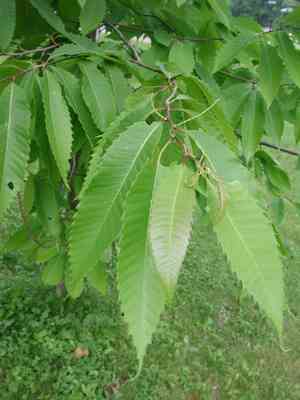
American chestnut (Castanea dentata)
Also known as: Chestnut
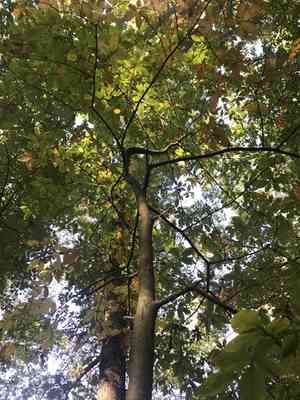
The American chestnut, a fast-growing deciduous hardwood, historically attained heights of up to 30 meters and was a key species in its native forests. However, in the early 20th century, the chestnut blight, caused by the fungus *Cryphonectria parasitica*, almost eradicated this important tree. Presently, mature American chestnuts are rare, though numerous small shoots still persist.
In This Article
Attributes of American chestnut
Lifespan
Perennial
Plant Type
Tree
Plant Height
15 m to 23 m
Spread
15 m to 23 m
Leaf Color
Green Yellow
Flower Size
15 cm to 20 cm
Flower Color
Yellow
Images of American chestnut
Quickly Identify American chestnut
1
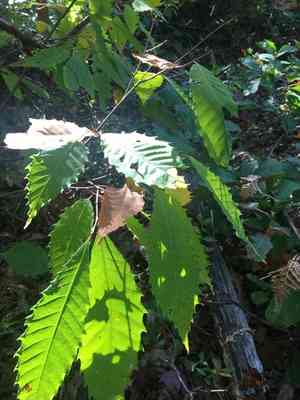
Toothed leaf margins with bristly tips
2
Male catkins with fragrant yellowish-white blooms
3
Spiny burr with 2-3 sweet, edible nuts
4
Glabrous twigs with scattered white lenticels
5
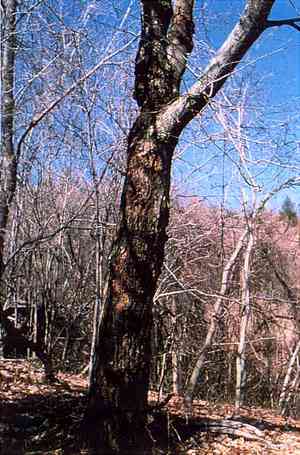
Light gray bark with spiraling ridges
Scientific Classification of American chestnut
Phylum
Vascular plants
Class
Dicotyledons
Order
Fagales
Family
Beech
Genus
Chestnuts
Species
American chestnut
Planting and Growing of American chestnut
Care Difficulty
Hard
Watering Schedule
Every 2 days
Sunlight Requirements
Full sun
Sunshine Duration
6-10 hours
Ideal Temperature
60-75℉
Soil Type
Potting Mix, Peat Mix
Soil pH
6.5-7.5
Fertilizer Type
Balanced
Pruning Season
Spring, Summer
Pruning Area
Branches, Leaves
Pruning Frequency
2 times a year
Repotting Season
Spring
Pot Type
Plastic, Ceramic
 How to Water American chestnut?
Castanea dentata, known as the American chestnut, requires a careful balance in its watering. Each time you water, ensure you are providing enough moisture to penetrate deep into the soil, around 500 ml per session. The goal is to keep the soil consistently moist, yet not waterlogged, as this maintains the delicate root systems that are characteristic of this species.
What are the symptoms of an underwatered American chestnut?
›
What should I do if my American chestnut is not getting enough water?
›
What are the symptoms of an overwatered American chestnut?
›
How to save an overwatered American chestnut?
›
 What Are the Sunlight Requirements for American chestnut?
Castanea dentata thrives in full sun conditions. Ideal lighting promotes vigorous growth, healthy leaf development, and optimal nut production, essential for its ecological and economic roles.
More About Sunlight Requirements Techniques→
How can Castanea dentata achieve ideal lighting?
›
What measures can enhance light exposure for Castanea dentata?
›
What benefits does ideal sunlight provide Castanea dentata?
›
 What Is the Ideal Temperature Range for American chestnut?
The ideal temperature range for Castanea dentata, also known as the American chestnut, lies between 60°F and 75°F. Within this range, the trees can carry out vital physiological processes efficiently, leading to healthy growth and fruit production. Temperatures significantly higher or lower might impede these processes.
 What Soil is Best for American chestnut?
Castanea dentata thrives in well-drained soils which prevent waterlogging. This is crucial for healthy root development, allowing air and nutrients to circulate efficiently. The tree prefers soil with moderate fertility. Too much fertility may lead to excessive leaf growth at the cost of nut production, so balance is key for optimal growth. While good drainage is important, having some level of moisture retention in the soil helps sustain the plant during dry periods. It ensures continuous availability of water for growth.
 How to Fertilize American chestnut?
Castanea dentata, commonly known as the American chestnut, benefits from a balanced fertilization approach employing moderate amounts. Typically, use a ratio of 10:10:10 NPK fertilizer at a rate of approximately 1 pound per 100 square feet. The key is to avoid excessive nitrogen as it can foster excessive leaf growth at the expense of nut production.
 How to Prune American chestnut?
The best time to prune the American chestnut tree (Castanea dentata) is late winter to early spring when the tree is dormant. Pruning during the dormant season helps in minimizing the risk of disease and pest infestation. Begin by pruning any dead, damaged, or diseased branches. This opens up the canopy for better air circulation and sunlight, which are vital for the tree’s health and nut production. Focus on creating a balanced structure by trimming overcrowded branches. This involves thinning out branches that cross or compete with others to prevent damage during windy conditions or when laden with nuts.
More About Pruning Techniques→
 How to Propagate American chestnut plant?
1
Begin by soaking seeds in water for 24 hours to enhance germination rates. Then, place the seeds in cold stratification for 2-3 months to mimic winter conditions. This process breaks seed dormancy, making them ready for germination come planting season.
2
Choose healthy rootstock and scion. Cut both the rootstock and the scion at a 45-degree angle. Place the scion onto the rootstock and wrap firmly using grafting tape. Ensure proper alignment for optimal growth and healing.
3
Start with selecting a healthy donor plant and sterilize the explants to prevent contamination. Transfer the explants to a nutrient-rich medium under controlled conditions to encourage tissue development and rooting.
 How to Repot American chestnut plant?
1
Repot during growth spurts in spring or autumn. Indicators include roots emerging from drainage holes, stunted growth, or lack of response to watering. These signals firmly indicate that your Castanea dentata is yearning for room to expand and breathe.
2
Choose a pot slightly larger than its current home. This ensures room for growth without overextending the plant's capacity to absorb water, aiding proper moisture level maintenance and preventing root rot.
3
Opt for well-draining loamy soil with organic matter. This soil type provides ample nutrients, supports strong root development, and maintains aeration, preventing waterlogging which is crucial for the Castanea dentata's health.



