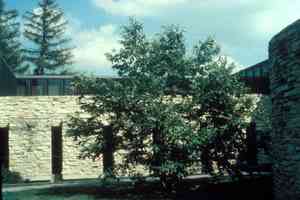
Chinese chestnut (Castanea mollissima)
Also known as: Chinese chestnut
Chinese chestnut trees (Castanea mollissima) are deciduous and can grow up to 20 meters tall. Native to China and the Korean Peninsula, these trees produce sweet, edible nuts. For optimal growth, they prefer acidic, loamy soil and require plenty of full sunlight, ideally at least 6 hours per day. Avoid planting in heavy clay or poorly drained soils.
In This Article
Attributes of Chinese chestnut
Lifespan
Perennial
Plant Type
Tree
Plant Height
20 m
Spread
12 m to 15 m
Leaf Color
Green Yellow
Flower Size
2.5 cm
Flower Color
Yellow White Cream
Images of Chinese chestnut
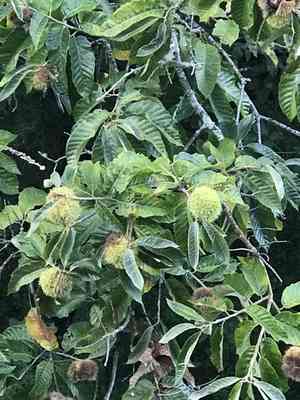
Quickly Identify Chinese chestnut
1
Rounded symmetrical crown, reaching 40 feet (12 meters) in height and spread.
2
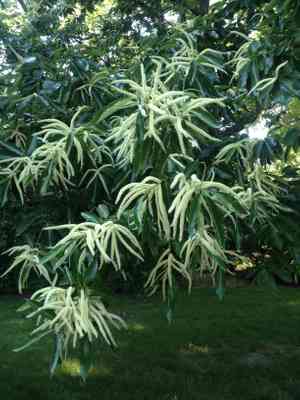
Aromatic flowers in catkins, showy with a brief blooming period.
3
Oval or round nuts in spiny, dehiscent bur, ripening in late September or October.
4
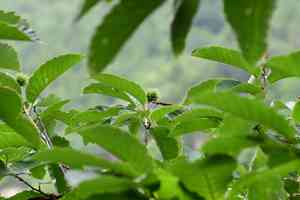
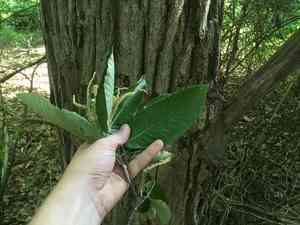
Dark green oblong-lanceolate leaves with pubescent texture, transitioning to yellow in fall.
5
Distinct venation pattern and coloration of leaves aid in easy identification.
Scientific Classification of Chinese chestnut
Phylum
Vascular plants
Class
Dicotyledons
Order
Beeches, walnuts, and allied trees
Family
Beech
Genus
Chestnuts
Species
Chinese chestnut
Planting and Growing of Chinese chestnut
Care Difficulty
Easy
Watering Schedule
Every 3 days
Sunlight Requirements
Full sun
Sunshine Duration
4-8 hours
Ideal Temperature
60-75℉
Soil Type
Potting Mix, Peat Mix
Soil pH
5.5-6.5
Fertilizer Type
Balanced
Pruning Season
Spring, Summer
Pruning Area
Branches, Leaves
Pruning Frequency
2 times a year
Repotting Season
Spring
Pot Type
Ceramic, Plastic
 How to Water Chinese chestnut?
For the Castanea mollissima, it's essential to ensure the soil is adequately moist without becoming waterlogged. When watering, aim for about 400 ml, as this generally suffices to maintain a consistent moisture level in the soil that mimics its natural habitat.
What are the symptoms of an underwatered Chinese chestnut?
›
What should I do if my Chinese chestnut is not getting enough water?
›
What are the symptoms of an overwatered Chinese chestnut?
›
How to save an overwatered Chinese chestnut?
›
 What Are the Sunlight Requirements for Chinese chestnut?
Chinese chestnut thrives in full sun to partial sunlight environments. Ideal sunlight exposure supports the plant in staking a robust growth structure and increased chestnut production.
More About Sunlight Requirements Techniques→
How much light does Castanea mollissima need?
›
What are the best solutions to achieve ideal light conditions for Castanea mollissima?
›
What benefits does ideal light provide to Castanea mollissima?
›
 What Is the Ideal Temperature Range for Chinese chestnut?
The ideal temperature range for Castanea mollissima, commonly known as the Chinese chestnut, is between 60°F and 75°F. This range allows the plant to thrive by ensuring optimal growth conditions, facilitating essential physiological processes such as photosynthesis and nutrient absorption.
 What Soil is Best for Chinese chestnut?
Castanea mollissima thrives in well-drained soil to prevent waterlogging. Good drainage helps avoid root rot and ensures optimal air exchange, promoting healthy root development that supports robust tree growth. Rich in organic matter, the soil provides nutrients essential for the chestnut tree’s growth. This boosts foliage health and improves overall resistance to pests and diseases. While well-drained, the soil should retain enough moisture to prevent drought stress. This balance provides consistent hydration critical for nut production.
 How to Fertilize Chinese chestnut?
For Castanea mollissima, it's important to apply a balanced fertilizer with a nitrogen-phosphorus-potassium ratio (N-P-K) of 10-10-10. During the growing season, you might want to use around 1 pound of fertilizer per mature tree to ensure healthy growth and nut production.
 How to Prune Chinese chestnut?
Begin by examining the health and structure of your Chinese Chestnut tree. Focus on removing dead, diseased, or damaged branches to prevent the spread of pests and diseases. Also, cut back any branches that are growing inward toward the trunk or crossing each other, as these can rub and create entry points for pathogens. For effective pruning, make cuts at a 45-degree angle just above a healthy bud or lateral branch. This angle helps water runoff, reducing the chance of rot. Use clean and sharp tools to make precise cuts, ensuring the bark is not torn or damaged, which can lead to infections. To achieve a balanced canopy, prune to open up the tree's center, allowing more light and air to penetrate. This will promote healthier growth and prevent the tree from becoming too dense, which can lead to weak branch development and poor chestnut production.
More About Pruning Techniques→
 How to Propagate Chinese chestnut plant?
1
Begin by selecting a suitable location for the seed bed with well-drained soil and ample sunlight. Amend the soil with compost to enhance fertility and create a fine tilth. This step is crucial to ensure proper germination.
2
To break seed dormancy, perform cold stratification by placing seeds in a moist medium at 32-41°F (0-5°C) for 2-3 months. Stratification mimics natural winter conditions, helping the seeds to sprout when temperatures warm up.
3
Collect scions from a healthy parent plant and prepare rootstocks that are vigorous and compatible. Both should be cut with clean, sharp tools to ensure a good fit and connection, vital for successful grafting.
 How to Repot Chinese chestnut plant?
1
Watch for signs like roots growing out of drainage holes or becoming pot-bound, as these indicate that your Castanea mollissima is ready for a new home. An overall slowdown in growth and frequent wilting could also be signals that it's time for a refresh.
2
Choose a pot that's one size larger than the current pot, with good drainage holes. A pot that's too big can hold excess moisture and lead to root rot—just the right size allows room for growth while ensuring efficient moisture management.
3
Opt for a well-draining loamy mix enriched with organic matter. This combination ensures the soil retains enough moisture for healthy growth but doesn't become waterlogged, providing an ideal balance of air and water.



