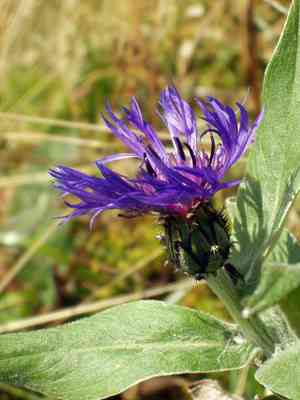
Perennial cornflower (Centaurea montana)
Also known as: Mountain bluet, Bachelor's button, Knapweed, Great blue-bottle
The perennial cornflower, or Centaurea montana, is native to the mountainous meadows and open woodlands of Europe, particularly in regions like the Alps and Pyrenees. It is often cultivated as a garden plant and valued for its ornamental flowers. While not edible, it has traditional medicinal uses in parts of Central Europe. Additionally, it has become invasive in areas such as British Columbia. The plant is also known for attracting various pollinators, including bees, butterflies, and moths.
In This Article
Attributes of Perennial cornflower
Lifespan
Perennial, Annual
Plant Type
Herb
Plant Height
30 cm to 70 cm
Spread
30 cm to 60 cm
Leaf Color
Green Gray
Flower Size
5 cm
Flower Color
Blue Red White Pink Violet
Images of Perennial cornflower
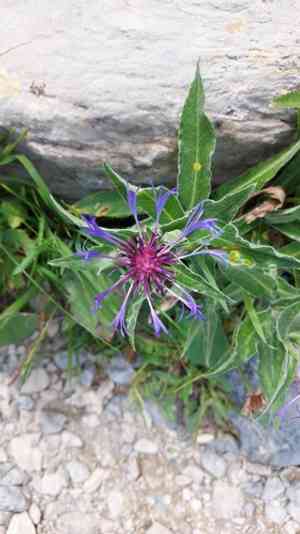
Quickly Identify Perennial cornflower
1
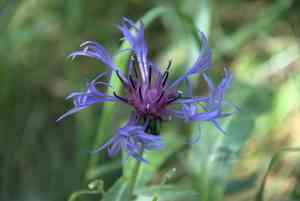
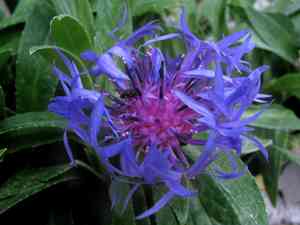
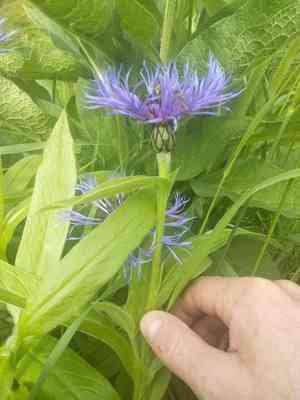
Distinct solitary blooms with fringed, vibrant blue petals and reddish-blue center.
2
Involucre bracts with black edging framing the striking flower center.
3
Lance-shaped, green leaves up to 7 inches (18 cm) long, with prominent parallel veins.
4
Erect, hairy stems reaching 1-2 feet (30-60 cm) in height, often unbranched.
5
Fruit with fine, straw-colored texture and tuft of light brown bristles at tip.
Scientific Classification of Perennial cornflower
Phylum
Vascular plants
Class
Dicotyledons
Order
Asters bellflowers fanflowers and allies
Family
Daisy
Genus
Centaury
Species
Perennial cornflower
Planting and Growing of Perennial cornflower
Care Difficulty
Easy
Watering Schedule
Every 4 days
Sunlight Requirements
Full sun
Sunshine Duration
6-12 hours
Ideal Temperature
60-70℉
Soil Type
Potting Mix, Peat Mix
Soil pH
6.5-7.5
Fertilizer Type
Balanced
Pruning Season
Spring, Summer
Pruning Area
Branches, Leaves
Pruning Frequency
2 times a year
Repotting Season
Spring
Pot Type
Plastic, Terracotta
 How to Water Perennial cornflower?
When watering Centaurea montana, aim to thoroughly soak the soil so it reaches a depth of 6 to 8 inches. This ensures that the roots receive sufficient moisture without waterlogging. A typical amount is around 500 ml, depending on soil type and environmental conditions.
More About Watering Techniques→
What are the symptoms of an underwatered Perennial cornflower?
›
What should I do if my Perennial cornflower is not getting enough water?
›
What are the symptoms of an overwatered Perennial cornflower?
›
How to save an overwatered Perennial cornflower?
›
 What Are the Sunlight Requirements for Perennial cornflower?
Centaurea montana thrives with a light exposure of at least six to eight hours of sun daily, preferably in the morning to midday. Such lighting conditions ensure vibrant blooms and vigorous growth.
More About Sunlight Requirements Techniques→
How much sunlight does Centaurea montana need?
›
What can be done to ensure Centaurea montana gets its ideal light?
›
What are the effects of ideal lighting on Centaurea montana?
›
 What Is the Ideal Temperature Range for Perennial cornflower?
Centaurea montana flourishes best in temperatures ranging from 60°F to 70°F. Within this range, the plant receives just the right conditions for optimum growth and blooming. Maintaining these temperatures ensures that the plant uses its resources most efficiently for photosynthesis and nutrient uptake.
 What Soil is Best for Perennial cornflower?
Centaurea montana thrives in well-drained soil, which prevents waterlogging and root rot. This kind of soil ensures that the plant's roots receive enough oxygen and helps the plant maintain healthy growth. This plant prefers moderately fertile soil, which provides a balanced supply of nutrients without encouraging leggy growth. Fertile soil supports robust flowering and overall vigor. Centaurea montana grows best in soil with a pH ranging from neutral to slightly alkaline, between 6.5 and 7.5. This pH level allows for optimal nutrient uptake, fostering strong plant development.
More About Soil→
 How to Fertilize Perennial cornflower?
When fertilizing Centaurea montana, it's essential to opt for a balanced 10-10-10 or 20-20-20 formulation, ensuring that you use approximately 1/2 to 1 full teaspoon per square foot of soil. This will provide the right blend of nutrients without overwhelming the plant and risking nutrient burn.
More About Fertilizing Techniques→
 How to Prune Perennial cornflower?
In early spring, as new growth emerges from the base, cut back old and dead stems to ground level. This promotes healthy new growth and helps rejuvenate the plant after its winter dormancy. Throughout the blooming season, regularly remove spent flowers by snipping just below the bloom. Deadheading not only tidies up the plant but also stimulates more flowering by redirecting energy into producing new buds. In mid-summer, once the main flowering flush is over, cut back the entire plant by about a third. This encourages a second wave of blooms and helps keep the plant from becoming leggy and untidy.
More About Pruning Techniques→
 How to Propagate Perennial cornflower plant?
1
Begin by filling a seed tray with a well-draining potting mix. Sow Centaurea montana seeds on the surface and lightly cover them with soil. Water them gently and cover the tray with a dome to retain humidity.
2
For division, lift the mature plant from the ground in early spring. Use a sharp garden knife to divide the root ball into sections, ensuring each section has roots attached. Replant the divisions immediately into prepared soil.
3
Select healthy roots from a mature Centaurea montana plant in early summer. Cut 3-4 inch sections, ensuring at least one root nodule per section. Plant these cuttings horizontally in a pot with moistened potting mix.
 How to Repot Perennial cornflower plant?
1
Signs that your Centaurea montana needs repotting include slowed growth, root bound symptoms like roots coming out of drainage holes, and frequent need for watering. These indicate the plant has outgrown its pot and would benefit from more space and fresh soil.
2
Opt for a pot that is slightly larger than the current one, ideally 1-2 inches bigger in diameter. Clay pots with drainage holes are excellent, as they allow excess moisture to escape, reducing the risk of root rot and ensuring healthy plant growth.
3
A well-draining garden soil is ideal. Mix regular potting soil with sand and perlite to improve aeration and drainage, which helps prevent waterlogging and provides a robust environment for roots to thrive.
Learn More About Perennial cornflower Diseases
Anthracnose
Bacterial Leaf Spot
Bacterial Soft Rot
Bacterial Wilt
Black Spot
Chemical Injury
Crown Gall
Cyst Nematode
Damping-off
Downy Mildew
Drought Stress
Fusarium Wilt
Gray Mold
Leaf Spot
Mosaic
Nutrient Deficiency
Nutrient Toxicity
Powdery Mildew
Root Rot
Root-knot Nematode
Rusts
Sooty Mold
Spider Mites
Temperature Stress
Thrips Damage
White Mold



