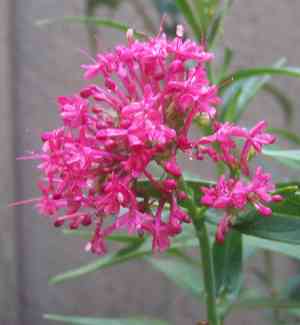
Red valerian (Centranthus ruber)
Also known as: Fox's brush, Kiss-me-quick, German Lilac, Spanish Valerian
Red valerian (Centranthus ruber) is a hardy perennial that thrives in alkaline soils and can often be seen growing in rocky crevices or even on old stone walls. It prefers sunny locations and can tolerate drought conditions. Unlike true valerian, red valerian is not known for any medicinal properties, although its leaves and roots can occasionally be used in culinary applications, such as salads or soups.
In This Article
Attributes of Red valerian
Lifespan
Perennial, Annual, Biennial
Plant Type
Herb
Plant Height
60 cm to 1 m
Spread
45 cm to 75 cm
Leaf Color
Green Gray
Flower Size
2 cm
Flower Color
Red Pink White Purple
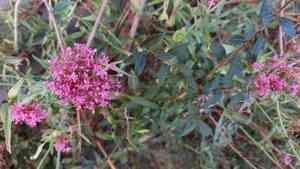
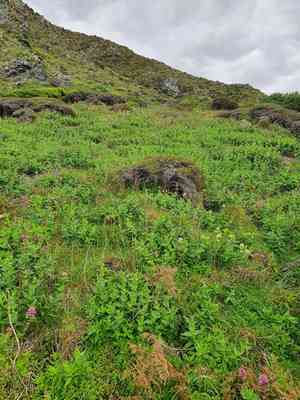
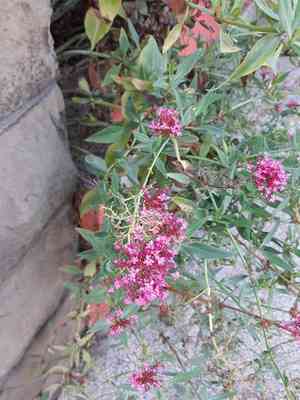
Images of Red valerian
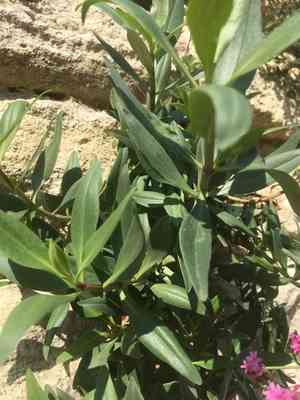
Quickly Identify Red valerian
1
Bluish-green foliage
2
Rounded spikes with reddish-pink flowers
3
Versatile in different garden settings
4
Cold hardy to 15-20°F (-9 to -6°C)
5
Self-sowing tendency manageable by removing spent blooms
Scientific Classification of Red valerian
Phylum
Vascular plants
Class
Dicotyledons
Order
Dipsacales
Family
Honeysuckle
Genus
Centranthus
Species
Red valerian
Planting and Growing of Red valerian
Care Difficulty
Easy
Watering Schedule
Every 4 days
Sunlight Requirements
Full sun
Sunshine Duration
4-8 hours
Ideal Temperature
65-75℉
Soil Type
Potting Mix, Peat Mix
Soil pH
6.5-7.5
Fertilizer Type
Balanced
Pruning Season
Spring, Summer
Pruning Area
Leaves, Branches
Pruning Frequency
2 times a year
Repotting Season
Spring
Pot Type
Plastic, Ceramic
 How to Water Red valerian?
Centranthus ruber thrives with moderate watering, typical of Mediterranean plants. Aim to soak the soil to about four inches deep, ensuring the roots are well-hydrated but not waterlogged. Let the topsoil dry out between waterings to simulate its natural habitat.
More About Watering Techniques→
What are the symptoms of an underwatered Red valerian?
›
What should I do if my Red valerian is not getting enough water?
›
What are the symptoms of an overwatered Red valerian?
›
How to save an overwatered Red valerian?
›
 What Are the Sunlight Requirements for Red valerian?
Centranthus ruber performs best in full sun to partial sun conditions, benefiting from robust flowering and healthy development, contributing to its lush appearance.
More About Sunlight Requirements Techniques→
How much sun does Centranthus ruber need?
›
What are the solutions for ideal lighting?
›
What are the benefits of ideal lighting?
›
 What Is the Ideal Temperature Range for Red valerian?
Centranthus ruber, commonly known as red valerian, thrives in temperate climates. The ideal temperature range is between 65°F and 75°F, allowing optimal growth and flowering. This range ensures that the plant can photosynthesize effectively, maintain cell structure, and stave off temperature-related stress. Ensuring these conditions can significantly improve the health and vibrancy of the plant.
 What Soil is Best for Red valerian?
Centranthus ruber thrives in well-drained soils to prevent root rot. This requirement ensures the roots do not sit in waterlogged soil, allowing the plant to flourish with robust growth and vibrant blooms. Though it sounds contradictory, Centranthus ruber prefers soils that are not overly rich in nutrients. This helps prevent excessive leafy growth and encourages healthy flowering, providing a balanced plant structure. Moderate fertility supports steady growth for Centranthus ruber without causing nutrient overload. This maintains the plant’s health and sustainability by ensuring it receives just the right amount of nutrients.
More About Soil→
 How to Fertilize Red valerian?
Centranthus ruber, commonly known as red valerian, has modest fertilization requirements. It thrives in moderately fertile soil, so applying a balanced liquid fertilizer diluted to half strength once a month during its growing season is optimal. For slow-release fertilizer, a light top dressing every six months is usually sufficient, applying around 50 to 100 grams per plant depending on its size.
More About Fertilizing Techniques→
 How to Prune Red valerian?
To keep your Centranthus ruber blooming profusely, regularly remove spent flower heads by cutting just above the first set of healthy leaves. This not only tidies the plant but also promotes a new flush of color as fresh blooms replace the old. Trim back overgrown stems to about one-third to encourage bushier growth. Begin by identifying overly leggy branches and cut them back to a leaf node. This ensures the plant retains a full look while maintaining its desired height and exposure to sunlight.
More About Pruning Techniques→
 How to Propagate Red valerian plant?
1
Begin by sowing seeds in a well-draining seed tray filled with a potting mix. Lightly cover the seeds and keep the soil consistently moist. Place in a warm, well-lit area for germination, which usually occurs within 2-3 weeks.
2
Select a healthy stem and cut a 10-15 cm segment just below a node. Remove the lower leaves and dip the cut end in rooting hormone. Plant the cutting in a pot filled with potting mix and water gently.
3
Carefully dig around the root system of a mature plant and gently separate the roots to form smaller sections. Ensure each section has a portion of the root system and healthy stems. Replant the divisions in well-prepared soil.
 How to Repot Red valerian plant?
1
Centranthus ruber needs repotting when you notice roots emerging from the drainage holes, indicating it's root-bound, or when growth seems stunted. Spring or autumn are ideal to give the plant favorable conditions to establish in its new pot.
2
Select a pot that is about 2 inches larger in diameter than the current one. This provides ample room for root expansion without overwhelming the plant with too much soil, which can retain excess moisture and cause root rot.
3
Opt for a well-draining soil mix, such as one incorporating perlite or sand, to mimic the plant’s natural sandy habitat. This ensures proper aeration and prevents waterlogging, which could otherwise lead to root rot and other fungal issues.
Learn More About Red valerian Diseases
Anthracnose
Bacterial Leaf Spot
Bacterial Soft Rot
Bacterial Wilt
Black Spot
Chemical Injury
Crown Gall
Cyst Nematode
Damping-off
Downy Mildew
Drought Stress
Fusarium Wilt
Gray Mold
Leaf Curl
Leaf Spot
Mosaic
Nutrient Deficiency
Nutrient Toxicity
Powdery Mildew
Root Rot
Root-knot Nematode
Rusts
Sooty Mold
Spider Mites
Temperature Stress
Thrips Damage
White Mold



