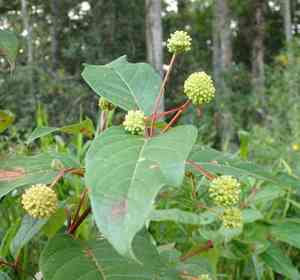
Common buttonbush (Cephalanthus occidentalis)
Also known as: Honey-bells, Button-ball
The common buttonbush (Cephalanthus occidentalis) typically reaches heights of 1.8 to 3.5 meters and thrives in various temperature zones, commonly found near swamps, ponds, and streams. Its distinctive spherical white flowers and button-like fruit are key attractions for wildlife. While its foliage is toxic to livestock, the plant offers nectar that sustains bees, butterflies, and hummingbirds. Birds, especially ducks, consume its seeds and often nest within its protective cover.
In This Article
Attributes of Common buttonbush
Lifespan
Perennial
Plant Type
Shrub
Plant Height
1 m to 6 m
Spread
1.2 m to 2.5 m
Leaf Color
Green
Flower Size
2 cm to 3.5 cm
Flower Color
White Yellow Cream
Images of Common buttonbush
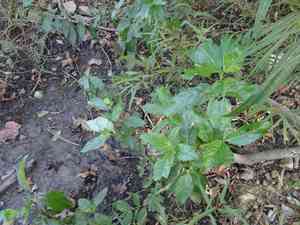
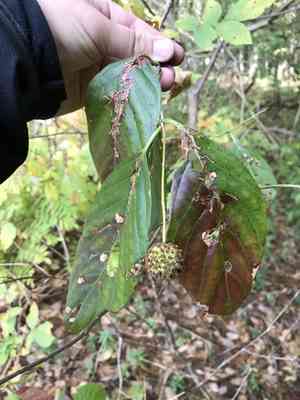
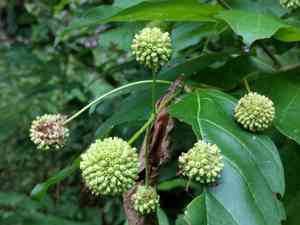

Quickly Identify Common buttonbush
1
Creamy-white, tubular blossom clusters in dense 1.5-inch heads.
2
Distinctive red-brown, spherical fruit with prominent nutlets, persisting through winter.
3
Bright green ovate leaves, glossy above, dull beneath, turning yellow in fall.
4
Stems with red lenticels, transitioning from green to woody, slender with opposite branching.
5
Trunk with grey bark, developing prominent furrows, rough to touch, distinguishing mature specimens.
Scientific Classification of Common buttonbush
Phylum
Vascular plants
Class
Dicotyledons
Order
Gentianales
Family
Madder
Genus
Buttonbush
Species
Common buttonbush
Planting and Growing of Common buttonbush
Care Difficulty
Easy
Watering Schedule
Every 8 days
Sunlight Requirements
Full sun
Sunshine Duration
6-10 hours
Ideal Temperature
65-75℉
Soil Type
Potting Mix, Peat Mix
Soil pH
5.5-7.5
Fertilizer Type
Balanced
Pruning Season
Spring, Summer
Pruning Area
Branches, Leaves
Pruning Frequency
2 times a year
Repotting Season
Spring
Pot Type
Plastic, Ceramic
 How to Water Common buttonbush?
The amount of water Cephalanthus occidentalis requires should be sufficient to keep the soil consistently moist but not waterlogged. A good rule of thumb is to provide around 500 milliliters of water each time, making sure the soil remains evenly damp. This ensures the roots can access sufficient moisture while preventing conditions that can lead to root rot.
What are the symptoms of an underwatered Common buttonbush?
›
What should I do if my Common buttonbush is not getting enough water?
›
What are the symptoms of an overwatered Common buttonbush?
›
How to save an overwatered Common buttonbush?
›
 What Are the Sunlight Requirements for Common buttonbush?
Cephalanthus occidentalis flourishes best under full to partial sun, which enhances its natural growth patterns and encourages vibrant foliage and robust flowering. Moreover, proper lighting conditions help the plant maintain optimal health and aesthetic appeal.
More About Sunlight Requirements Techniques→
What is the best lighting for Cephalanthus occidentalis?
›
What solutions help achieve ideal lighting?
›
What are the benefits of achieving ideal lighting?
›
 What Is the Ideal Temperature Range for Common buttonbush?
The ideal temperature range of 65°F to 75°F provides a conducive environment for the growth of Cephalanthus occidentalis. In this range, the plant can photosynthesize efficiently, maintain cellular structure integrity, and effectively manage water uptake processes without stress. Temperatures within this range optimize metabolic functions and reduce the risk of temperature-induced disorders.
 What Soil is Best for Common buttonbush?
Cephalanthus occidentalis thrives in soils that retain moisture well. This characteristic aids the plant in maintaining hydration during dry spells, enhancing its growth and blooming potential. A nutrient-rich soil ensures that Cephalanthus occidentalis has a steady supply of essential nutrients for optimal growth. Soils high in organic matter are ideal as they provide the necessary nutrients for lush foliage and vibrant blooms. While moisture retention is key, it's equally important for the soil to drain excess water efficiently. Good drainage prevents root rot, which could be detrimental to the plant's health.
More About Soil→
 How to Fertilize Common buttonbush?
For Cephalanthus occidentalis, it is essential to use a balanced fertilizer composition. Typically, a balanced 10-10-10 ratio is recommended. When using liquid fertilizer, dilute it to half strength to prevent stressing the plant roots. Apply approximately 1 gallon of the diluted mixture per plant.
More About Fertilizing Techniques→
 How to Prune Common buttonbush?
Avoid cutting too much at once; this can stress the plant and lead to fewer blooms. Limit pruning to no more than one-third of the total plant volume at any one time. Do not prune during periods of extreme cold or heat, as these conditions can cause undue stress and hamper the plant's natural recovery process.
More About Pruning Techniques→
 How to Propagate Common buttonbush plant?
1
Collect Cephalanthus occidentalis seeds in early fall when the seed heads are mature but before they disperse naturally. Clean and dry the seeds thoroughly before storage or immediate planting.
2
Take semi-hardwood cuttings in early summer. Each cutting should be 4-6 inches long, with at least two sets of leaves. Remove the lower leaves to prevent rot when inserted into soil.
3
Sow the prepared seeds in a well-draining potting mix covered lightly with soil. Maintain consistent moisture and place them in a bright, warm location to promote germination.
 How to Repot Common buttonbush plant?
1
Look for signs like roots growing out of the drainage holes, soil drying out too quickly, or poor growth. These indicate that it's time to give your Cephalanthus occidentalis a new home. Early spring to mid-summer is the ideal window, as it allows the plant ample time to recover and establish itself before winter dormancy.
2
Select a pot that's only slightly larger than the current one, with ample drainage holes. This ensures that the roots have room to expand without leading to excess water retention, reducing the risk of root rot. A pot with good drainage also helps mimic the plant's natural habitat, where it thrives on moist but well-drained soil.
3
Cephalanthus occidentalis prefers moist, well-drained loamy soil, mimicking its natural habitat near water sources. A mix containing peat, sand, and a bit of organic matter can provide the ideal conditions. This soil structure ensures adequate aeration and moisture retention, preventing waterlogging while supporting healthy root growth.
Learn More About Common buttonbush Diseases
Anthracnose
Bacterial Leaf Spot
Bacterial Soft Rot
Bacterial Wilt
Black Spot
Chemical Injury
Crown Gall
Damping-off
Downy Mildew
Drought Stress
Fusarium Wilt
Gray Mold
Leaf Spot
Mosaic
Nutrient Deficiency
Nutrient Toxicity
Powdery Mildew
Root Rot
Root-knot Nematode
Rusts
Sooty Mold
Spider Mites
Temperature Stress
Thrips Damage
White Mold



