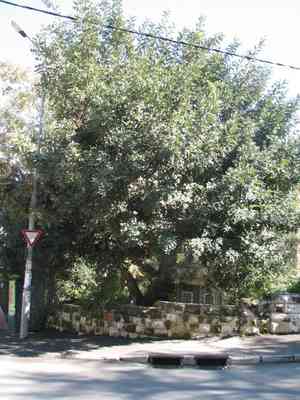
Carob tree(Ceratonia siliqua)

Carob tree (Ceratonia siliqua)

Also known as: Locust tree, Algaroba

The Carob tree (Ceratonia siliqua) is an evergreen shrub indigenous to the Middle East and the Mediterranean region. It is frequently used in ornamental gardening and landscaping. The tree produces edible pods, which can be toasted, ground into a powder, and utilized as a chocolate substitute. Commercially, Carob trees are often grown in large orchards for their pods.

Attributes of Carob tree

Lifespan
Perennial
Plant Type
Tree
Plant Height
15 m
Spread
10 m
Leaf Color
Green
Flower Size
6 mm to 1.2 cm
Flower Color
Red

PlantJoy - Identify plants with a snap

Identify and diagnose plants, get toxicity alerts, and explore safety guides for all types of fungi.

Try for Free

Images of Carob tree

Carob tree(Ceratonia siliqua)

Quickly Identify Carob tree

1
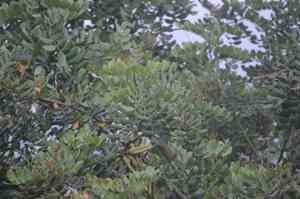
Broad, rounded crown with glossy green foliage.
2
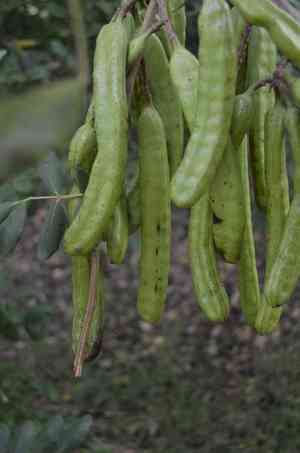
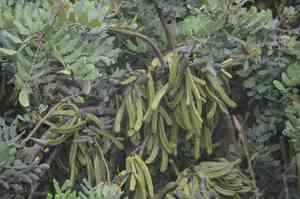
Distinctive elongated pods resembling horns, typically brown.
3
Flowers in dense clusters on catkin-like racemes, lacking petals.
4
Fruit pods 4–12 inches (10–30 cm) long, with thickened seams.
5
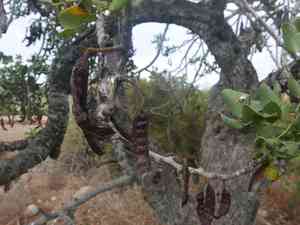
Thick trunk with rough, brown bark and sturdy branching structure.

Scientific Classification of Carob tree

Phylum
Vascular plants
Class
Dicotyledons
Order
Fabales
Family
Legume
Genus
Ceratonia
Species
Carob tree

Planting and Growing of Carob tree

Care Difficulty
Easy
Watering Schedule
Every 2 days
Sunlight Requirements
Full sun
Sunshine Duration
6-10 hours
Ideal Temperature
60-80℉
Soil Type
Potting Mix, Peat Mix
Soil pH
6-8.5
Fertilizer Type
Balanced
Pruning Season
Spring, Summer
Pruning Area
Branches, Leaves
Pruning Frequency
2 times a year
Repotting Season
Spring
Pot Type
Plastic, Ceramic

water icon How to Water Carob tree?

Carob trees, or Ceratonia siliqua, prefer moderate watering. A general rule is to provide around 500 ml per watering, ensuring the soil is moistened but not waterlogged. The goal is to allow the soil to dry out slightly between watering sessions, mimicking the tree's natural Mediterranean environment.
What are the symptoms of an underwatered Carob tree?
What should I do if my Carob tree is not getting enough water?
What are the symptoms of an overwatered Carob tree?
How to save an overwatered Carob tree?
More About Watering Techniques

sunlight icon What Are the Sunlight Requirements for Carob tree?

Sunlight Requirements: Full sun
Duration of light: 6-8 hours daily
Ceratonia siliqua should be exposed to full sun for about 6-8 hours daily. This allows the plant to perform photosynthesis effectively, supporting healthy growth and development. Adequate sunlight is crucial for maximizing the plant's potential.
How much sunlight does Ceratonia siliqua need?
What solutions are available for optimal light exposure?
What benefits does ideal sunlight provide?
More About Sunlight Requirements Techniques

temperature icon What Is the Ideal Temperature Range for Carob tree?

Ideal Temperature: 60 ~ 80℉
The ideal temperature range for growing Ceratonia siliqua is between 60°F and 80°F. This range supports optimal metabolic processes and growth rates, promoting healthy development of leaves and fruit. Maintaining this temperature range helps in ensuring adequate nutrient absorption and physiological activities essential for the plant’s overall wellbeing.

soil icon What Soil is Best for Carob tree?

Soil type: Sandy soil, Loam, Calcareous soil
Soil PH: 6 ~ 8.5
Ceratonia siliqua thrives best in well-draining soil, as it prevents root rot and encouraging strong root development. The ability of the soil to drain excess water helps the carob tree to absorb nutrients efficiently. Though tolerant to poorer soils, Ceratonia siliqua benefits from a soil enriched with organic matter, which enhances nutrient availability and promotes healthier foliage growth. While this plant is drought-tolerant, maintaining moderate moisture in the soil supports steady growth and fruit production, ensuring the tree withstands extended dry periods more effectively. More About Soil

fertilize icon How to Fertilize Carob tree?

Fertilizer type: Balanced
Ceratonia siliqua, commonly known as the carob tree, requires moderate fertilization. It thrives best with a balanced NPK (Nitrogen-Phosphorus-Potassium) ratio. For mature trees, approximately 200 grams of general-purpose fertilizer per application is recommended, taking care to distribute it evenly around the base without directly contacting the trunk. More About Fertilizing Techniques

prune icon How to Prune Carob tree?

Pruning Time: Spring, Summer
Prune your Ceratonia siliqua during late winter or early spring before the new growth starts. This timing is ideal because it allows you to remove dead or weak branches, promoting healthier growth as the plant prepares to burgeon. Avoid pruning in late autumn as it might expose the plant to winter stresses. Start by inspecting your Carob tree for any dead, damaged, or diseased branches. These should be your primary targets for removal. Also, look for branches that cross or rub against each other and thin them out. This will prevent any wounds caused by friction and improve sunlight penetration and air circulation throughout the canopy. Use clean, sharp pruning shears or saws to make precise cuts. When removing thicker branches, make an initial cut underneath the branch about one-third of the way through, then a clean cut from the top to avoid tearing bark. For smaller branches, cut just above a node or bud to promote healthier growth. More About Pruning Techniques

propagate icon How to Propagate Carob tree plant?

Propagate Time: Early spring, Spring, Summer
1
Choose healthy and disease-free seeds or cuttings from a vigorously growing carob tree. For seeds, ensure they are plump and undamaged, while cuttings should be taken from semi-hardwood sections.
2
Pre-soak carob seeds in warm water for 24 hours to soften the outer coat. Sow seeds in a well-draining potting mix, covering lightly with soil. Keep the soil consistently moist until germination occurs.
3
Dip the cut end of the cuttings into rooting hormone powder before planting in a well-draining mix. Ensure the cutting has several nodes and is about 10-15 cm in length. Water lightly and cover with a plastic bag to retain humidity.
More About Propagating Techniques

repot icon How to Repot Carob tree plant?

Repotting frequency: Every 2-3 years
1
Ceratonia siliqua should be repotted when you notice the roots are growing out of the drainage holes or the plant's growth has significantly slowed down. Another indication is if the soil loses its structure or the pot becomes too small for the plant. The best time to repot is during spring or autumn when the plant is in its active growth phase and can recover quickly from the transplant shock, allowing it to adjust better to its new home.
2
Select a pot that is about 1-2 inches larger in diameter than the current one to allow room for growth but avoid excessive size, which can lead to overwatering. Ensure the pot has adequate drainage holes to prevent waterlogging, as standing water can lead to root rot. The material of the pot should be breathable, such as ceramic or clay, which helps in maintaining optimal soil moisture levels by allowing excess moisture to evaporate.
3
Opt for a well-draining sandy loam soil mix that mimics the plant's natural Mediterranean environment. This type of soil promotes good drainage, preventing water accumulation that can cause root rot. The soil should be slightly alkaline, as it suits the carob tree's preference and aids in nutrient absorption, fostering healthy growth and development.

PlantJoy - Identify plants with a snap

Find the best spots for them to optimize their health, simply using your phone.

Try for Free

Toxicity of Carob tree

Is Carob tree toxic to humans?

While the majority of the carob tree is not suitable for consumption, it is generally considered safe. The carob pods are enjoyable and nutritious for many individuals; however, some people may experience allergies when consuming the pods or products derived from them. Common allergic reactions include nausea, vomiting, hives, and in severe cases, anaphylactic shock. Even for those without allergies, consuming excessive amounts of carob may lead to complications, as it can reduce blood sugar and insulin levels, which could be problematic for individuals with existing blood sugar concerns. Moreover, this same effect can result in undesirable weight loss. It is essential to note that small children are more susceptible, and lesser amounts can trigger these issues. If an individual experiences allergy symptoms after ingestion, they should cease consumption immediately. Should the reactions be severe, or if there is a significant intake of carob, it is advisable to seek medical guidance or possibly visit an emergency department.

Identify toxic plants for your safety

Learn which plants are harmful to you and your pets, and make informed choices for a safer home!

Try for Free
WARNING
The judgment on toxicity and danger is for reference only. We DO NOT GUARANTEE any accuracy of such judgment. Therefore, you SHALL NOT rely on such judgment. It is IMPORTANT TO SEEK PROFESSIONAL ADVICE in advance when necessary.
More About Toxic Techniques