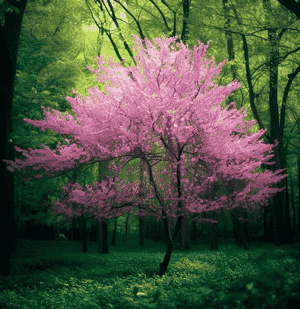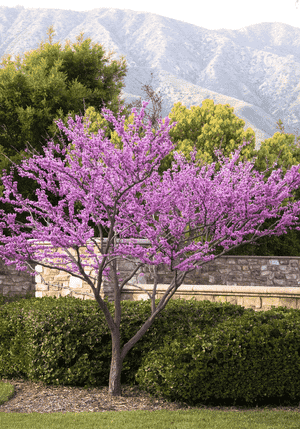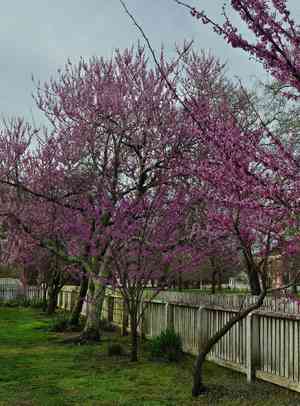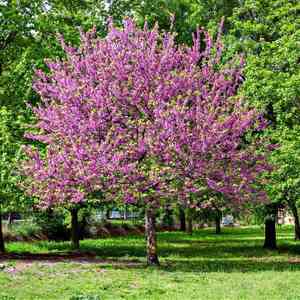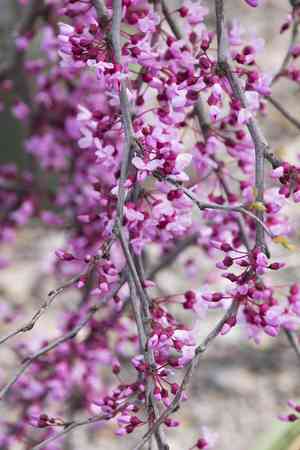
Eastern redbud(Cercis canadensis)

Eastern redbud (Cercis canadensis)

Also known as: American Redbud, Texas Redbud, Judas tree, Flowering judas

The Eastern redbud, scientifically known as Cercis canadensis, is a small tree found in North America. In the spring or early summer, it showcases clusters of purple-pink flowers that bloom directly on its branches and sometimes even on the trunk. The tree produces seed pods, indicating that it is part of the legume family, related to peas and locust trees.

Attributes of Eastern redbud

Lifespan
Perennial
Plant Type
Shrub, Tree
Plant Height
6 m to 15 m
Spread
8 m to 11 m
Leaf Color
Green Yellow Red
Flower Size
1.5 cm
Flower Color
Pink Purple White Red

PlantJoy - Identify plants with a snap

Identify and diagnose plants, get toxicity alerts, and explore safety guides for all types of fungi.

Try for Free

Images of Eastern redbud

Eastern redbud(Cercis canadensis)

Quickly Identify Eastern redbud

1
Heart-shaped leaves, 3-5 inches (7.5-12.5 cm) long, with 7 palmate veins and lustrous surface.
2
Vibrant pink to purple flowers in spring growing directly on branches and trunk (cauliflory).
3
Flat, oblong seed pods 2-4 inches (5-10 cm) long, transitioning from green to brown.
4
Slender, zig-zag stem with dark reddish-brown to black hue, dividing close to ground.
5
Bark transitions from smooth dark brown to scaly plates, with hints of orange in inner layers.

Scientific Classification of Eastern redbud

Phylum
Vascular plants
Class
Dicotyledons
Order
Fabales
Family
Legume
Genus
Redbuds
Species
Eastern redbud

Planting and Growing of Eastern redbud

Care Difficulty
Easy
Watering Schedule
Every 2 days
Sunlight Requirements
Full sun
Sunshine Duration
4-8 hours
Ideal Temperature
60-70℉
Soil Type
Potting Mix, Peat Mix
Soil pH
6.5-7.5
Fertilizer Type
Balanced
Pruning Season
Spring, Summer
Pruning Area
Branches, Leaves
Pruning Frequency
2 times a year
Repotting Season
Spring
Pot Type
Ceramic, Plastic

water icon How to Water Eastern redbud?

For the Eastern Redbud (Cercis canadensis), it's advisable to ensure the soil is moist but not waterlogged. Usually, 500 ml of water per watering session should keep the root area sufficiently hydrated without causing pooling. Ideally, the soil feels like a damp sponge that's just shy of dripping.
What are the symptoms of an underwatered Eastern redbud?
What should I do if my Eastern redbud is not getting enough water?
What are the symptoms of an overwatered Eastern redbud?
How to save an overwatered Eastern redbud?

sunlight icon What Are the Sunlight Requirements for Eastern redbud?

Sunlight Requirements: Full sun, Partial sun
Duration of light: 6 to 8 hours daily
Cercis canadensis ideally enjoys full sun to partial sun exposure, benefiting from six to eight hours of light. Adequate sunlight promotes robust growth, vibrant foliage color, and profuse blooming.
What is the best location for Cercis canadensis?
How can I provide optimal lighting during different seasons?
What happens if Cercis canadensis gets ideal sunlight?

temperature icon What Is the Ideal Temperature Range for Eastern redbud?

Ideal Temperature: 60 ~ 70℉
The optimal temperature range for growing Cercis canadensis, commonly known as the Eastern Redbud, falls between 60°F and 70°F. This range provides the plant with the necessary warmth for proper metabolic processes while avoiding the stresses associated with temperatures that are too high or too low.

soil icon What Soil is Best for Eastern redbud?

Soil type: Loam, Clay soil
Soil PH: 6.5 ~ 7.5
Cercis canadensis thrives in well-draining soils, preventing waterlogged roots that could lead to rot. Ensuring good drainage promotes healthy growth and vibrant blooms, making it an attractive choice for any garden. Rich, fertile soil provides the essential nutrients that Cercis canadensis requires for lush foliage and robust flowering. Amending the soil with organic matter can enhance its nutrient profile, supporting the plant's health. While Cercis canadensis dislikes soggy conditions, consistent moisture is beneficial for growth. Loam soil balances drainage with moisture retention, creating an ideal environment for root development and nutrient uptake.

fertilize icon How to Fertilize Eastern redbud?

Fertilizer type: Balanced
For Cercis canadensis, it is generally recommended to use a balanced 10-10-10 NPK fertilizer. For liquid fertilizers, dilute according to package instructions, which usually suggests about 1 tablespoon per gallon of water. For slow-release types, apply approximately 1 pound per 100 square feet. Over-fertilization can harm the plant, so it's crucial to adhere to these guidelines.

prune icon How to Prune Eastern redbud?

Pruning Time: Spring, Summer
Begin by identifying branches that are dead, diseased, or crossing over each other. These branches need to be removed to ensure proper airflow and sunlight penetration, which are crucial for healthy growth. Make clean cuts at a 45-degree angle above a bud facing the direction you want the new growth to proceed. This technique promotes water runoff and reduces the risk of water-induced diseases. Always use sharp, sanitized pruning tools to prevent diseases and infections from spreading. Dull tools can tear the branches, causing harm to the tree's health and integrity.

propagate icon How to Propagate Eastern redbud plant?

Propagate Time: Late spring, Early summer
1
Before sowing, seeds require cold stratification. Place seeds in damp sand or a potting mix, and refrigerate for 60 days. This mimics winter conditions, breaking seed dormancy and enhancing germination rates.
2
Select healthy, disease-free stems from the current year's growth for cuttings. Cuttings should be 4 to 6 inches long, with the lower leaves removed to promote root development when placed in the propagation medium.
3
Grafting is best done using a whip and tongue method. Ensure that rootstock and scion are compatible and closely matched in diameter. Bind the graft with grafting tape to ensure proper alignment and healing.

repot icon How to Repot Eastern redbud plant?

Repotting frequency: Every 2-3 years
1
Cercis canadensis generally needs repotting every 2-3 years or when you observe roots emerging from the drainage holes. It's a sign that the plant is becoming root-bound, and the pot cannot support its growth any longer. Moreover, if the soil seems depleted or overly compacted, it's a good time to consider repotting.
2
Select a container that is 2-3 inches larger in diameter than the current pot. Ensure it has drainage holes to prevent waterlogging. A well-choosing pot provides ample space for growth and promotes better root development, which leads to a healthier plant. The material should ideally be porous like terracotta, helping with air circulation.
3
Choose a well-draining potting mix with a balance of organic matter and inert materials like perlite. A light and airy soil mix encourages proper drainage, which is crucial for preventing root rot while providing sufficient nutrients for the plant to thrive and continue its vibrant growth.

PlantJoy - Identify plants with a snap

Find the best spots for them to optimize their health, simply using your phone.

Try for Free

Toxicity of Eastern redbud

Is Eastern redbud toxic to cat?

The Eastern redbud presents a mild level of toxicity for cats. Although every part of the plant can be harmful, a cat would need to ingest a significant amount for it to experience adverse effects. Signs that may indicate distress in a cat that has consumed a large quantity include general symptoms of physical discomfort or illness. While specific toxic agents are not mentioned, it is essential for cat owners to remain cautious and prevent their pets from eating any parts of the eastern redbud. Should a cat exhibit any alarming symptoms after exposure to the plant, it is vital to seek prompt veterinary assistance to ensure its health.

Is Eastern redbud toxic to dog?

The Eastern redbud presents a mild toxic risk for dogs. Although it is typically not harmful in small doses, consuming large quantities can result in poisoning. All parts of the plant are regarded as toxic, meaning dogs can be affected by eating any part of it. Poisoning symptoms from the Eastern redbud may include gastrointestinal distress, such as vomiting or diarrhea, and can escalate to more serious reactions based on the ingested amount. If you believe your dog has ingested Eastern redbud, it is crucial to seek prompt veterinary assistance to ensure appropriate treatment and symptom management.

Identify toxic plants for your safety

Learn which plants are harmful to you and your pets, and make informed choices for a safer home!

Try for Free
WARNING
The judgment on toxicity and danger is for reference only. We DO NOT GUARANTEE any accuracy of such judgment. Therefore, you SHALL NOT rely on such judgment. It is IMPORTANT TO SEEK PROFESSIONAL ADVICE in advance when necessary.