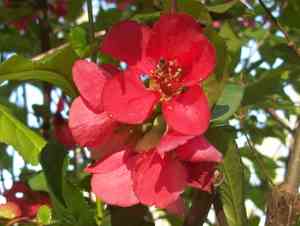
Japanese flowering quince (Chaenomeles japonica)
Also known as: Maule's quince
The Japanese flowering quince (Chaenomeles japonica) is a low-maintenance shrub admired for its striking spring blossoms and small, apple-like fruit. While the raw fruit is quite tart and firm, making it difficult to consume as is, it becomes a delightful ingredient when cooked. It's commonly transformed into jams, jellies, and marmalades. This plant is also favored for bonsai cultivation.
In This Article
Attributes of Japanese flowering quince
Lifespan
Perennial
Plant Type
Shrub
Plant Height
60 cm to 1 m
Spread
90 cm to 2 m
Leaf Color
Green
Flower Size
2.5 cm to 4 cm
Flower Color
Red Orange White Pink
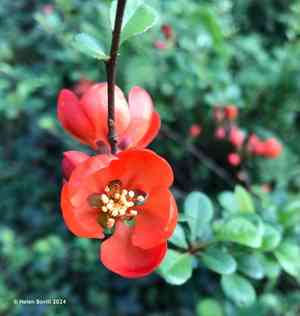
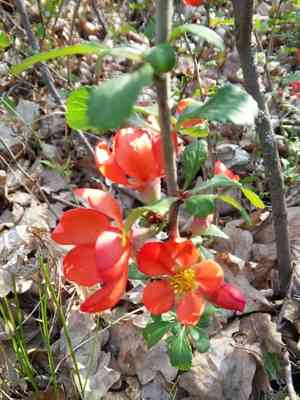
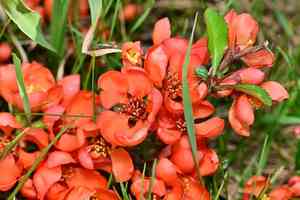
Images of Japanese flowering quince
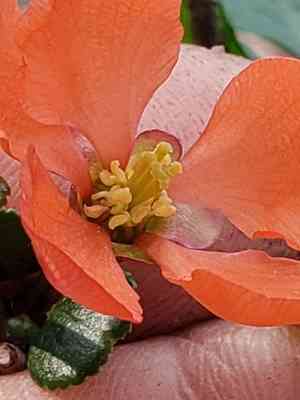
Quickly Identify Japanese flowering quince
1
Thorny branches form a dense thicket.
2
Vibrant cup-shaped flowers attract pollinators.
3
Small apple-like fruits with greenish-yellow skin.
4
Dark green, glossy leaves with serrated margins.
5
Sturdy, gnarled stems with small thorns.
Scientific Classification of Japanese flowering quince
Phylum
Vascular plants
Class
Dicotyledons
Order
Rosales
Family
Rose
Genus
Flowering quinces
Species
Japanese flowering quince
Planting and Growing of Japanese flowering quince
Care Difficulty
Easy
Watering Schedule
Every 4 days
Sunlight Requirements
Full sun
Sunshine Duration
6-10 hours
Ideal Temperature
60-75℉
Soil Type
Potting Mix, Peat Mix
Soil pH
6.5-7.5
Fertilizer Type
Balanced
Pruning Season
Spring, Summer
Pruning Area
Branches, Leaves
Pruning Frequency
2 times a year
Repotting Season
Spring
Pot Type
Plastic, Ceramic
 How to Water Japanese flowering quince?
For Chaenomeles japonica, the watering amount should be approximately 500 milliliters per session. The key is to ensure the soil is evenly moist but not waterlogged, allowing thorough drainage. The amount can slightly vary depending on the ambient temperature and soil type.
More About Watering Techniques→
What are the symptoms of an underwatered Japanese flowering quince?
›
What should I do if my Japanese flowering quince is not getting enough water?
›
What are the symptoms of an overwatered Japanese flowering quince?
›
How to save an overwatered Japanese flowering quince?
›
 What Are the Sunlight Requirements for Japanese flowering quince?
Chaenomeles japonica prefers full to partial sun, gaining at least 4 to 6 hours of sunlight daily. Ensuring such light conditions promotes not only healthy growth but also a richer blossom display, vital for ornamental appeal.
More About Sunlight Requirements Techniques→
How much sunlight does Chaenomeles japonica need?
›
What happens if Chaenomeles japonica doesn't get enough light?
›
What are the signs of too much sunlight for Chaenomeles japonica?
›
 What Is the Ideal Temperature Range for Japanese flowering quince?
The ideal temperature range for Chaenomeles japonica is between 60°F to 75°F. These conditions support optimal growth and development, ensuring healthy foliage and vibrant flowers. Maintaining this range helps in promoting energy-efficient photosynthesis and minimizes stress on the plant, thus yielding the best results.
 What Soil is Best for Japanese flowering quince?
Chaenomeles japonica thrives best in well-drained soil. This characteristic prevents root rot caused by waterlogging, ensuring the plant's roots receive enough oxygen for healthy growth. The plant benefits from soil that has a good amount of organic matter. This enriches the soil with nutrients, improving its fertility and enhancing the fruit and flower production. Although well-drained, the soil should retain sufficient moisture to support the plant's growth. This balance prevents the plant from experiencing drought stress, promoting vibrant blossoms.
More About Soil→
 How to Fertilize Japanese flowering quince?
For Chaenomeles japonica, when using liquid fertilizer, a concentration of half-strength is recommended to avoid root burn. Apply approximately 500 mL of diluted solution per plant during active growth periods each time you fertilize.
More About Fertilizing Techniques→
 How to Prune Japanese flowering quince?
First, identify and remove any dead, damaged, or diseased branches. Cutting them back to the point of healthy growth will prevent the spread of disease. Look for crowded sections of the plant and thin them out by cutting back to a main branch. This improves air circulation and light penetration. Gently trim the plant to maintain its desired shape, whether you prefer a rounded bush or a more open, natural form. Always make cuts above a bud facing outward. Prune after flowering in late spring or early summer to promote beautiful blooms the following year. Avoid heavy pruning in winter as this can reduce flower production.
More About Pruning Techniques→
 How to Propagate Japanese flowering quince plant?
1
Collect mature seeds from Chaenomeles japonica and remove the protective outer coating. Soak the seeds in water for 24 hours to soften the seed coat, aiding in germination when planted.
2
Select healthy stems and use clean, sharp pruning shears to take 4-6 inch long cuttings. Remove the lower leaves and dip the cut end in rooting hormone to enhance root development.
3
For division propagation, gently dig up the plant and separate the root ball into sections, ensuring each section has sufficient roots. Replant immediately to prevent drying out.
 How to Repot Japanese flowering quince plant?
1
Repotting Chaenomeles japonica is necessary when the roots start to outgrow the pot or the soil drains too fast. Look for signs such as roots poking out of drainage holes or the plant becoming top-heavy. These indicators suggest the need for more space and nutrient replenishment.
2
Select a pot that is slightly larger than the current one, ideally 2-3 inches wider in diameter. Opt for a pot with ample drainage holes to prevent waterlogging. A clay pot works well as it allows excess moisture to evaporate, preventing root rot and maintaining a healthy growing environment.
3
Use a well-draining soil mix, such as a blend of peat moss, perlite, and coarse sand. This combination ensures that roots receive enough oxygen and moisture without retaining excess water, which is key to preventing root rot and promoting healthy growth.



