Partridge pea(Chamaecrista fasciculata)

Partridge pea (Chamaecrista fasciculata)

Also known as: Sensitive plant, Golden cassia, Locust weed, Sleeping plant

The Partridge Pea (Chamaecrista fasciculata), also called Sleepingplant and Sensitive Plant, is notable for its delicate yellow flowers that close when touched. This annual legume is beneficial for several reasons:

1. **Wildlife Support**: It provides excellent cover for wildlife and serves as a food source for deer and various pollinators, including bees and butterflies.

2. **Soil Health**: As a nitrogen-fixing plant, it enhances soil fertility by converting atmospheric nitrogen into a usable form for other plants.

3. **Erosion Prevention**: Its robust root system helps stabilize soil, effectively preventing erosion.

4. **Inedibility**: While useful in many ways, it is not suitable for consumption by humans or domestic animals.

In addition to these practical uses, the Partridge Pea is appreciated for its resilience, thriving in poor, sandy soils and contributing to the health and stability of various ecosystems.

Attributes of Partridge pea

Lifespan
Annual
Plant Type
Herb
Plant Height
50 cm
Spread
30 cm to 90 cm
Leaf Color
Green Blue
Flower Size
2.5 cm
Flower Color
Yellow Red Burgundy Gold

PlantJoy - Identify plants with a snap

Identify and diagnose plants, get toxicity alerts, and explore safety guides for all types of fungi.

Try for Free

Images of Partridge pea

Partridge pea(Chamaecrista fasciculata)

Quickly Identify Partridge pea

1
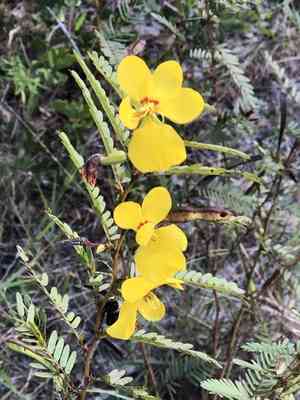
Distinctive feathery green leaves that fold in response to touch and darkness.
2
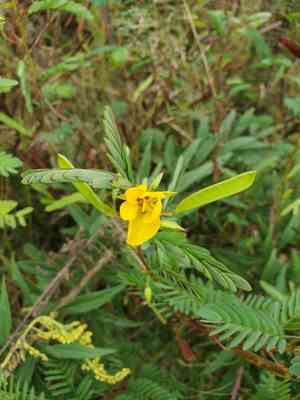
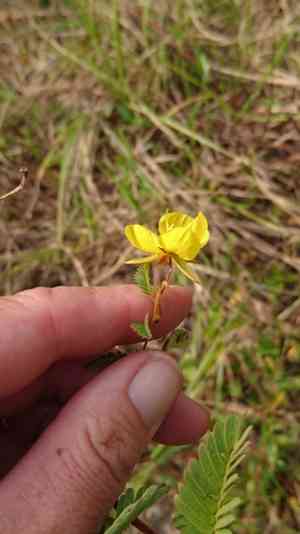
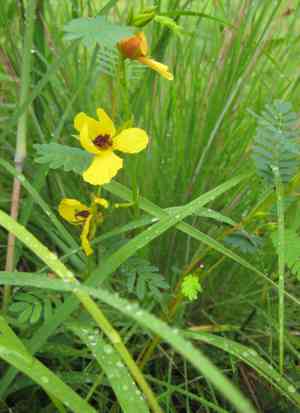
Vibrant yellow flowers with reddish-purple spots and red stamens, in clusters of 2-6.
3
Slender pods, 2 1/2 inches (6.35 cm) long, turning from green to brown and dehiscing.
4
Mature height up to 3 feet (91 cm), sprawling habit, critical for soil enrichment.
5
Linear-oblong leaflets with petioles containing nectaries, folding in response to stimuli.

Scientific Classification of Partridge pea

Phylum
Vascular plants
Class
Dicotyledons
Order
Fabales
Family
Legume
Genus
Chamaecrista
Species
Partridge pea

Planting and Growing of Partridge pea

Care Difficulty
Easy
Watering Schedule
Every 3 days
Sunlight Requirements
Full sun
Sunshine Duration
4-8 hours
Ideal Temperature
70-85℉
Soil Type
Potting Mix, Peat Mix
Soil pH
6.5-7.5
Fertilizer Type
Balanced
Pruning Season
Spring, Summer
Pruning Area
Branches, Leaves
Pruning Frequency
2 times a year
Repotting Season
Spring
Pot Type
Plastic, Ceramic

water icon How to Water Partridge pea?

For Chamaecrista fasciculata, watering should mimic its natural habitat, ensuring the soil remains moist but never waterlogged. Each watering session should aim for approximately 250 ml, sufficient to moisten the soil to a depth of about two inches, ensuring even distribution without pooling.
What are the symptoms of an underwatered Partridge pea?
What should I do if my Partridge pea is not getting enough water?
What are the symptoms of an overwatered Partridge pea?
How to save an overwatered Partridge pea?

sunlight icon What Are the Sunlight Requirements for Partridge pea?

Sunlight Requirements: Full sun
Duration of light: 6-8 hours
The ideal light range for Chamaecrista fasciculata is full sun. This ensures the plant achieves optimal growth, vibrant blooms, and sturdy foliage, benefiting its overall vigor and reproduction capabilities.
What is the best lighting condition for Chamaecrista fasciculata?
What solutions help achieve ideal light for Chamaecrista fasciculata?
What are the benefits when Chamaecrista fasciculata gets ideal light?

temperature icon What Is the Ideal Temperature Range for Partridge pea?

Ideal Temperature: 70 ~ 85℉
Chamaecrista fasciculata thrives best in warm environments with temperatures ideally between 70°F and 85°F. This range allows for optimum photosynthesis and metabolic activities.

soil icon What Soil is Best for Partridge pea?

Soil type: Sandy soil, Loam, Sandy loam
Soil PH: 6.5 ~ 7.5
Chamaecrista fasciculata thrives in well-draining soil, which prevents water from accumulating around the roots, reducing the risk of root rot and promoting healthy root development. This plant prefers soils with moderate nutrient levels, as overly rich soils can lead to excessive foliage growth with fewer flowers. Balanced nutrients support robust flowering and optimal plant health. Maintaining a slightly acidic to neutral pH (6.5 to 7.5) ensures proper nutrient uptake and prevents nutrient deficiency, which can affect plant vitality and flowering ability.

fertilize icon How to Fertilize Partridge pea?

Fertilizer type: Balanced
For Chamaecrista fasciculata, a balanced approach to applying fertilizer is crucial. Aim to use approximately half the recommended dose on the package of liquid fertilizer per application. This is essential to prevent over-fertilization, which can damage the plant's roots. A gentle approach is favorable since less is sometimes more when it comes to fertilizers, allowing the plant to absorb nutrients over time. Always ensure the soil is moist when applying fertilizers to aid absorption.

prune icon How to Prune Partridge pea?

Pruning Time: Spring, Summer
Begin by inspecting the Chamaecrista fasciculata for any spent flowers or pods. Clip these off to encourage more blooms and prevent the plant from diverting energy into seed production. Focus on maintaining the natural shape of the plant. Trim back any overgrown or wayward stems, ensuring a balanced look. This will help the plant maintain its aesthetic appeal and allow better air circulation. Identify any weak or spindly stems that aren't contributing to the plant's robustness. Cutting these will direct energy towards stronger, healthier growth, resulting in a more vigorous plant.

propagate icon How to Propagate Partridge pea plant?

Propagate Time: Early spring,Summer
1
Begin by sowing the seeds in a seed tray filled with sterilized potting soil. Make sure seeds are spread evenly with a light covering of soil, as they need light to germinate.
2
Water the seeds gently using a fine spray to ensure the soil is moist but not waterlogged. Consistent moisture is crucial during the germination phase to prevent drying out.
3
Place the seed tray in a warm location with plenty of indirect sunlight. Ideal temperatures for germination range from 20 to 25°C (68 to 77°F).
More About Propagating Techniques

repot icon How to Repot Partridge pea plant?

Repotting frequency: Once every two years
1
Begin considering repotting Chamaecrista fasciculata when the plant shows signs of outgrowing its current pot. If you notice roots growing out of the drainage holes or the plant's growth has gradually slowed, it's likely time to give it a new home. Look for these signals around spring or early summer for the best results.
2
Select a pot that is one to two inches wider than the current one to give the roots room to expand. A pot with adequate drainage holes is essential to prevent waterlogging, which could harm the plant. Using a slightly larger pot reduces root congestion and allows for healthier growth.
3
Choose well-draining sandy soil to allow adequate water flow and air circulation to the roots. This type of soil mimics the plant's natural environment, ensuring that moisture does not stagnate and lead to root rot. Sandy soil also ensures the roots can extend and anchor the plant securely.

PlantJoy - Identify plants with a snap

Find the best spots for them to optimize their health, simply using your phone.

Try for Free

Toxicity of Partridge pea

Is Partridge pea toxic to humans?

Partridge pea can be harmful if consumed in significant amounts. Its stems, leaves, flowers, and seeds harbor a potentially dangerous chemical. Ingestion of this toxin may lead to abdominal discomfort accompanied by vomiting, nausea, and diarrhea. Additionally, the leaves are known to contain a cathartic substance that has the potential to impair both heart and respiratory functions. Nevertheless, considerable quantities of the plant, whether cooked or raw, are required to trigger these intense symptoms. Children are particularly vulnerable to accidental poisoning incidents. The tiny seed pods resemble peas and lack any bitter or acidic flavor.

Identify toxic plants for your safety

Learn which plants are harmful to you and your pets, and make informed choices for a safer home!

Try for Free
WARNING
The judgment on toxicity and danger is for reference only. We DO NOT GUARANTEE any accuracy of such judgment. Therefore, you SHALL NOT rely on such judgment. It is IMPORTANT TO SEEK PROFESSIONAL ADVICE in advance when necessary.
More About Toxic Techniques