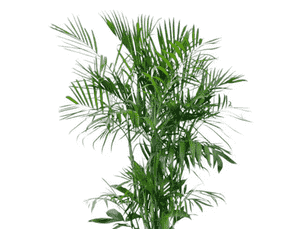
Bamboo palm (Chamaedorea seifrizii)
Also known as: Seifriz's chamaedorea
Bamboo palms (Chamaedorea seifrizii) are evergreen palms that can reach up to 2 meters in height. They feature slender, bamboo-like stems and grow in thick clusters. These palms flourish in indirect light to shaded areas, making them ideal for indoor environments. Be cautious when handling the red fruit they produce, as it can irritate the skin.
In This Article
Attributes of Bamboo palm
Lifespan
Perennial
Plant Type
Tree
Plant Height
2.5 m
Spread
60 cm to 90 cm
Leaf Color
Green
Flower Size
3 mm to 4 mm
Flower Color
Yellow
Images of Bamboo palm
Quickly Identify Bamboo palm
1
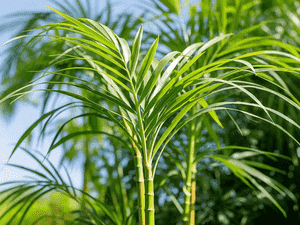
Even pinnate compound leaves with uniquely fused terminal pinnae.
2
Golden-yellow interfoliar flowers with papery, branched bracts.
3
Round, bluish-black fruits with potential skin irritation upon contact.
4
Slender, cane-like stems with minimal branching in tight clusters.
5
Smooth, rich green leaves with lanceolate pinnae and prominent midrib.
Scientific Classification of Bamboo palm
Phylum
Vascular plants
Class
Monocotyledons
Order
Arecales
Family
Palm
Genus
Chamaedorea
Species
Bamboo palm
Planting and Growing of Bamboo palm
Care Difficulty
Easy
Watering Schedule
Every 4 days
Sunlight Requirements
Partial sun
Sunshine Duration
6-12 hours
Ideal Temperature
65-75℉
Soil Type
Potting Mix, Peat Mix
Soil pH
6.5-7.5
Fertilizer Type
Balanced
Pruning Season
Spring, Summer
Pruning Area
Branches, Leaves
Pruning Frequency
2 times a year
Repotting Season
Spring
Pot Type
Plastic, Ceramic
 How to Water Bamboo palm?
For Chamaedorea seifrizii, water deeply enough so the soil is thoroughly moistened but not waterlogged. Ensure that excess water drains out from the bottom of the pot. The general rule is to water until you see some drainage from the bottom.
More About Watering Techniques→
What are the symptoms of an underwatered Bamboo palm?
›
What should I do if my Bamboo palm is not getting enough water?
›
What are the symptoms of an overwatered Bamboo palm?
›
How to save an overwatered Bamboo palm?
›
 What Are the Sunlight Requirements for Bamboo palm?
Chamaedorea seifrizii thrives best in partial shade to partial sun environments. This ideal light range supports strong, healthy growth and maintains the plant’s lush, green appearance with minimal risk of damage.
More About Sunlight Requirements Techniques→
How much light does Chamaedorea seifrizii need?
›
What solutions can help achieve ideal light conditions?
›
What benefits does Chamaedorea seifrizii gain from ideal light?
›
 What Is the Ideal Temperature Range for Bamboo palm?
Chamaedorea seifrizii, commonly known as the bamboo palm, thrives best within an ideal temperature range of 65°F to 75°F. This range provides the most suitable conditions for photosynthesis and overall growth. Temperatures within this band mimic the plant's native tropical environment, promoting optimal metabolic activity and energy efficiency.
 What Soil is Best for Bamboo palm?
Chamaedorea seifrizii thrives in soil that offers excellent drainage. A well-drained soil prevents waterlogging, which can lead to root rot. This condition is essential for the healthy growth of the plant as it mimics its natural habitat. While good drainage is important, the soil should also retain some moisture. A soil mix with organic matter helps retain necessary moisture while still allowing excess water to drain. This balance ensures the plant stays hydrated without the risk of waterlogging. Rich in nutrients, the soil should provide essential elements for the plant’s growth. A soil mix enriched with compost or well-rotted manure will supply the Chamaedorea seifrizii with the necessary nutrients for robust growth and lush foliage.
More About Soil→
 How to Fertilize Bamboo palm?
Chamaedorea seifrizii, also known as the bamboo palm, benefits from a balanced fertilization approach. When using liquid fertilizers, apply a diluted solution at a rate of half the recommended strength to avoid nutrient burn. For slow-release fertilizers, follow the manufacturer's instructions, typically around 3 to 5 grams per plant administered every 4 months.
More About Fertilizing Techniques→
 How to Prune Bamboo palm?
Scan the plant for yellow or brown fronds, as these indicate older or damaged growth. Focus on these for pruning, as removing them can improve the plant's appearance. Position your pruning shears just above the base of the browning frond, ensuring a clean cut towards the stem. This precise cut encourages new growth. After pruning, keep a lookout for any changes in the plant’s health. Proper pruning should result in a more vigorous and healthy Chamaedorea seifrizii.
More About Pruning Techniques→
 How to Propagate Bamboo palm plant?
1
Soak the seeds in water for 24 hours to help soften the outer shell and improve germination rates. This will facilitate faster and more successful sprouting when the seeds are planted.
2
Place seeds in moist, well-draining compost in seed trays. Ensure they are lightly covered with soil and keep the trays in a warm, shaded location, maintaining consistent moisture but avoiding waterlogging.
3
For division propagation, carefully dig out the plant and separate root clumps using a sharp knife, ensuring each piece has both roots and shoots to ensure continued growth.
 How to Repot Bamboo palm plant?
1
Chamaedorea seifrizii shows it needs repotting when you notice roots coming out of the drainage holes or when soil compaction becomes obvious. Early spring is ideal for repotting as the plant enters its active growth phase, making it better equipped to handle transplant shock.
2
Select a pot that's one size larger than the current one. It should have ample drainage holes to prevent waterlogging, which can harm the roots. Choosing a slightly larger pot provides your plant more room to grow and encourages healthier root development without drowning it.
3
Opt for a well-draining potting mix, combining peat moss, perlite, and pine bark. This blend retains sufficient moisture while allowing excess to drain away, preventing root rot and providing the roots with necessary aeration.



