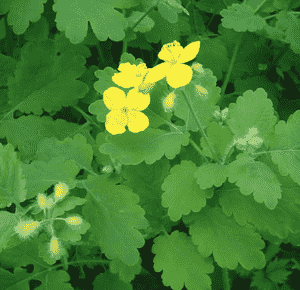
Greater celandine(Chelidonium majus)

Greater celandine (Chelidonium majus)

Also known as: Chelidonium, Devil’s milk

Greater Celandine (*Chelidonium majus*) is a plant characterized by its bright golden-yellow flowers and toxic yellow latex. This species has been cultivated since the first century, during the time of Pliny the Elder. Belonging to the poppy family (Papaveraceae), Greater Celandine is noted for its vibrant blooms and the caution required due to its poisonous latex.

Attributes of Greater celandine

Lifespan
Perennial, Biennial
Plant Type
Herb
Plant Height
30 cm to 1 m
Spread
30 cm to 40 cm
Leaf Color
Green Blue
Flower Size
1.5 cm to 2.5 cm
Flower Color
Yellow

PlantJoy - Identify plants with a snap

Identify and diagnose plants, get toxicity alerts, and explore safety guides for all types of fungi.

Try for Free

Images of Greater celandine

Greater celandine(Chelidonium majus)

Quickly Identify Greater celandine

1
Yellow 1/2 to 3/4 inch (1.3 to 1.9 cm) flowers blooming May-June.
2
Distinctive cylindrical 2 inch (5 cm) green-brown fruit capsules that split open.
3
Prominent pinnately-divided leaves with lobed leaflets and noticeable veins.
4
Brittle stem exuding yellow-orange sap, waxy texture with sparse hairs.
5
Adaptable herbaceous perennial thriving in shaded areas with vivid yellow flowers.

Scientific Classification of Greater celandine

Phylum
Vascular plants
Class
Dicotyledons
Order
Ranunculales
Family
Poppy
Genus
Celandines
Species
Greater celandine

Planting and Growing of Greater celandine

Care Difficulty
Easy
Watering Schedule
Every 3 days
Sunlight Requirements
Partial sun
Sunshine Duration
6-10 hours
Ideal Temperature
60-75℉
Soil Type
Potting Mix, Peat Mix
Soil pH
6.5-7.5
Fertilizer Type
Balanced
Pruning Season
Spring, Summer
Pruning Area
Branches, Leaves
Pruning Frequency
2 times a year
Repotting Season
Spring
Pot Type
Plastic, Ceramic

water icon How to Water Greater celandine?

When watering Chelidonium majus, ensure the soil is moistened consistently without becoming overly saturated. The optimal amount would be around 250ml per watering session, aiming for even distribution across the soil. Maintain slight soil moisture between waterings.
What are the symptoms of an underwatered Greater celandine?
What should I do if my Greater celandine is not getting enough water?
What are the symptoms of an overwatered Greater celandine?
How to save an overwatered Greater celandine?
More About Watering Techniques

sunlight icon What Are the Sunlight Requirements for Greater celandine?

Sunlight Requirements: Partial sun, Full sun
Duration of light: 4 to 6 hours daily
Partial sun or dappled light is ideal for Chelidonium majus, supporting healthy foliage and budding. Good lighting conditions ensure vibrant leaf pigmentation and robust structure.
What is the best position for Chelidonium majus?
How to achieve the ideal lighting for Chelidonium majus?
What benefits does ideal light have for Chelidonium majus?
More About Sunlight Requirements Techniques

temperature icon What Is the Ideal Temperature Range for Greater celandine?

Ideal Temperature: 60 ~ 75℉
For optimal growth, Chelidonium majus thrives best within a temperature range of 60°F to 75°F. This range ensures that the plant's physiological processes are functioning properly, leading to healthy development and flourishing foliage.

soil icon What Soil is Best for Greater celandine?

Soil type: Loam, Sandy loam, Calcareous soil
Soil PH: 6.5 ~ 7.5
Chelidonium majus thrives in well-drained soil, preventing water from standing around the roots, reducing the risk of root rot, and promoting healthy growth. This plant benefits from nutrient-rich soil that supports lush foliar growth and robust flowering, achieved by adding organic compost. A slightly alkaline soil pH supports Chelidonium majus's ability to absorb essential nutrients, leading to vibrant plant health and resilience. More About Soil

fertilize icon How to Fertilize Greater celandine?

Fertilizer type: Balanced
For Chelidonium majus, moderate fertilization is key. Use liquid fertilizer at half strength to avoid overwhelming the plant, applying around 15ml per plant. Balanced nutrition ensures optimal health and prevents both deficiency and toxicity. More About Fertilizing Techniques

prune icon How to Prune Greater celandine?

Pruning Time: Spring, Summer, Autumn
To help Chelidonium majus maintain a bushy and healthy shape, focus on cutting back overgrown areas by up to a third of their size. This not only improves the plant's appearance but also stimulates new growth closer to the base. When pruning, be cautious of the yellow sap that Chelidonium majus exudes, as it can be an irritant to the skin. Wearing gloves is advised to avoid any allergic reactions or skin irritation. More About Pruning Techniques

propagate icon How to Propagate Greater celandine plant?

Propagate Time: Spring, Autumn
1
Collect fresh seeds from C. majus pods once they have matured and dried on the plant. Clean the seeds and allow them to dry for a day to prevent mold growth.
2
Fill a seed tray with moistened potting mix. Evenly distribute Chelidonium majus seeds on the surface and lightly cover them with a thin layer of the mix.
3
Place the seed tray in a location that receives indirect sunlight. Maintain a constant temperature of around 15-20°C to facilitate germination over several weeks.
More About Propagating Techniques

repot icon How to Repot Greater celandine plant?

Repotting frequency: Every two years
1
Chelidonium majus prefers to be repotted when you notice the roots are circling the bottom of the pot or poking out of the drainage holes. Another sign is when the soil dries out quicker than before. Spring or autumn is the best time for repotting as it allows the plant to recover quickly without the stress of extreme temperatures.
2
Selecting an appropriate pot for Chelidonium majus is crucial. Choose a pot that is one size larger than the current one, ensuring it has ample drainage holes. A terracotta pot is often a good choice as it allows air circulation, preventing waterlogging and promoting healthier root systems.
3
Chelidonium majus thrives in a well-draining potting mix, with a blend of peat, perlite, and sand. This soil type prevents water retention, reducing the risk of root rot. The mix provides essential aeration while retaining enough moisture to sustain the plant between waterings.

PlantJoy - Identify plants with a snap

Find the best spots for them to optimize their health, simply using your phone.

Try for Free

Toxicity of Greater celandine

Is Greater celandine toxic to humans?

Certain evidence suggests that the internal consumption of greater celandine could be harmful to the liver and lead to negative side effects. Ingesting its leaves, roots, flowers, or stems might result in nausea, dizziness, fatigue, and fever. There have also been several incidents correlating the consumption of greater celandine with acute hepatitis. Research is limited regarding the safety of prolonged or regular use of this plant, its proper dosage, and potential interactions with other medications.

Is Greater celandine toxic to cat?

Greater celandine poses a significant toxicity risk to cats. Any part of this plant, when ingested by these animals, can lead to poisoning due to the presence of toxic compounds throughout. Cats may inadvertently consume greater celandine, which can trigger symptoms of physical distress or illness. While the specific toxic components in greater celandine are not identified, the potential danger it represents must be acknowledged. In any case of a cat consuming greater celandine, seeking immediate veterinary attention is crucial to effectively manage and treat the consequences of the poisoning.

Is Greater celandine toxic to dog?

Greater celandine is a plant known to pose a considerable threat to dogs due to its toxic nature. Any part of this plant can cause poisoning in dogs if ingested, as all its components are toxic. The most frequent way for dogs to encounter greater celandine is by accidentally eating it, which may occur during unsupervised outdoor activities or when fragments of the plant are introduced into their surroundings. Upon consuming greater celandine, dogs may display a range of symptoms suggestive of poisoning. These symptoms can vary from mild to severe and necessitate prompt attention. If you suspect your dog has consumed greater celandine, it is essential to seek veterinary treatment immediately to ensure the best possible outcome for your beloved pet.

Identify toxic plants for your safety

Learn which plants are harmful to you and your pets, and make informed choices for a safer home!

Try for Free
WARNING
The judgment on toxicity and danger is for reference only. We DO NOT GUARANTEE any accuracy of such judgment. Therefore, you SHALL NOT rely on such judgment. It is IMPORTANT TO SEEK PROFESSIONAL ADVICE in advance when necessary.
More About Toxic Techniques

