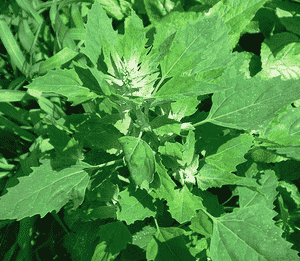
Lambsquarters(Chenopodium album)

Lambsquarters (Chenopodium album)

Also known as: Fat-Hen, Wild Spinach , Baconweed, Bacon weed, Fat hen

Lambsquarters, also known by names such as pigweed, goosefoot, and fat-hen, often pops up unexpectedly and is frequently regarded as an annoying weed. Despite this, its leaves and young shoots are edible and can be cooked in the same way as spinach. Rich in essential nutrients like vitamins A and C, as well as calcium and iron, lambsquarters can be a nutritious addition to salads, soups, or sautéed dishes.

Attributes of Lambsquarters

Lifespan
Annual
Plant Type
Herb
Plant Height
10 cm to 1.5 m
Spread
20 cm
Leaf Color
Green White Gray Silver
Flower Size
2.5 cm
Flower Color
Green Yellow Pink

PlantJoy - Identify plants with a snap

Identify and diagnose plants, get toxicity alerts, and explore safety guides for all types of fungi.

Try for Free

Images of Lambsquarters

Lambsquarters(Chenopodium album)

Quickly Identify Lambsquarters

1
Diamond-shaped leaves with white mealy coating on underside, 2-4 inches (5-10 cm) long.
2
Erect growth up to 3 feet (90 cm) with grooved stem occasionally reddish.
3
Tiny flowers lacking petals, green clusters with 5 stamens and yellow anthers.
4
Fruit with small spherical seeds, colors range from black to green and brown.
5
Stem angular, smooth texture with varying colors like light green, red, purple.

Scientific Classification of Lambsquarters

Phylum
Vascular plants
Class
Dicotyledons
Order
Pinks, cacti, and allies
Family
Amaranth
Genus
Goosefoots
Species
Lambsquarters

Planting and Growing of Lambsquarters

Care Difficulty
Easy
Watering Schedule
Every 2 days
Sunlight Requirements
Full sun
Sunshine Duration
4-6 hours
Ideal Temperature
60-75℉
Soil Type
Potting Mix, Peat Mix
Soil pH
6.5-7.5
Fertilizer Type
Balanced
Pruning Season
Spring, Summer
Pruning Area
Branches, Leaves
Pruning Frequency
2 times a year
Repotting Season
Spring
Pot Type
Plastic, Ceramic

water icon How to Water Lambsquarters?

Chenopodium album or Goosefoot thrives with moderate watering. Aim to water with about 200 milliliters each time, ensuring the soil is moist but not soggy. Water until you see slight runoff from the drainage holes, indicating that the water reached the roots, but avoid waterlogging.
What are the symptoms of an underwatered Lambsquarters?
What should I do if my Lambsquarters is not getting enough water?
What are the symptoms of an overwatered Lambsquarters?
How to save an overwatered Lambsquarters?

sunlight icon What Are the Sunlight Requirements for Lambsquarters?

Sunlight Requirements: Full sun, Partial sun
Duration of light: 6 to 8 hours daily
Optimal light conditions for Chenopodium album include full sun to partial sun, receiving 6 to 8 hours of sunlight daily. Sufficient light leads to enhanced photosynthesis, yielding vigorous growth and vibrant foliage.
What is the best lighting condition for growth?
How can you ensure Chenopodium album gets ideal sunlight?
What benefits are observed from ideal sunlight conditions?

temperature icon What Is the Ideal Temperature Range for Lambsquarters?

Ideal Temperature: 60 ~ 75℉
The ideal temperature range for Chenopodium album is between 60°F and 75°F. This range provides the optimal conditions for growth, ensuring the plant has sufficient warmth to support its photosynthesis and nutrient uptake processes. It's important to maintain these temperatures consistently to promote strong and healthy development.

soil icon What Soil is Best for Lambsquarters?

Soil type: Sandy soil, Loam, Calcareous soil
Soil PH: 6.5 ~ 7.5
Chenopodium album thrives in nutrient-rich soils, which provide essential minerals that fuel robust growth and vibrant foliage. Such soils are typically well-fertilized, ensuring that the plant receives adequate nitrogen and other essential nutrients. Well-draining soils prevent waterlogging, a condition detrimental to Chenopodium album's roots. Proper drainage promotes healthy root development, reducing the risk of rot and enhancing the plant's ability to uptake nutrients effectively. A balance in moisture retention is crucial. While the soil must drain efficiently, it should also retain enough moisture to keep the plant hydrated. This balance supports steady growth and helps the plant withstand periods of dry weather.

fertilize icon How to Fertilize Lambsquarters?

Fertilizer type: Balanced
For Chenopodium album, appropriate fertilization is key to healthy growth. Typically, apply liquid fertilizer at a concentration of 1 to 2 teaspoons per gallon of water. Adjust based on plant response and environmental conditions.

prune icon How to Prune Lambsquarters?

Pruning Time: Spring, Summer, Autumn
Begin by identifying any dead, damaged, or diseased leaves and branches. Remove these parts carefully to encourage healthy growth. This process helps maintain the plant’s vigor and overall aesthetic appeal. Chenopodium album can grow rapidly. Regularly trim the tops of the plant to maintain a manageable height. Also, cut back branches that encroach on neighboring plants to prevent overcrowding. To promote a bushier plant, focus on pinching back new growth. This encourages the plant to develop multiple shoots rather than a single, leggy stem, enhancing its fullness and improving its appearance.

propagate icon How to Propagate Lambsquarters plant?

Propagate Time: Spring, Late spring, Early spring
1
Fill the seed trays with potting mix and lightly press the Chenopodium album seeds onto the surface. Do not cover them with soil as they require light for germination. Water gently to keep the soil moist.
2
Place the seed trays in a location with plenty of light, ideally using grow lights if natural light is limited. Maintain a warm temperature of around 15-20°C (59-68°F) for optimal germination rates.
3
Once seedlings are large enough to handle and have developed at least two true leaves, they can be carefully transplanted into larger pots or directly into the garden. Ensure that they are planted at the same depth they were in the trays.

repot icon How to Repot Lambsquarters plant?

Repotting frequency: Every 2-3 years
1
There are clear signals indicating it's time to repot Chenopodium album. If roots are growing out of the drainage holes or the plant looks stressed and not thriving, it's time for a new pot. Spring and summer are the ideal seasons as the plant is in its active growth phase, ensuring it recovers well from the process.
2
Select a pot that is 1-2 inches larger in diameter than the current one. A pot too large may retain excess moisture, which can cause root rot. A clay pot is ideal, as it allows the soil to breathe, offers good drainage, and helps prevent overwatering—a common issue with Chenopodium album.
3
Opt for a well-draining potting mix rich in organic matter. This type of soil ensures adequate drainage while retaining sufficient moisture to nourish the Chenopodium album without waterlogging it. A suitable soil mix is critical to support growth and prevent root diseases.

PlantJoy - Identify plants with a snap

Find the best spots for them to optimize their health, simply using your phone.

Try for Free

Toxicity of Lambsquarters

Is Lambsquarters toxic to humans?

The unprocessed leaves and stems of lambsquarters are rich in oxalic acid, which can lead to negative health effects if consumed in significant amounts. Poisoning due to oxalic acid typically results in mild to moderate health complications, with symptoms that may include abdominal pain, nausea, and a burning feeling in the mouth and throat. This is particularly likely to happen from inadequate preparation of the plant or the ingestion of large amounts.

Is Lambsquarters toxic to cat?

Lambsquarters is harmful to cats, as every part of the plant—leaves, seeds, stems, and sap/juice—can be toxic if consumed. Cats might unknowingly eat lambsquarters, resulting in poisoning. Pet owners must be vigilant for any signs of distress or illness that could arise following such an event. If lambsquarters poisoning is suspected, it is crucial to promptly obtain professional care at a veterinary clinic to protect the well-being and health of the affected feline.

Is Lambsquarters toxic to dog?

Lambsquarters is regarded as toxic to dogs. Dogs may accidentally consume various parts of this plant, including leaves, seeds, stems, or sap/juice, which can result in poisoning. If a dog ingests lambsquarters, it may show symptoms such as gastrointestinal upset, lethargy, or potentially more severe clinical signs depending on the quantity consumed. It is crucial for dog owners to keep a close eye on their pets and to prevent them from accessing lambsquarters. Should ingestion be suspected, seeking immediate veterinary assistance is vital to safeguard the health and wellbeing of the affected dog.

Identify toxic plants for your safety

Learn which plants are harmful to you and your pets, and make informed choices for a safer home!

Try for Free
WARNING
The judgment on toxicity and danger is for reference only. We DO NOT GUARANTEE any accuracy of such judgment. Therefore, you SHALL NOT rely on such judgment. It is IMPORTANT TO SEEK PROFESSIONAL ADVICE in advance when necessary.

