Spotted wintergreen(Chimaphila maculata)

Spotted wintergreen (Chimaphila maculata)

Also known as: Rheumatism root, Spotted pipsissewa

Spotted wintergreen (Chimaphila maculata) is a low-growing, evergreen perennial reaching up to 30 cm in height. It thrives in shaded areas, ideal for planting beneath trees. This low-maintenance plant favors warm climates and acidic, well-drained soils rich in organic material. It produces fragrant, creamy white flowers from late spring to early summer.

Attributes of Spotted wintergreen

Lifespan
Perennial
Plant Type
Herb
Plant Height
15 cm to 20 cm
Spread
30 cm to 90 cm
Leaf Color
Green White
Flower Size
6 mm to 8 mm
Flower Color
White Pink

PlantJoy - Identify plants with a snap

Identify and diagnose plants, get toxicity alerts, and explore safety guides for all types of fungi.

Try for Free

Images of Spotted wintergreen

Spotted wintergreen(Chimaphila maculata)

Quickly Identify Spotted wintergreen

1
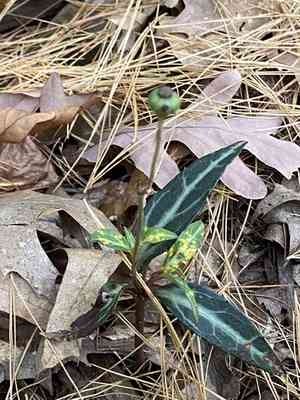
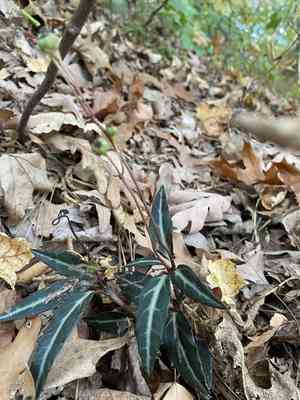
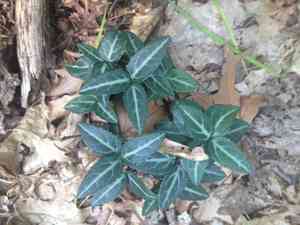
Distinctive white midrib stripe on dark green leaves.
2
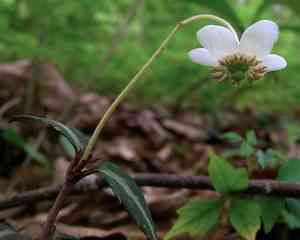
Fragrant, nodding flowers in white to pinkish hues.
3
Small, round dark brown capsules with textured surface.
4
Robust, reddish-brown stems with sparse branching.
5
Evergreen leaves with widely spaced teeth and whorl of three below flowers.

Scientific Classification of Spotted wintergreen

Phylum
Vascular plants
Class
Dicotyledons
Order
Ericales
Family
Heath
Genus
Prince's pines
Species
Spotted wintergreen

Planting and Growing of Spotted wintergreen

Care Difficulty
Hard
Watering Schedule
Every 2 days
Sunlight Requirements
Full shade
Sunshine Duration
4-6 hours
Ideal Temperature
60-75℉
Soil Type
Potting Mix, Peat Mix
Soil pH
4.5-6
Fertilizer Type
Balanced
Pruning Season
Spring, Summer
Pruning Area
Branches, Leaves
Pruning Frequency
2 times a year
Repotting Season
Spring
Pot Type
Plastic, Ceramic

water icon How to Water Spotted wintergreen?

When watering Chimaphila maculata, aim for approximately 250 ml each time. This plant thrives when the soil is evenly moist, but not waterlogged, mimicking the dappled conditions of its natural woodland habitats. Allow the top inch of soil to dry out before watering again, ensuring excess water drains well to prevent root rot.
What are the symptoms of an underwatered Spotted wintergreen?
What should I do if my Spotted wintergreen is not getting enough water?
What are the symptoms of an overwatered Spotted wintergreen?
How to save an overwatered Spotted wintergreen?

sunlight icon What Are the Sunlight Requirements for Spotted wintergreen?

Sunlight Requirements: Full shade, Partial sun
Duration of light: 2-4 hours a day
Partial sun to full shade is optimal; it supports balanced photosynthesis without overexfoliation. Ensures vibrant leaf patterns and healthy growth conditions.
Preferred Light Levels
Solution for Optimal Light
Benefits of Ideal Lighting

temperature icon What Is the Ideal Temperature Range for Spotted wintergreen?

Ideal Temperature: 60 ~ 75℉
Chimaphila maculata thrives best in a mild temperature range of 60 to 75°F. This range provides optimal conditions for photosynthesis and nutrient uptake, ensuring healthy growth and vibrant foliage. Avoiding temperatures outside this range helps in minimizing stress and promoting resilience in plant development.

soil icon What Soil is Best for Spotted wintergreen?

Soil type: Loam, Acidic soil, Sandy loam
Soil PH: 4.5 ~ 6
Chimaphila maculata thrives in acidic soils, usually with a pH range of 4.5 to 6.0. This environment allows for optimal nutrient uptake, enhancing its growth and resilience. Well-drained soils prevent waterlogging which can be detrimental to Chimaphila maculata. This requirement ensures root rot is avoided, promoting healthy root development. Abundant organic matter improves soil fertility, which is beneficial for Chimaphila maculata. It enhances soil structure and moisture retention, supporting vigorous growth.

fertilize icon How to Fertilize Spotted wintergreen?

Fertilizer type: Balanced
For Chimaphila maculata, apply liquid fertilizer at a quarter-strength concentration to avoid root burn, as this plant prefers low-nutrient soils. Use around 200 ml per application.

prune icon How to Prune Spotted wintergreen?

Pruning Time: Spring
Begin by examining the plant for any dead, diseased, or damaged stems. Removing these first ensures that the plant can focus its energy on healthy growth. Trim stems selectively to maintain the plant's natural mounding shape. This not only enhances its aesthetic appeal but also ensures that each part of the plant receives proper light and airflow.

propagate icon How to Propagate Spotted wintergreen plant?

Propagate Time: Spring, Early spring, Late spring
1
Chimaphila maculata seeds require a period of cold stratification to mimic winter conditions. Place the seeds in a moist medium and refrigerate them for several weeks before sowing them in seed trays.
2
Use sharp pruning shears to cut healthy stems with a few leaves. Dip the cut end in rooting hormone to stimulate root growth before planting it in a well-draining medium.
3
Once seedlings have developed strong roots and multiple leaves, carefully transplant them into individual pots or directly into the garden, ensuring they have enough space to grow.

repot icon How to Repot Spotted wintergreen plant?

Repotting frequency: Every 2-3 years
1
Keep an eye on those roots – if they’re spiraling around the pot or popping out of drainage holes, it’s repotting time! Also, diminished growth despite ample care signals a need for fresh soil and space to breathe.
2
Select a pot that's just 1-2 inches wider than the current one, ensuring it has good drainage holes. This prevents waterlogged soil, allowing roots to stay healthy while accommodating new growth comfortably.
3
Opt for an acidic, well-draining mix, mimicking its natural forest floor conditions. Such soil ensures adequate moisture retention while preventing roots from sitting in water, fostering healthy root development.

PlantJoy - Identify plants with a snap

Find the best spots for them to optimize their health, simply using your phone.

Try for Free

Toxicity of Spotted wintergreen

Is Spotted wintergreen toxic to humans?

Spotted wintergreen is considered moderately toxic and can induce a rash in individuals who are sensitive upon contact with its leaves. Furthermore, consuming a sufficient quantity of the leaves may result in potentially lethal consequences. The toxic agent responsible for this is a naphthoquinone known as chimaphilin, an irritating substance that brings about tissue sensitivity and inflammation. Naphthoquinones at lower doses can lead to inflammatory responses, while higher exposures may cause cell death, ultimately resulting in organ damage. It is essential to keep small children away from this particular plant.

Identify toxic plants for your safety

Learn which plants are harmful to you and your pets, and make informed choices for a safer home!

Try for Free
WARNING
The judgment on toxicity and danger is for reference only. We DO NOT GUARANTEE any accuracy of such judgment. Therefore, you SHALL NOT rely on such judgment. It is IMPORTANT TO SEEK PROFESSIONAL ADVICE in advance when necessary.