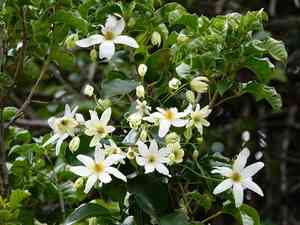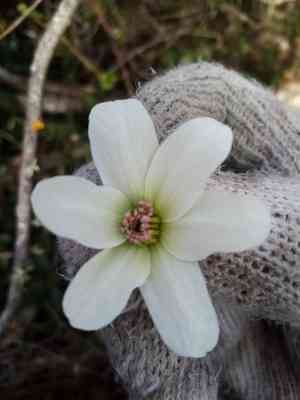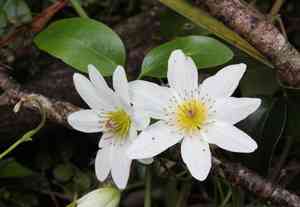
Puawhananga(Clematis paniculata)

Puawhananga (Clematis paniculata)

Also known as: White clematis

Clematis paniculata, commonly known as puawhananga, is one of seven native clematis species in New Zealand. It stands out as the most prevalent and can be found extensively across the country's forests.

Attributes of Puawhananga

Lifespan
Perennial
Plant Type
Vine
Plant Height
6 m to 9 m
Spread
1.2 m to 1.8 m
Leaf Color
Green
Flower Size
2.5 cm to 8 cm
Flower Color
White

PlantJoy - Identify plants with a snap

Identify and diagnose plants, get toxicity alerts, and explore safety guides for all types of fungi.

Try for Free

Images of Puawhananga

Puawhananga(Clematis paniculata)

Quickly Identify Puawhananga

1
Compound leaves with 3 leaflets and serrated margins.
2
1-inch (2.5 cm) star-shaped white flowers with prominent yellow stamens.
3
Silvery, plume-like seed heads in late summer to early fall.
4
Climbing habit with stems reaching up to 30 feet (9 meters) long.
5
Achene fruit attached to a feathery 'coma' for wind dispersal.

Scientific Classification of Puawhananga

Phylum
Vascular plants
Class
Dicotyledons
Order
Ranunculales
Family
Buttercup
Genus
Clematis
Species
Puawhananga

Planting and Growing of Puawhananga

Care Difficulty
Easy
Watering Schedule
Every 4 days
Sunlight Requirements
Full sun
Sunshine Duration
6-10 hours
Ideal Temperature
65-75℉
Soil Type
Potting Mix, Peat Mix
Soil pH
6.5-7.5
Fertilizer Type
Balanced
Pruning Season
Spring, Summer
Pruning Area
Branches, Leaves
Pruning Frequency
2 times a year
Repotting Season
Spring
Pot Type
Plastic, Ceramic

water icon How to Water Puawhananga?

For Clematis paniculata, it is essential to ensure that the soil remains evenly moist but not waterlogged. Use approximately 1000 ml of water per session, ensuring it penetrates deeply to reach the roots. Water until you see a slight run-off from the base of the plant.
What are the symptoms of an underwatered Puawhananga?
What should I do if my Puawhananga is not getting enough water?
What are the symptoms of an overwatered Puawhananga?
How to save an overwatered Puawhananga?

sunlight icon What Are the Sunlight Requirements for Puawhananga?

Sunlight Requirements: Full sun, Partial sun
Duration of light: 4 to 6 hours
Clematis paniculata prefers full to partial sun. Ideal conditions foster lush growth and abundant blooms, ensuring the plant's vitality and robust appearance throughout its growing season.
How much sunlight does Clematis paniculata need?
What should be done to achieve ideal sunlight for Clematis paniculata?
What benefits does Clematis paniculata derive from ideal sunlight conditions?

temperature icon What Is the Ideal Temperature Range for Puawhananga?

Ideal Temperature: 65 ~ 75℉
Clematis paniculata thrives best in temperatures ranging from 65 to 75°F. This range provides the optimal conditions for growth and flowering, ensuring that the plant's metabolic processes function efficiently and that it remains healthy and vibrant.

soil icon What Soil is Best for Puawhananga?

Soil type: Loam, Sandy loam
Soil PH: 6.5 ~ 7.5
Clematis paniculata thrives in well-drained soil, preventing waterlogging which can cause root rot. Ensuring good drainage is crucial as it promotes healthy root development and supports vigorous flowering. A fertile soil rich in organic matter enhances the plant's growth and flower production. Adding compost or well-rotted manure boosts the soil's nutrient content, providing essential elements for the plant's health. While clematis appreciates well-drained soil, it also requires consistent moisture levels. Loamy soil, with its balance of drainage and moisture retention, offers the perfect environment, reducing the need for frequent watering.

fertilize icon How to Fertilize Puawhananga?

Fertilizer type: Balanced
Clematis paniculata thrives well with moderate fertilization. Use about 1 tablespoon of liquid fertilizer diluted per gallon, applied monthly. For solid fertilizers, apply 1/2 cup per plant thrice a year for optimal growth and health.

prune icon How to Prune Puawhananga?

Pruning Time: Spring
Start pruning Clematis paniculata in early spring before new growth begins. First, remove any dead or damaged stems by cutting them back to a healthy pair of buds. Then, cut back the remaining stems to around 12 inches above the ground to encourage strong basal growth and abundant flowering. Make clean cuts with sharp pruning shears to avoid damaging the plant.

propagate icon How to Propagate Puawhananga plant?

Propagate Time: Spring, Early spring, Late spring
1
Collect seeds from mature Clematis paniculata plants in late autumn. Allow them to dry completely before storing in a cool, dry place. Ensuring seeds are mature is essential to successful germination in the following season.
2
Select healthy, disease-free stems of the plant during the growing season. Cut just below a node and remove the lower leaves. It's important to choose vibrant stems as they are more likely to root successfully.
3
Identify a flexible, healthy stem and bend it to ground level. Slightly wound the area to be buried, bury it under the soil, and secure it with a pin. This method takes longer but can result in higher rates of successful root formation.

repot icon How to Repot Puawhananga plant?

Repotting frequency: Every 2-3 years
1
Clematis paniculata shows signs of needing repotting when you notice the roots beginning to emerge from the drainage holes or the growth appears stunted. These are strong indicators that the pot is becoming too constrictive, meaning the roots need more space to grow. Repotting is best done during early spring or autumn to minimize stress on the plant.
2
Select a pot that is about 2 inches larger in diameter than the current one, providing enough room for growth while avoiding excess space that could hold too much moisture. A pot with excellent drainage is crucial as it prevents waterlogging, which can lead to root rot. Terra cotta pots are ideal due to their breathability, helping regulate soil moisture.
3
Opt for a well-draining, nutrient-rich potting mix, ideally with a blend of equal parts garden loam, peat, and perlite or sand. This mixture maintains optimal moisture levels and ensures that the roots receive necessary aeration. Such soil promotes healthy root development and vigorous plant growth, crucial for a thriving Clematis paniculata.

PlantJoy - Identify plants with a snap

Find the best spots for them to optimize their health, simply using your phone.

Try for Free

Toxicity of Puawhananga

Is Puawhananga toxic to humans?

Puawhananga is extremely toxic to humans if ingested, and it can also induce dermatitis upon contact with its foliage or sap. Although it is a frequently found ornamental plant, its appearance does not mimic that of edible crops, which puts children and gardeners at the highest risk of poisoning due to skin exposure, resulting in burning sensations and skin rashes. When consumed, the poisoning effects are serious and may manifest as ulcers and oral discomfort, dizziness, fainting, and seizures. This plant possesses a strong and harshly bitter flavor, which helps to diminish the chances of severe poisoning from consuming large quantities.

Identify toxic plants for your safety

Learn which plants are harmful to you and your pets, and make informed choices for a safer home!

Try for Free
WARNING
The judgment on toxicity and danger is for reference only. We DO NOT GUARANTEE any accuracy of such judgment. Therefore, you SHALL NOT rely on such judgment. It is IMPORTANT TO SEEK PROFESSIONAL ADVICE in advance when necessary.