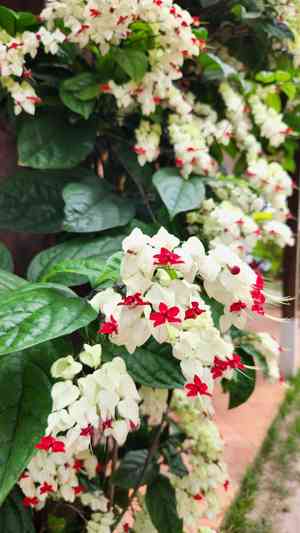
Bleeding-heart vine (Clerodendrum thomsoniae)
Also known as: Bagflower, Beauty bush
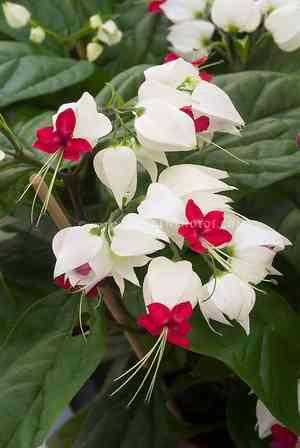
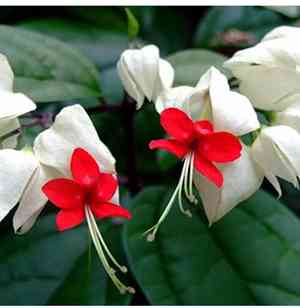
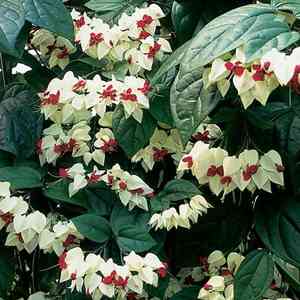
The Bleeding-heart vine (Clerodendrum thomsoniae) is a lush, evergreen climber characterized by its glossy, dark green leaves and exotic flowers. It thrives when supported on structures like trellises and can extend up to 4.5 meters in length. The plant produces clusters of vibrant red flowers encased in white, petal-like bracts, with the most abundant blooming period occurring during the summer, though it can flower throughout the year. While it flourishes best in full sunlight, it can also grow in partially shaded areas.
In This Article
Attributes of Bleeding-heart vine
Lifespan
Perennial
Plant Type
Vine, Herb
Plant Height
2 m to 5 m
Spread
1 m to 1.5 m
Leaf Color
Green
Flower Size
2.5 cm to 5 cm
Flower Color
Red White
Images of Bleeding-heart vine
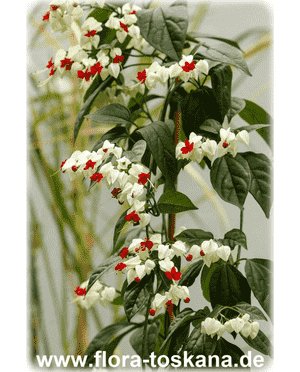
Quickly Identify Bleeding-heart vine
1
Evergreen vine up to 12 feet (3.66 meters) long with dark green, oval leaves
2
Distinct red tubular flowers in flat clusters with white calyx
3
Fruits maturing to glossy black drupes, around 0.5 inches (1.3 cm)
4
Smooth, glossy elliptic leaves with acuminate apex and obtuse base
5
Quadrangular woody stem with puberulent texture, branching abundantly
Scientific Classification of Bleeding-heart vine
Phylum
Vascular plants
Class
Dicotyledons
Order
Mints plantains olives and allies
Family
Mint
Genus
Glorybowers
Species
Bleeding-heart vine
Planting and Growing of Bleeding-heart vine
Care Difficulty
Easy
Watering Schedule
Every 3 days
Sunlight Requirements
Partial sun
Sunshine Duration
4-8 hours
Ideal Temperature
65-75℉
Soil Type
Potting Mix, Peat Mix
Soil pH
6.5-7.5
Fertilizer Type
Balanced
Pruning Season
Spring, Summer
Pruning Area
Branches, Leaves
Pruning Frequency
2 times a year
Repotting Season
Spring
Pot Type
Terracotta, Plastic
 How to Water Bleeding-heart vine?
Clerodendrum thomsoniae thrives when watered deeply and thoroughly, ensuring the soil is evenly moist but not waterlogged. The ideal principle is to allow the top 1-2 inches of the soil to dry out between waterings. When you water, make sure that it seeps through the soil completely, ensuring that every root gets a chance to absorb the moisture.
More About Watering Techniques→
What are the symptoms of an underwatered Bleeding-heart vine?
›
What should I do if my Bleeding-heart vine is not getting enough water?
›
What are the symptoms of an overwatered Bleeding-heart vine?
›
How to save an overwatered Bleeding-heart vine?
›
 What Are the Sunlight Requirements for Bleeding-heart vine?
Clerodendrum thomsoniae flourishes under partial sun, ideally receiving 4 to 6 hours of indirect sunlight daily. This light range supports healthy foliage development and boosts its flowering potential, ensuring the plant remains robust and vibrant.
More About Sunlight Requirements Techniques→
How much sun does Clerodendrum thomsoniae prefer?
›
Where should I place my plant for optimal growth?
›
What are the benefits of ideal lighting for this plant?
›
 What Is the Ideal Temperature Range for Bleeding-heart vine?
For optimal growth, Clerodendrum thomsoniae prefers temperatures between 65°F and 75°F. This range provides a comfortable environment that encourages healthy foliage and flowering. Temperatures within this range support the plant's metabolic processes and help prevent stress.
 What Soil is Best for Bleeding-heart vine?
Clerodendrum thomsoniae thrives in soil that offers excellent drainage. This is crucial as it prevents water from pooling around the roots, which could lead to root rot. Well-draining soil ensures that the plant's roots receive adequate air circulation, promoting healthy growth and vibrant blooms. For optimal growth, this plant prefers soil rich in organic matter. Nutrient-rich soil provides the necessary minerals and elements that fuel the plant's development, resulting in robust foliage and an abundance of flowers. While drainage is vital, the soil should also retain some moisture to keep the roots hydrated. Soil that retains a moderate level of moisture ensures that the plant sustains even during dry periods without sitting in water-logged conditions.
More About Soil→
 How to Fertilize Bleeding-heart vine?
For Clerodendrum thomsoniae, it is advisable to apply a diluted liquid fertilizer with a balanced N-P-K ratio of 20-20-20. Use a solution with half the strength recommended on the label to avoid over-fertilizing, which can happen easily with chemical fertilizers. About 200 milliliters of this diluted solution should be sufficient for each feeding.
More About Fertilizing Techniques→
 How to Prune Bleeding-heart vine?
Prune in early spring or after blooming in the summer to maintain shape. Avoid pruning too late in the growing season to prevent harming new growth. Regularly pinch back the tips of new growth to promote compact growth and more flowers. Remove spent blooms promptly to extend the flowering period.
More About Pruning Techniques→
 How to Propagate Bleeding-heart vine plant?
1
Choose a healthy stem that is about 10-15 cm long and cut just below a node. A node is where the leaves are attached to the stem, and it is often the area where roots will develop.
2
Remove the lower leaves near the cut end of the stem, leaving a few leaves at the top to maintain photosynthesis. Optionally, dip the cut end in rooting hormone to promote root growth.
3
Place the cutting into a pot filled with moist, well-draining potting mix. Ensure the node is buried in the soil, as this will encourage roots to develop from that point.
 How to Repot Bleeding-heart vine plant?
1
Clerodendrum thomsoniae shows signs of needing a new pot when you notice roots growing out of the drainage holes or stunted growth even with adequate care. It's important to choose the right moment, ideally during spring or summer, when the plant is actively growing and can recover quickly from the stress of repotting.
2
Select a pot that is slightly larger than the current one, with proper drainage holes. The pot material should offer stability and should complement your plant's aesthetics. A good pot ensures roots have enough space to grow, reducing the risk of root rot and other drainage issues.
3
For Clerodendrum thomsoniae, a well-draining potting mix is crucial. The soil should retain some moisture but never become waterlogged, as this plant is sensitive to overwatering. Incorporating perlite or sand is beneficial, providing aeration and preventing root rot by enhancing drainage.
Learn More About Bleeding-heart vine Diseases
Anthracnose
Bacterial Leaf Spot
Bacterial Soft Rot
Chemical Injury
Damping-off
Downy Mildew
Drought Stress
Fusarium Wilt
Gray Mold
Leaf Curl
Leaf Spot
Mosaic
Nutrient Deficiency
Nutrient Toxicity
Powdery Mildew
Root Rot
Root-knot Nematode
Sooty Mold
Spider Mites
Temperature Stress
Thrips Damage
White Mold



