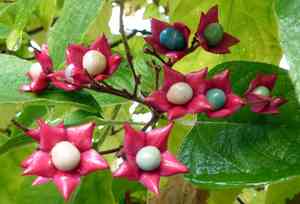
Harlequin glorybower (Clerodendrum trichotomum)
Also known as: Peanut butter tree
The Clerodendrum trichotomum, originating from China and Japan, is often called the Harlequin Glorybower. When its leaves are crushed, they emit a distinctive peanut butter aroma. This plant can reach a height of up to 4.5 meters and thrives well in a spacious container.
Attributes of Harlequin glorybower
Images of Harlequin glorybower
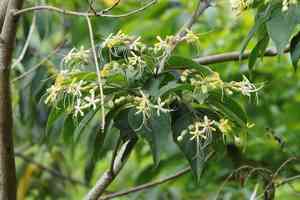
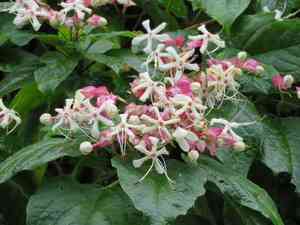
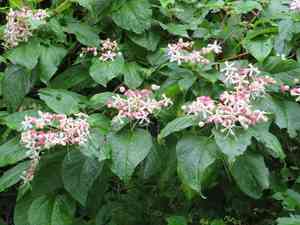
Quickly Identify Harlequin glorybower
Scientific Classification of Harlequin glorybower
Planting and Growing of Harlequin glorybower
 How to Water Harlequin glorybower?
 What Are the Sunlight Requirements for Harlequin glorybower?
 What Is the Ideal Temperature Range for Harlequin glorybower?
 What Soil is Best for Harlequin glorybower?
 How to Fertilize Harlequin glorybower?
 How to Prune Harlequin glorybower?
 How to Propagate Harlequin glorybower plant?
 How to Repot Harlequin glorybower plant?
Toxicity of Harlequin glorybower
Is Harlequin glorybower toxic to humans?
The Harlequin glorybower is a poisonous plant that poses significant health risks if consumed. The symptoms can be quite severe, with potential life-threatening outcomes in extreme situations. Every part of this plant is toxic, but the seeds and leaves are particularly dangerous to humans, having a greater likelihood of eliciting severe reactions. Symptoms may include diarrhea, vomiting, and even seizures, with the most serious incidents resulting in fatalities. To safeguard yourself while handling this plant in your garden or yard, it is advisable to wear gloves, as contact with any part of the plant can lead to adverse skin reactions or dermatitis.
Is Harlequin glorybower toxic to cat?
The Harlequin glorybower exhibits a moderate toxicity level for cats. If felines ingest the fruits of this plant, which are the toxic components, they risk poisoning. Symptoms of physical distress may occur following ingestion. Pet owners need to be attentive and keep cats away from the harlequin glorybower's fruits. If poisoning is suspected, seeking prompt veterinary assistance is essential for the health and safety of the pet.
Is Harlequin glorybower toxic to dog?
The Harlequin glorybower presents a moderate toxicity hazard to dogs, especially when they consume its fruits. Ingestion of these plant parts can result in poisoning, leading to various symptoms associated with toxic exposure. Dog owners must remain alert for indications such as gastrointestinal disturbances, vomiting, diarrhea, or more serious signs suggesting systemic involvement. If a dog eats harlequin glorybower, it is crucial to obtain prompt veterinary assistance to achieve the best possible result for the animal.



