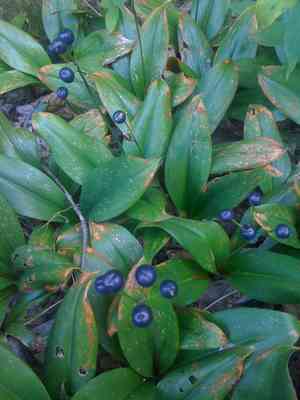
Bluebead Lily(Clintonia borealis)

Bluebead Lily (Clintonia borealis)

Also known as: Snakeberry, Bluebead, Yellow Bluebead Lily, Clintonia

The Bluebead Lily (Clintonia borealis) is found in the shaded forests of the eastern United States. It is named in honor of DeWitt Clinton, a former governor and senator of New York. The plant produces berries that are visually striking but taste unpleasant and are mildly toxic.

Attributes of Bluebead Lily

Lifespan
Perennial
Plant Type
Herb
Plant Height
20 cm to 50 cm
Spread
30 cm
Leaf Color
Green
Flower Size
1.9 cm
Flower Color
Yellow Green Gold

PlantJoy - Identify plants with a snap

Identify and diagnose plants, get toxicity alerts, and explore safety guides for all types of fungi.

Try for Free

Images of Bluebead Lily

Bluebead Lily(Clintonia borealis)

Quickly Identify Bluebead Lily

1
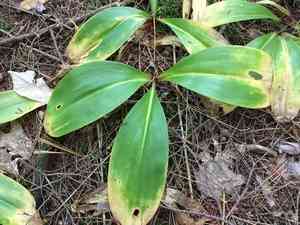
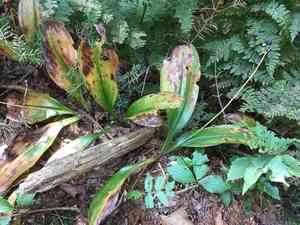
Curved leaves in sets of 2 to 4.
2
Dark blue, bead-like berries.
3
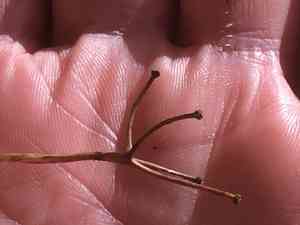
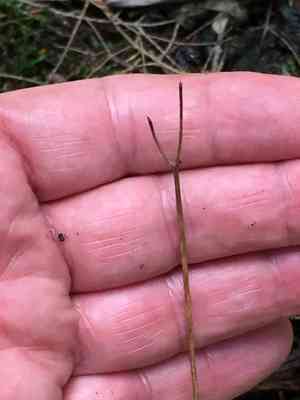
Terminal raceme of bell-like flowers.
4
Bright green, shiny, oblong leaves.
5
Edible leaves with hairy-fringed margins.

Scientific Classification of Bluebead Lily

Phylum
Vascular plants
Class
Monocotyledons
Order
Liliales
Family
Lily
Genus
Bluebead Lily
Species
Bluebead Lily

Planting and Growing of Bluebead Lily

Care Difficulty
Easy
Watering Schedule
Every 4 days
Sunlight Requirements
Partial sun
Sunshine Duration
6-8 hours
Ideal Temperature
60-75℉
Soil Type
Potting Mix, Peat Mix
Soil pH
4-6
Fertilizer Type
Balanced
Pruning Season
Spring, Summer
Pruning Area
Branches, Leaves
Pruning Frequency
2 times a year
Repotting Season
Spring
Pot Type
Plastic, Ceramic

water icon How to Water Bluebead Lily?

Clintonia borealis should be watered until the soil is moist but not soggy. Aim to provide about 200 milliliters per watering, ensuring that the top inch of soil is moist but not waterlogged. This ensures the plant's roots have access to moisture without risk of rot.
What are the symptoms of an underwatered Bluebead Lily?
What should I do if my Bluebead Lily is not getting enough water?
What are the symptoms of an overwatered Bluebead Lily?
How to save an overwatered Bluebead Lily?

sunlight icon What Are the Sunlight Requirements for Bluebead Lily?

Sunlight Requirements: Partial sun, Full shade
Duration of light: 2 to 6 hours
Clintonia borealis performs best in partial sun or full shade environments. Providing this balanced light exposure promotes healthy leaf color, aids in photosynthesis, and supports its natural habitat conditions, resulting in a thriving plant.
What is the ideal light condition for Clintonia borealis?
How can I achieve the ideal lighting conditions?
What benefits does ideal lighting provide to Clintonia borealis?
More About Sunlight Requirements Techniques

temperature icon What Is the Ideal Temperature Range for Bluebead Lily?

Ideal Temperature: 60 ~ 75℉
The ideal temperature range for Clintonia borealis is between 60°F to 75°F. This range supports optimal growth and development, allowing the plant to thrive. It is essential to maintain these temperatures to ensure the plant's health, as it mimics the natural woodland environment where this species is commonly found.

soil icon What Soil is Best for Bluebead Lily?

Soil type: Acidic soil, Peat soil
Soil PH: 4 ~ 6
Clintonia borealis thrives in environments where the soil can retain moisture but is well-drained. This means the plant benefits from a consistent water supply without the risk of root rot, which often occurs in overly waterlogged areas. The soil should be rich in organic matter, providing ample nutrients for Clintonia borealis. Nutrient-rich soil supports healthy growth and aids in developing lush, vibrant foliage indicative of a well-nurtured plant. This plant favors cool, humus-rich soils, which mimic its natural forest floor habitat. Such conditions support its root development and overall health, contributing to a robust lifecycle.

fertilize icon How to Fertilize Bluebead Lily?

Fertilizer type: Balanced
For Clintonia borealis, the recommended amount of fertilizer is relatively modest. This plant thrives with a balanced 10-10-10 NPK fertilizer. When using liquid fertilizer, a dilution rate of half the recommended strength on the product label is sufficient. For slow-release granules, a handful sprinkled around the root zone is ideal. The key is to ensure the soil retains some fertility without overwhelming the plant’s natural nutrient absorption process.

prune icon How to Prune Bluebead Lily?

Pruning Time: Spring, Summer, Autumn
Start by closely examining your Clintonia borealis for any damaged or yellow leaves; these should be your primary targets for pruning. Avoid cutting the main stem unless absolutely necessary. Hold the leaves you intend to prune in one hand and cut them at the base using sharp scissors or pruners. Aim to make a clean diagonal cut, which promotes quicker healing and prevents water from settling on the cut surface. Proper disposal of pruned materials is key in preventing any disease spread. Compost plant matter if it is healthy; otherwise, discard it to prevent any potential disease from infecting other plants. More About Pruning Techniques

propagate icon How to Propagate Bluebead Lily plant?

Propagate Time: Spring, Early summer
1
Start by preparing a seed tray with a well-draining potting mix. Moisten the soil lightly before sowing the seeds across the surface, ensuring even distribution. Cover them with a thin layer of soil and water gently to settle the seeds.
2
In early spring, choose a healthy clump of Clintonia borealis and carefully dig it up using a trowel. Gently separate the rhizomes ensuring each piece has roots and shoots, then replant them at the same depth in suitable soil.
3
Once seedlings develop two to three leaves, they are ready for transplanting. Prepare a shaded garden bed with rich, moist soil. Use the trowel to plant seedlings, spacing them adequately to allow growth and avoid competition.
More About Propagating Techniques

repot icon How to Repot Bluebead Lily plant?

Repotting frequency: Every 2-3 years
1
Repot Clintonia borealis when you notice roots sprawling out of the drainage holes, indicating that the plant has outgrown its current pot. Another signal to repot is when growth slows significantly, suggesting that the soil may be compacted or depleted of nutrients. Springtime is optimal as the plant is naturally emerging from dormancy, allowing it to quickly adapt to new conditions.
2
Select a pot that is just one size larger than the current one to avoid excessive soil retaining too much moisture, which can lead to root rot. A pot with good drainage is crucial for Clintonia borealis to prevent waterlogging. Additionally, consider materials like terracotta, which allow for better air exchange and moisture regulation.
3
Opt for a well-draining mix enriched with organic matter, such as a blend of peat moss, pine bark, and perlite. This mix helps to maintain the right moisture balance while supplying essential nutrients. The airy structure prevents compaction, promoting healthy root growth and aeration, crucial for thriving Clintonia borealis.

PlantJoy - Identify plants with a snap

Find the best spots for them to optimize their health, simply using your phone.

Try for Free

Toxicity of Bluebead Lily

Is Bluebead Lily toxic to humans?

The Bluebead Lily has the potential to induce certain toxic reactions in humans if consumed. These reactions, when they do occur, are generally mild and are most commonly associated with the plant's berries. Although the berries are not usually appealing or palatable to humans, a child or an unsuspecting forager might be tempted to eat them, mistakenly believing they belong to a non-toxic variety.

Identify toxic plants for your safety

Learn which plants are harmful to you and your pets, and make informed choices for a safer home!

Try for Free
WARNING
The judgment on toxicity and danger is for reference only. We DO NOT GUARANTEE any accuracy of such judgment. Therefore, you SHALL NOT rely on such judgment. It is IMPORTANT TO SEEK PROFESSIONAL ADVICE in advance when necessary.
More About Toxic Techniques