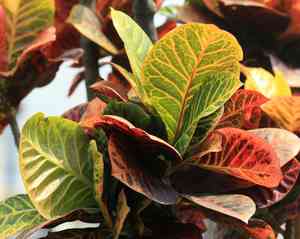
Garden croton(Codiaeum variegatum)

Garden croton (Codiaeum variegatum)

Also known as: Croton

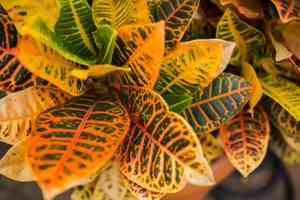
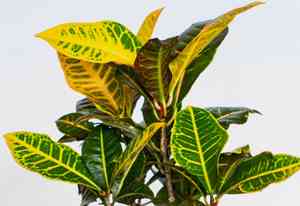
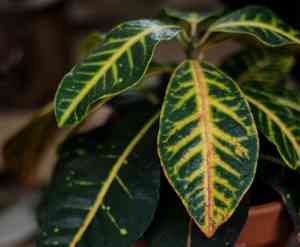
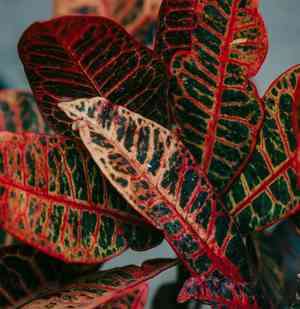
The garden croton is a vibrant tropical plant that thrives indoors and in warm climates. Its eye-catching foliage showcases a range of colors such as green, yellow, red, orange, purple, and even pink. Often, these colors appear together on a single plant, creating stunning patterns and variegations.

Attributes of Garden croton

Lifespan
Perennial
Plant Type
Shrub
Plant Height
1 m to 3 m
Spread
1 m
Leaf Color
Green Red Yellow Orange
Flower Size
5 mm to 1.5 cm
Flower Color
White Yellow

PlantJoy - Identify plants with a snap

Identify and diagnose plants, get toxicity alerts, and explore safety guides for all types of fungi.

Try for Free

Images of Garden croton

Garden croton(Codiaeum variegatum)

Quickly Identify Garden croton

1
Leaves exude milky sap when broken, displaying variegated patterns and vibrant colors.
2
Flowers in slender racemes, male white with delicate petals, female yellow without petals.
3
Smooth fruit capsules encase three seeds, measuring around 9 mm in diameter.
4
Simple, alternate leaves range from 2 to 12 inches long, showcasing diverse shapes and vibrant colors.
5
Glabrous, multi-branched stem with vertical fissures and prominent leaf scars, transforming texture as it ages.

Scientific Classification of Garden croton

Phylum
Vascular plants
Class
Dicotyledons
Order
Nances, spurges, willows and allies
Family
Spurge
Genus
Codiaeum
Species
Garden croton

Planting and Growing of Garden croton

Care Difficulty
Hard
Watering Schedule
Every 8 days
Sunlight Requirements
Partial sun
Sunshine Duration
6-10 hours
Ideal Temperature
65-80℉
Soil Type
Potting Mix, Peat Mix
Soil pH
6.5-7.5
Fertilizer Type
Balanced
Pruning Season
Spring, Summer
Pruning Area
Branches, Leaves
Pruning Frequency
2 times a year
Repotting Season
Spring
Pot Type
Plastic, Ceramic

water icon How to Water Garden croton?

For Codiaeum variegatum, the watering amount should be just enough to keep the soil uniformly moist, but not soggy. Aim for about 250 ml per watering session to ensure the roots have ample moisture. Use room-temperature water and make sure to water until you see excess trickling out of the drainage holes.
What are the symptoms of an underwatered Garden croton?
What should I do if my Garden croton is not getting enough water?
What are the symptoms of an overwatered Garden croton?
How to save an overwatered Garden croton?
More About Watering Techniques Group

sunlight icon What Are the Sunlight Requirements for Garden croton?

Sunlight Requirements: Partial sun
Duration of light: 4 to 6 hours
Partial sun range is ideal for Codiaeum variegatum, allowing it to receive adequate morning or late afternoon light. This promotes vibrant coloring and healthy growth, ensuring the plant is visually appealing and robust.
Is direct sunlight beneficial for Codiaeum variegatum?
What is the optimal location for placing Codiaeum variegatum indoors?
How can I ensure my Codiaeum variegatum gets ideal outdoor lighting?
More About Sunlight Requirements Techniques Group

temperature icon What Is the Ideal Temperature Range for Garden croton?

Ideal Temperature: 65 ~ 80℉
The ideal temperature range for Codiaeum variegatum, commonly known as the croton, is between 65°F and 80°F. Within this range, the plant is able to thrive and exhibit its vibrant colors and healthy foliage. Maintaining this temperature range supports optimal growth and reduces the risk of stress on the plant.

soil icon What Soil is Best for Garden croton?

Soil type: Loam, Sandy loam, Peat soil
Soil PH: 6.5 ~ 7.5
Codiaeum variegatum thrives best in well-drained soil, preventing waterlogging that can lead to root rot. This need ensures the plant has access to both water and oxygen, fostering healthy root growth. The plant benefits from soil rich in organic matter. This provides essential nutrients that sustain vibrant foliage and promote vigorous growth, enhancing the plant's aesthetic appeal. A soil that holds onto moisture without becoming soggy is crucial for Codiaeum variegatum. This balance helps maintain a consistent moisture level that keeps the plant hydrated without causing stress or fungal diseases. More About Soil Group

fertilize icon How to Fertilize Garden croton?

Fertilizer type: Balanced
Codiaeum variegatum, commonly known as croton, thrives with a balanced approach to fertilization. Use a water-soluble fertilizer diluted to half-strength, approximately 10-10-10 or 20-20-20 NPK, applied at the recommended frequency. The amount should be enough to moisten the soil without oversaturating. Avoid excessive fertilization as it can lead to nutrient burn. More About Fertilizing Techniques Group

prune icon How to Prune Garden croton?

Pruning Time: Spring, Summer
Use clean, sharp pruning shears to make precise cuts. Dull tools can damage the plant tissue, making it susceptible to diseases. Look for leggy or unhealthy branches that need removal. Trim these back to the base to encourage new, healthy growth and maintain structure. Cut back any out-of-place branches to maintain the desired shape. Crotons can grow unevenly, so regular shaping ensures an attractive silhouette. Gently pull away any dead leaves or stems by hand or with shears. This tidies the plant and prevents pests from settling in decaying matter.

propagate icon How to Propagate Garden croton plant?

Propagate Time: Spring, Early summer
1
Choose healthy stems about 4-6 inches long with a few leaves attached. Use sharp, sterilized pruning shears to make clean cuts below a node, and remove the lower leaves to expose nodes for rooting.
2
Dip the cut end of each cutting into a rooting hormone. This should be done right after cutting to prevent the cut ends from drying, which assists in faster root initiation.
3
Insert the cuttings into a well-draining potting mix, ensuring that at least one or two nodes are buried. Provide support if necessary and keep them in a warm, humid environment to encourage root growth.

repot icon How to Repot Garden croton plant?

Repotting frequency: Every 2-3 years
1
Codiaeum variegatum displays signs like roots emerging from drainage holes or stunted growth when it needs repotting. These indicators suggest that the root system is cramped and that fresh soil is needed to provide necessary nutrients and further growth.
2
Always select a pot that is no more than 1-2 inches larger in diameter than the current pot. Ensure it has enough drainage holes to allow excess water to escape. This prevents waterlogging, which can cause root rot.
3
Opt for a well-draining potting mix that includes components like peat moss and perlite. This mixture ensures good aeration and moisture retention, crucial for promoting healthy root growth and preventing waterlogging.
More About Repotting Techniques Group

PlantJoy - Identify plants with a snap

Find the best spots for them to optimize their health, simply using your phone.

Try for Free

Toxicity of Garden croton

Is Garden croton toxic to humans?

The garden croton possesses toxic compounds that can provoke a reaction upon contact with its sap or through puncture wounds caused by its thorns. A rash is likely to develop in the area that has been affected. Additionally, ingesting garden croton is hazardous, particularly for small children who might be drawn to its vibrant foliage, potentially leading to symptoms such as vomiting, rash, and diarrhea.

Is Garden croton toxic to cat?

The garden croton plant poses a toxicity risk to cats. If a cat accidentally consumes any part of this plant, it may suffer from poisoning. Symptoms can manifest as signs of physical distress, including gastrointestinal issues like vomiting or diarrhea, as well as oral irritation. It is essential for cat owners to remain alert and keep their cats away from garden croton. Should there be any suspicion of poisoning, it is vital to quickly seek medical attention at a veterinary clinic to safeguard the health and welfare of the affected cat.

Is Garden croton toxic to dog?

The garden croton plant is regarded as toxic to dogs. When dogs consume any parts of this plant, they can suffer from poisoning due to its inherent toxicity. Every part of the garden croton, including leaves, stems, flowers, and others, is toxic, meaning a dog can be poisoned by biting into any of these components. Symptoms of poisoning in dogs may manifest as vomiting, diarrhea, excessive drooling, and possibly other severe reactions, which can vary based on the quantity ingested and the individual dog's sensitivity. It is essential for dog owners to keep their pets away from garden croton and to closely observe for any signs of distress following exposure. If there is a suspicion that a dog has consumed any part of garden croton, it is crucial to seek prompt veterinary assistance to facilitate timely and proper treatment.

Identify toxic plants for your safety

Learn which plants are harmful to you and your pets, and make informed choices for a safer home!

Try for Free
WARNING
The judgment on toxicity and danger is for reference only. We DO NOT GUARANTEE any accuracy of such judgment. Therefore, you SHALL NOT rely on such judgment. It is IMPORTANT TO SEEK PROFESSIONAL ADVICE in advance when necessary.
More About Toxic Techniques Group