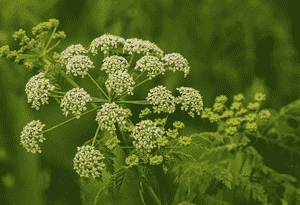
Poison hemlock(Conium maculatum)

Poison hemlock (Conium maculatum)

Also known as: Wild Hemlock, Devil's bread, Poison parsley

Poison Hemlock (Conium maculatum) is an extremely toxic plant that often deceives livestock due to its leaves, which closely resemble those of carrots and parsley. Ingestion of this plant can be fatal.

Attributes of Poison hemlock

Lifespan
Biennial, Perennial
Plant Type
Herb
Plant Height
1.5 m to 2.5 m
Spread
1 m
Leaf Color
Green
Flower Size
10 cm to 15 cm
Flower Color
White

PlantJoy - Identify plants with a snap

Identify and diagnose plants, get toxicity alerts, and explore safety guides for all types of fungi.

Try for Free

Images of Poison hemlock

Poison hemlock(Conium maculatum)

Quickly Identify Poison hemlock

1
Hollow stem with purple blotches
2
Finely divided, lacy leaves reminiscent of a carrot top
3
Distinctive white flowers in umbrella-like clusters with a central purple flower
4
Green fruit maturing to gray-brown ovoid shape with wavy ribbing
5
Large, intricately dissected leaves with 3-4 pinnate divisions

Scientific Classification of Poison hemlock

Phylum
Vascular plants
Class
Dicotyledons
Order
Apiales
Family
Umbellifers
Genus
Poison hemlocks
Species
Poison hemlock

Planting and Growing of Poison hemlock

Care Difficulty
Hard
Watering Schedule
Every 2 days
Sunlight Requirements
Partial sun
Sunshine Duration
4-8 hours
Ideal Temperature
60-75℉
Soil Type
Potting Mix, Peat Mix
Soil pH
6.5-7.5
Fertilizer Type
Balanced
Pruning Season
Spring, Summer
Pruning Area
Branches, Leaves
Pruning Frequency
2 times a year
Repotting Season
Spring
Pot Type
Plastic, Ceramic

water icon How to Water Poison hemlock?

Conium maculatum prefers soil that is kept evenly moist but not waterlogged. Generally, aim for around 300 milliliters per watering, ensuring the water reaches the root zone but does not accumulate at the surface or the base of the container. Consider factors like humidity and sunlight in your environment to adjust accordingly.
What are the symptoms of an underwatered Poison hemlock?
What should I do if my Poison hemlock is not getting enough water?
What are the symptoms of an overwatered Poison hemlock?
How to save an overwatered Poison hemlock?

sunlight icon What Are the Sunlight Requirements for Poison hemlock?

Sunlight Requirements: Partial sun
Duration of light: 4 to 6 hours daily
Conium maculatum thrives in partial sun, ideally receiving 4 to 6 hours of indirect and morning direct light. This balance promotes its health by aiding in nutrient synthesis, thus resulting in strong growth and flowering, reducing the risk of scalds.
What is the ideal light condition for Conium maculatum?
How can you achieve the ideal lighting for Conium maculatum?
What benefits does Conium maculatum receive from ideal lighting?

temperature icon What Is the Ideal Temperature Range for Poison hemlock?

Ideal Temperature: 60 ~ 75℉
For ideal growth, Conium maculatum prefers a temperature range between 60°F and 75°F. This range provides optimal conditions for its metabolic processes and overall development. Within these temperatures, the plant finds the right balance of warmth without being exposed to extreme heat, which ensures healthy leaf growth and flowering.

soil icon What Soil is Best for Poison hemlock?

Soil type: Loam, Sandy loam, Calcareous soil
Soil PH: 6.5 ~ 7.5
Conium maculatum thrives in nutrient-rich soils that provide essential minerals and nutrients for optimal growth. Ensuring the soil is fertile promotes robust plant health and vibrant foliage. Adequate drainage is crucial for this plant to prevent waterlogging, which can lead to root rot. A well-drained soil supports healthy root systems and overall plant vigor. While good drainage is essential, maintaining a consistent level of soil moisture ensures Conium maculatum receives enough water, crucial for its growth during dry periods.

fertilize icon How to Fertilize Poison hemlock?

Fertilizer type: Balanced
For Conium maculatum, the fertilizer amount should be carefully measured. Use a diluted liquid fertilizer at half strength to avoid any risk of over-fertilization. If using a granular slow-release fertilizer, apply approximately 50 grams per square meter to maintain optimal nutrient levels.

prune icon How to Prune Poison hemlock?

Pruning Time: Spring, Summer, Autumn
Begin by identifying the stems that are dead, damaged, or diseased. Conium maculatum, or poison hemlock, can grow quite large and unruly, so it's crucial to target these sections first. Use clean, sharp pruning shears to cut back any unwanted stems at their base. Be cautious to avoid touching your face or skin after handling, as the plant is toxic. Dispose of all pruned material promptly and safely to prevent accidental contact, as Conium maculatum is highly poisonous to humans and animals.

propagate icon How to Propagate Poison hemlock plant?

Propagate Time: Spring, Early spring
1
Scatter the Conium maculatum seeds evenly over the surface of a filled seed tray. Lightly cover them with a thin layer of soil and water gently. Ensure that the soil is kept moist but not overly wet during the germination period.
2
Place the seed tray in a spot that receives indirect sunlight. Too much direct sunlight can dry out the seeds or seedlings, while too little light can slow down germination and growth.
3
Once the seedlings have grown two sets of true leaves, they can be gently transplanted into individual pots with more potting soil. Handle the seedlings carefully to avoid damaging the stems and roots.

repot icon How to Repot Poison hemlock plant?

Repotting frequency: Every two years
1
Conium maculatum, commonly known as Hemlock, signals its need for repotting through several signs. Look for roots growing out from the drainage holes, slow growth, or if the soil appears compacted. Spring and Autumn are ideal times since the plant is less stressed and can establish itself better in the new soil.
2
Select a pot that is only slightly larger, about 1-2 inches bigger in diameter than the current one. Ensure it has drainage holes to prevent waterlogging, which can lead to root rot. A breathable material like terracotta is preferable as it allows for air circulation, which benefits root health.
3
Opt for a well-drained potting mix. A blend that includes sand, perlite, or pumice can ensure good drainage and aeration. Such a mixture helps mimic its natural habitat, reducing the chances of root diseases and allowing for proper root development.

PlantJoy - Identify plants with a snap

Find the best spots for them to optimize their health, simply using your phone.

Try for Free

Toxicity of Poison hemlock

Is Poison hemlock toxic to humans?

Consuming any portion of poison hemlock can lead to serious consequences, even if just a small quantity is ingested. Its potent toxin specifically targets the nervous system, disrupting the transmission of nerve impulses to muscles. Symptoms generally manifest within an hour of consumption and may include muscle pain and/or weakness, loss of speech, excessive salivation, initially rapid then decreased heart rate, tremors, dilated pupils, gastrointestinal discomfort, and in some cases, unconsciousness. In severe instances, it may lead to kidney or respiratory failure, long-term damage to both the nervous system and muscles, and ultimately death. Poison hemlock is often found growing near roadsides and in waste areas, and it has previously been mistaken for wild parsnip, which is a common cause of poisoning.

Is Poison hemlock toxic to cat?

As its name implies, poison hemlock (Conium maculatum) is highly poisonous to felines and can lead to fatality upon ingestion of even a minuscule quantity. If a cat comes into contact with this toxic plant, it is crucial to take them to an emergency veterinary facility immediately for urgent care to avert severe lasting health issues, such as paralysis. The plant's delicate, feathery leaves could attract cats, making them prone to playful interactions!

Is Poison hemlock toxic to dog?

Poison hemlock, as its name suggests, poses a significant hazard to dogs due to its high toxicity levels. If you suspect that your dog has ingested any part of this plant, it is imperative to seek veterinary assistance immediately. Every part of the hemlock plant harbors a variety of alkaloid toxins. Ingestion can lead to a range of alarming symptoms such as vomiting, diarrhea, muscle spasms, cramping, elevated heart rate, increased respiratory rate, seizures, and, in severe instances, death. Even minuscule amounts of poison hemlock can cause serious harm to a dog. Fortunately, the plant's intensely bitter flavor discourages dogs from consuming it.

Identify toxic plants for your safety

Learn which plants are harmful to you and your pets, and make informed choices for a safer home!

Try for Free
WARNING
The judgment on toxicity and danger is for reference only. We DO NOT GUARANTEE any accuracy of such judgment. Therefore, you SHALL NOT rely on such judgment. It is IMPORTANT TO SEEK PROFESSIONAL ADVICE in advance when necessary.

