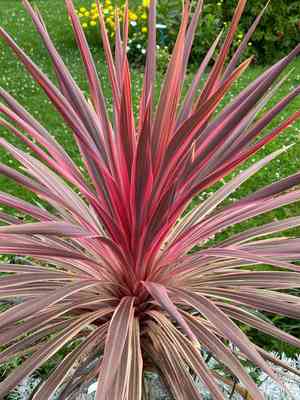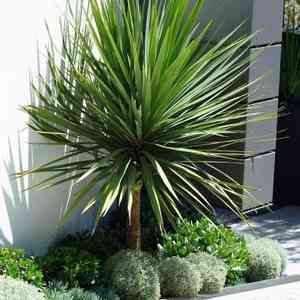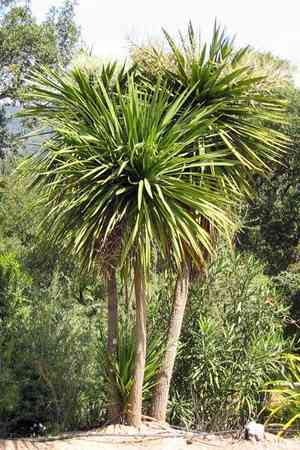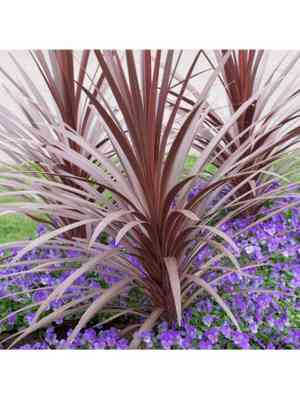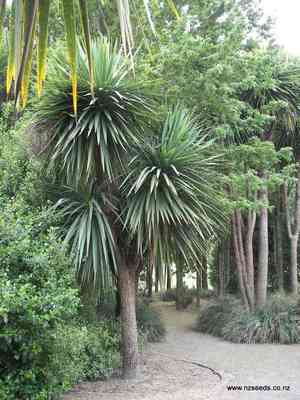
Cabbage tree(Cordyline australis)

Cabbage tree (Cordyline australis)

Also known as: Grass palm, Giant dracaena, Tī kōuka, Torquay palm

The Cabbage Tree (*Cordyline australis*) is a subtropical, palm-like tree that flourishes in fertile, well-drained soil. It is both salt and drought tolerant, making it perfect for sunny borders or container planting. This tree produces small, fragrant white flowers from late spring through early summer. It’s commonly found in urban courtyards and coastal gardens.

Attributes of Cabbage tree

Lifespan
Perennial
Plant Type
Shrub
Plant Height
20 m
Spread
5 m
Leaf Color
Green
Flower Size
5 mm to 6 mm
Flower Color
White Cream

PlantJoy - Identify plants with a snap

Identify and diagnose plants, get toxicity alerts, and explore safety guides for all types of fungi.

Try for Free

Images of Cabbage tree

Cabbage tree(Cordyline australis)

Quickly Identify Cabbage tree

1
Sword-like leaves, 3 feet (91 cm) long and 3 inches (7.6 cm) wide.
2
Small, white star-shaped flowers, fragrant, 0.2 inches (0.5 cm) in diameter.
3
Globular berries, 0.2-0.3 inches (5-8 mm) wide, creamy white when ripe.
4
Gray-green, narrow leaves with prominent central vein, up to 3 feet (91 cm) long.
5
Pale to dark grey, spongy bark with fissures, pliable texture when pressed.

Scientific Classification of Cabbage tree

Phylum
Vascular plants
Class
Monocotyledons
Order
Asparagus and allies
Family
Asparagus
Genus
Cordylines
Species
Cabbage tree

Planting and Growing of Cabbage tree

Care Difficulty
Easy
Watering Schedule
Every 4 days
Sunlight Requirements
Full sun
Sunshine Duration
6-10 hours
Ideal Temperature
60-75℉
Soil Type
Potting Mix, Peat Mix
Soil pH
6.5-7.5
Fertilizer Type
Balanced
Pruning Season
Spring, Summer
Pruning Area
Branches, Leaves
Pruning Frequency
Once a year
Repotting Season
Spring
Pot Type
Plastic, Ceramic

water icon How to Water Cabbage tree?

The Cordyline australis prefers to be watered thoroughly until the soil is evenly moist but not soggy. Water should permeate down through the potting mix, encouraging the development of deep roots, but should not leave any standing water.
What are the symptoms of an underwatered Cabbage tree?
What should I do if my Cabbage tree is not getting enough water?
What are the symptoms of an overwatered Cabbage tree?
How to save an overwatered Cabbage tree?
More About Watering Techniques

sunlight icon What Are the Sunlight Requirements for Cabbage tree?

Sunlight Requirements: Full sun, Partial sun
Duration of light: 6 to 8 hours
Cordyline australis thrives best under full to partial sunlight, ideally receiving between 6 to 8 hours of sun daily. This promotes healthy growth and vibrant foliage of the plant.
What type of light does it prefer?
How can I ensure it gets ideal lighting?
What are the benefits of ideal lighting?
More About Sunlight Requirements Techniques

temperature icon What Is the Ideal Temperature Range for Cabbage tree?

Ideal Temperature: 60 ~ 75℉
Cordyline australis thrives best in temperatures ranging between 60°F and 75°F. This range allows for optimal physiological functioning, including photosynthesis and nutrient absorption, essential for growth and development. Maintaining these temperatures ensures robust foliage and vibrant colors.

soil icon What Soil is Best for Cabbage tree?

Soil type: Loam, Sandy loam
Soil PH: 6.5 ~ 7.5
Cordyline australis thrives best in well-drained soil. This type of soil prevents water from pooling around the roots, reducing the risk of root rot and ensuring the plant receives adequate oxygen. The plant prefers soil that is moderately fertile. Adequate fertility supports robust growth and vibrant leaf coloration, making the plant more visually appealing and healthier. Cordyline australis does best in a neutral to slightly acidic pH range. This pH balance enhances nutrient availability, promoting stronger and more vibrant plant growth. More About Soil

fertilize icon How to Fertilize Cabbage tree?

Fertilizer type: Balanced
Cordyline australis, commonly known as cabbage tree, prefers moderate fertilization. Use a balanced liquid fertilizer diluted to half strength, applying about 100 ml per plant during each session. Over-fertilizing should be avoided to prevent root damage. More About Fertilizing Techniques

prune icon How to Prune Cabbage tree?

Pruning Time: Spring, Summer, Autumn
Begin by preparing sterilized pruning shears to avoid spreading diseases. Identify and cut away any yellowing or damaged leaves from the base of the plant. When cutting, aim for a clean, angled cut to prevent water from accumulating on the stems, which can lead to rotting. For taller, leggier Cordyline, consider trimming some of the taller stems back to encourage bushier growth. Always ensure not to cut more than one-third of the plant at once, as this can stress the plant excessively. For an aesthetically pleasing appearance, use pruning to shape your Cordyline australis. Trim back the top stems more heavily than the sides, creating a gentle cascade effect in the foliage. Even out the growth by selectively pruning back specific areas, fostering a fuller, more balanced plant. Be careful to use sharp pruners to avoid tearing the plant's fibers, which can make it more susceptible to disease. Always step back periodically to assess the shape and balance of your pruning work. More About Pruning Techniques

propagate icon How to Propagate Cabbage tree plant?

Propagate Time: Spring, Early summer
1
Collect seeds from mature Cordyline australis plants. Sow the seeds in a well-draining seed mix and lightly cover them with soil. Keep the soil consistently moist and place the tray in a warm, bright location. Germination usually occurs within a few weeks.
2
Choose a healthy stem from the mother plant and cut a section approximately 10-15 cm in length. Remove the lower leaves to prevent rot and encourage root growth. Dip the cut end in rooting hormone to promote rapid root development before planting in a suitable medium.
3
When the plant is mature, it can be divided at the roots. Carefully dig around the base and separate sections of the clump, ensuring each section has adequate roots attached. Plant these divisions in individual pots or suitable garden areas.
More About Propagating Techniques

repot icon How to Repot Cabbage tree plant?

Repotting frequency: Every 2-3 years
1
Your Cordyline australis may need repotting when you see roots emerging from the drainage holes or if growth has slowed down significantly. Spring or early summer is ideal, as it allows the plant ample time to establish in new soil.
2
Select a pot that is 2-4 inches larger in diameter than the current one to allow room for growth. Ensure it has drainage holes to prevent waterlogging, which can lead to root rot and inhibit root expansion.
3
Use a well-draining potting mix enriched with organic matter. This type of soil promotes healthy root development and prevents water from pooling, which is crucial for preventing root rot in Cordyline australis.
More About Repotting Techniques

PlantJoy - Identify plants with a snap

Find the best spots for them to optimize their health, simply using your phone.

Try for Free

Toxicity of Cabbage tree

Is Cabbage tree toxic to humans?

The cabbage tree poses minimal danger, yet it does possess a sufficient quantity of saponins in its tissues that can spoil anyone's day who consumes them. Symptoms include excessive drooling, nausea, vomiting, abdominal pain, cramping, and loss of appetite. In some cases, these symptoms can become severe enough to necessitate hospitalization, although this typically occurs only after ingesting a significant amount. Young children are particularly vulnerable to poisoning and should be kept away from this plant. If someone consumes this plant and experiences severe symptoms, it is crucial to contact a doctor immediately. For children or other at-risk individuals exhibiting serious symptoms, take them to a hospital for supportive treatment until they fully recover.

Is Cabbage tree toxic to cat?

Cabbage trees possess a mild toxicity for cats. Every part of this plant contains saponins, but the fronds and seeds are the parts that cats most commonly consume. Ingesting these can lead to symptoms such as vomiting, diarrhea, lethargy, and a decrease in appetite. Fortunately, cabbage trees have a very bitter taste, which prevents cats from typically consuming enough of the plant to trigger a serious reaction.

Is Cabbage tree toxic to dog?

Cabbage trees possess a mild toxicity for dogs. Every part of this plant contains saponins that may lead to mild irritation and gastrointestinal disturbances in canines. Signs of cabbage tree consumption include reduced appetite, vomiting, diarrhea, and excessive drooling. Fortunately, the bitterness of these saponins renders the leaves and flowers unpalatable, resulting in dogs seldom consuming significant amounts.

Identify toxic plants for your safety

Learn which plants are harmful to you and your pets, and make informed choices for a safer home!

Try for Free
WARNING
The judgment on toxicity and danger is for reference only. We DO NOT GUARANTEE any accuracy of such judgment. Therefore, you SHALL NOT rely on such judgment. It is IMPORTANT TO SEEK PROFESSIONAL ADVICE in advance when necessary.
More About Toxic Techniques