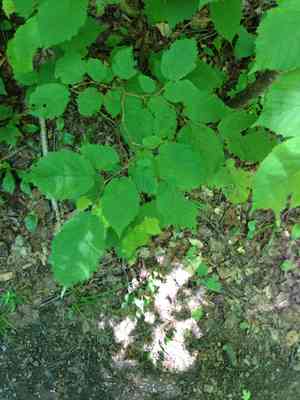
Beaked hazelnut (Corylus cornuta)
Also known as: Beaked hazel, Turkish filbert
The beaked hazelnut (Corylus cornuta) is a deciduous shrub indigenous to North America. Renowned for its exceptional cold-hardiness, it thrives in freezing temperatures, particularly in its northern ranges. This shrub produces small, edible nuts despite their modest size.
In This Article
Attributes of Beaked hazelnut
Lifespan
Perennial
Plant Type
Shrub
Plant Height
4 m to 8 m
Spread
6 m
Leaf Color
Green
Flower Size
5 mm to 8 mm
Flower Color
Yellow White Green Brown
Images of Beaked hazelnut
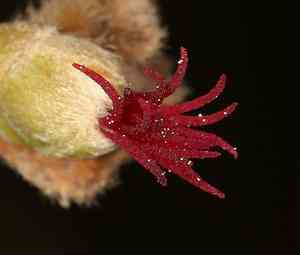


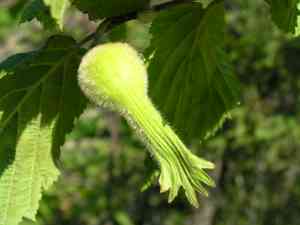
Quickly Identify Beaked hazelnut
1
Heart-shaped leaves with double-serrated edges, 3-5 inches (7.5-12.7 cm) long.
2
Fruit with nut encased in hard shell and long, tubular beaked husk.
3
Male flowers are yellowish drooping catkins, 1-3 inches (2.5-7.6 cm) long.
4
Distinctive leaf venation pattern with hairs along veins.
5
Light brown stem, 0.25-0.5 inches (0.6-1.3 cm) in diameter; irregular, zigzag branching.
Scientific Classification of Beaked hazelnut
Phylum
Vascular plants
Class
Dicotyledons
Order
Fagales
Family
Birch
Genus
Hazels
Species
Beaked hazelnut
Planting and Growing of Beaked hazelnut
Care Difficulty
Easy
Watering Schedule
Every 3 days
Sunlight Requirements
Full sun
Sunshine Duration
6-8 hours
Ideal Temperature
55-75℉
Soil Type
Potting Mix, Peat Mix
Soil pH
5.5-7.5
Fertilizer Type
Balanced
Pruning Season
Spring, Summer
Pruning Area
Branches, Leaves
Pruning Frequency
2 times a year
Repotting Season
Spring
Pot Type
Plastic, Ceramic
 How to Water Beaked hazelnut?
For Corylus cornuta, each watering should provide approximately 500 milliliters of water. This amount ensures the soil remains consistently moist but not waterlogged. Always aim for the soil to be moist at a depth of around 5-7 centimeters. Avoid puddling water at the surface.
What are the symptoms of an underwatered Beaked hazelnut?
›
What should I do if my Beaked hazelnut is not getting enough water?
›
What are the symptoms of an overwatered Beaked hazelnut?
›
How to save an overwatered Beaked hazelnut?
›
 What Are the Sunlight Requirements for Beaked hazelnut?
Corylus cornuta prefers environments ranging from full sun to partial sun. Ensuring this range promotes healthy growth, vibrant leaf color, and overall plant vigor, preventing weak or spindly growth.
More About Sunlight Requirements Techniques→
What is the optimal light environment for Corylus cornuta?
›
How can I ensure Corylus cornuta receives ideal lighting?
›
What are the benefits of ideal lighting for Corylus cornuta?
›
 What Is the Ideal Temperature Range for Beaked hazelnut?
Corylus cornuta, commonly known as beaked hazelnut, thrives in a temperate climate. Ideally, the plant should be grown between 55°F and 75°F to ensure optimal growth and development. At these temperatures, photosynthesis occurs efficiently, promoting healthy foliage and fruit production. Extreme fluctuations outside this range may stress the plant, impacting its productivity and health.
 What Soil is Best for Beaked hazelnut?
Corylus cornuta thrives in well-drained soil where excess water can easily seep away. This is crucial for preventing root rot, a common issue in waterlogged soils, and ensures the plant's roots can breathe, spreading healthily and effectively absorbing nutrients. The soil should be moisture-retentive yet not waterlogged, offering a perfect balance. By providing steady moisture, this requirement helps the plant maintain lush foliage and robust growth throughout its active growing season. Corylus cornuta favors soil rich in organic matter, which supplies necessary nutrients for development. The availability of ample nutrients is vital for flower and nut production, ensuring plant vigor and a rewarding yield.
 How to Fertilize Beaked hazelnut?
Corylus cornuta, also known as Beaked Hazelnut, requires moderate amounts of fertilizer. It's important to apply fertilizer at the drip line of the plant, not directly at the base, to ensure even distribution. Typically, 1 pound of balanced 10-10-10 fertilizer per plant annually is sufficient. However, soil testing is recommended to precisely determine nutrient needs.
 How to Prune Beaked hazelnut?
Conduct heavy pruning in early spring before new growth appears, when the plant is still dormant. Minimal touch-ups can be done in summer or autumn to maintain the desired shape without stressing the plant. Over-pruning can lead to excess stress and a loss of natural shape and form. Always aim to remove only about a third of the total wood in any given year to avoid shocking the plant. After pruning, monitor the plant for signs of stress or disease. It's also helpful to consider mulching around the base to help retain moisture and provide nutrient support as the plant recovers.
More About Pruning Techniques→
 How to Propagate Beaked hazelnut plant?
1
Collect seeds directly from the plant when they are mature, preferably in the autumn. Ensure that the seeds are dry, clean, and free from any plant debris before storing them.
2
Take semi-hardwood cuttings from healthy plants during their dormant season. Cut at an angle to increase surface area and dip the cut end into rooting hormone before planting.
3
Sow seeds in prepared trays filled with a sterile, well-draining soil mix. Cover lightly with soil and water gently to settle the soil and encourage seed germination.
 How to Repot Beaked hazelnut plant?
1
Corylus cornuta, also known as beaked hazelnut, requires repotting when it becomes root-bound, making it difficult for water to penetrate the soil. Visible roots poking from the drainage holes also signal the need for a change. Spring and early autumn are best, providing mild temperatures that ease the plant’s transition.
2
Select a pot 2-4 inches larger in diameter than the current one, emphasizing good drainage. This helps prevent waterlogging, which can lead to root rot. Opt for clay or terracotta pots, which allow breathability, promoting a healthy root environment.
3
Loamy soil with excellent drainage is ideal. This prevents water excess while retaining enough moisture, crucial for beaked hazelnut’s growth. An ideal mix includes organic matter to nourish, sand for drainage, and loam for structure.



