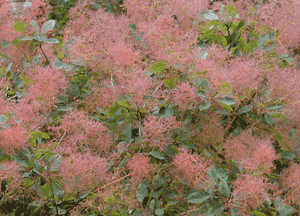
Smoketree (Cotinus coggygria)
Also known as: Smoke Bush, Venetian-Sumac, Wigtree, Young fustig, Hungarian Sumac, Purple Fringe
The smoketree (Cotinus coggygria) is a deciduous shrub native to Southern Europe and Central China. It is renowned for its distinctive, long-lasting clusters of pinkish-purple flowers that create a smoky effect when in bloom. In China, the smoketree is especially valued for its vibrant autumn foliage, which turns striking shades of red. This makes it a popular choice for fall decorations and ornamental landscaping.
Attributes of Smoketree
Images of Smoketree
Quickly Identify Smoketree
Scientific Classification of Smoketree
Planting and Growing of Smoketree
 How to Water Smoketree?
 What Are the Sunlight Requirements for Smoketree?
 What Is the Ideal Temperature Range for Smoketree?
 What Soil is Best for Smoketree?
 How to Fertilize Smoketree?
 How to Prune Smoketree?
 How to Propagate Smoketree plant?
 How to Repot Smoketree plant?
Toxicity of Smoketree
Is Smoketree toxic to humans?
Every component of the smoketree is poisonous if consumed. Products such as extracts, tinctures, essential oils, and others derived from the smoketree can be lethal when ingested. Furthermore, the sap of the plant is harmful to humans upon physical contact. Interaction with the sap typically results in dermatitis, which is a condition of skin irritation that may be intense and distressing. The occurrence of poisoning from the smoketree is often due to unintentional contact.
Is Smoketree toxic to cat?
Smoketree presents a mild toxicity risk to cats when consumed in substantial amounts. Every part of this plant is deemed toxic, potentially resulting in discomforting symptoms in felines. It is vital for cat owners to supervise their pets and prevent them from nibbling or ingesting any part of the smoketree. If a cat shows signs of illness after consuming smoketree, seeking immediate veterinary attention is crucial to manage potential health concerns and to ensure proper care.
Is Smoketree toxic to dog?
Smoketree presents a moderate toxicity risk to dogs. Although the plant is not highly toxic, large amounts ingested can result in negative effects. Any part of the smoketree is considered toxic, meaning dogs can be poisoned by eating it. Symptoms like gastrointestinal upset or other mild clinical signs may emerge if a dog consumes smoketree. It is essential for dog owners to keep a close watch on their pets and restrict their access to smoketree to prevent any chance of poisoning. Should a dog ingest smoketree, prompt veterinary attention is crucial to ensure effective treatment and management of any symptoms.



