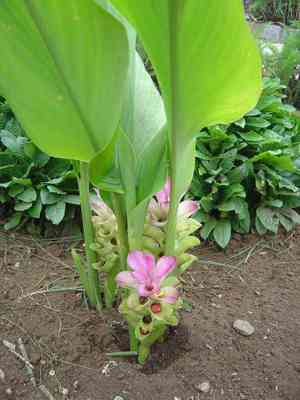
Common turmeric (Curcuma longa)
Also known as: Tumeric
Turmeric, a relative of ginger, has roots that are widely utilized for various purposes. In culinary practices, turmeric is valued as a seasoning and can be used either fresh or in its dried, ground form. Its vibrant orange hue makes it easily recognizable and also allows it to be used as a natural dye for both foods and fabrics. Additionally, turmeric roots are known for their medicinal properties and are incorporated into traditional remedies and modern supplements.
In This Article
Attributes of Common turmeric
Lifespan
Perennial, Annual
Plant Type
Herb
Plant Height
1 m to 1.5 m
Spread
50 cm
Leaf Color
Green
Flower Size
8 cm to 10 cm
Flower Color
White Yellow
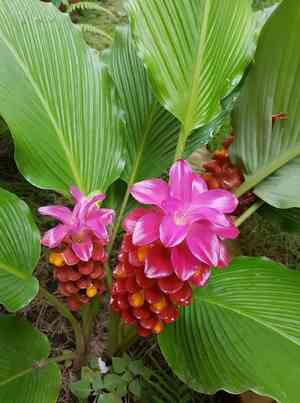
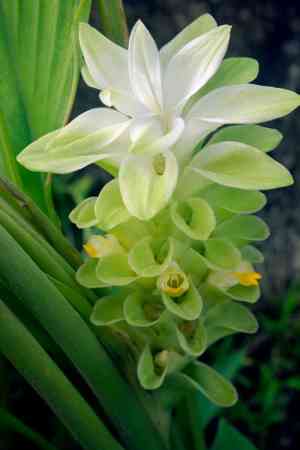
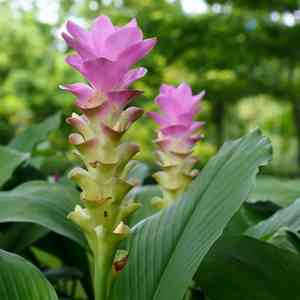
Images of Common turmeric
Quickly Identify Common turmeric
1
Robust perennial herb with lustrous green leaves and thick yellow-orange rhizomes resembling fingers.
2
Tubular white to yellowish-white flowers in spike-like inflorescences with pale green bracts and hairy bracteoles.
3
Anomaly in fruit production, propagates through rhizome divisions, no typical fruits or seeds.
4
Large lanceolate leaves, dark green above and pale green below, up to 40 inches (100 cm) long.
5
Stem with ellipsoidal primary tuber, bright orange color, cylindrical lateral rhizomes, and distinct branching pattern.
Scientific Classification of Common turmeric
Phylum
Vascular plants
Class
Monocotyledons
Order
Zingiberales
Family
Ginger
Genus
Curcuma
Species
Common turmeric
Planting and Growing of Common turmeric
Care Difficulty
Easy
Watering Schedule
Every 2 days
Sunlight Requirements
Partial sun
Sunshine Duration
6-10 hours
Ideal Temperature
75-85℉
Soil Type
Potting Mix, Peat Mix
Soil pH
5.5-7.5
Fertilizer Type
Balanced
Pruning Season
Spring, Summer
Pruning Area
Branches, Leaves
Pruning Frequency
2 times a year
Repotting Season
Spring
Pot Type
Plastic, Ceramic
 How to Water Common turmeric?
Water Curcuma longa until the soil is consistently moist but not soggy. Approximately 500 milliliters should be sufficient for a typical medium-sized pot. The key is to ensure that excess water can drain freely to prevent root rot, which can be a severe problem if the soil remains waterlogged.
More About Watering Techniques→
What are the symptoms of an underwatered Common turmeric?
›
What should I do if my Common turmeric is not getting enough water?
›
What are the symptoms of an overwatered Common turmeric?
›
How to save an overwatered Common turmeric?
›
 What Are the Sunlight Requirements for Common turmeric?
Curcuma longa flourishes in partial sun to full shade, which balances light exposure with reduced stress. This leads to healthier growth and more vibrant foliage, optimal for its tropical nature.
More About Sunlight Requirements Techniques→
What is the best type of light for Curcuma longa?
›
How can I achieve the ideal light conditions for Curcuma longa?
›
What benefits does Curcuma longa experience with ideal light?
›
 What Is the Ideal Temperature Range for Common turmeric?
Curcuma longa thrives in temperatures ranging from 75 to 85 degrees Fahrenheit. Maintaining this temperature range ensures optimal growth and energy efficiency for the plant. This warm temperature mimics the tropical conditions that Curcuma longa is naturally accustomed to, facilitating effective photosynthesis and nutrient uptake.
 What Soil is Best for Common turmeric?
Curcuma longa thrives in well-aerated and well-drained soil. Good aeration allows roots to access oxygen, promoting healthy growth and preventing root rot. Soil should be rich in organic matter and nutrients. This ensures robust rhizome development and vibrant vegetative growth, crucial for Curcuma longa. The soil must retain moisture without becoming waterlogged. Moisture retention supports the plant through dry spells, maintaining steady growth.
More About Soil→
 How to Fertilize Common turmeric?
Curcuma longa, commonly known as turmeric, thrives on a balanced fertilization approach. The key is to ensure the soil is nutrient-rich without over-applying fertilizer. Use a dilute liquid fertilizer mix, no more than 1 tablespoon per gallon of water to avoid scorching the roots. For solid fertilizers, incorporate them gently into the topsoil, using no more than 2 ounces per plant annually.
More About Fertilizing Techniques→
 How to Prune Common turmeric?
Always use clean, sharp pruning shears to prevent the spread of diseases and ensure clean cuts that heal quickly. Sterilize your tools with alcohol before and after pruning to protect your Curcuma longa from potential infections. Start by removing any dead or damaged leaves and stems. Cut them back to healthy growth, ensuring a tidy plant appearance. This step improves air circulation and directs energy to healthier parts of the plant. Trim back healthy stems and leaves gently to shape the plant. Focus on maintaining a balanced structure that allows sunlight to penetrate evenly, promoting vigorous growth and flowering.
More About Pruning Techniques→
 How to Propagate Common turmeric plant?
1
Start by selecting healthy and mature rhizomes that are at least one year old. Gently clean them to remove excess soil, and identify sections with at least two to three nodes for successful division.
2
Before cutting, sterilize all tools and the surface area where you will work. This reduces the risk of infection or disease affecting the divided rhizomes.
3
Once divided, plant the rhizomes approximately three inches deep in well-draining soil. Ensure the nodes are facing upwards to allow new growth to emerge efficiently.
 How to Repot Common turmeric plant?
1
Curcuma longa shows signs of needing a repot when its roots start circling the pot or protruding from drainage holes. Repotting is best done during its active growth period, in spring or summer, when the plant can quickly recover and establish itself in a new pot.
2
Select a pot that is about 2 inches larger in diameter than the current one. Ensure it has adequate drainage holes to prevent waterlogging. This size allows the plant sufficient room for root growth without risking root rot from excess soil moisture.
3
Curcuma longa thrives in a well-draining potting mix, often one containing perlite or sand, to maintain aeration. This type of soil helps prevent water accumulation, ensuring the tubers do not rot while providing the nutrients necessary for healthy growth.
Learn More About Common turmeric Diseases
Anthracnose
Bacterial Leaf Spot
Bacterial Soft Rot
Bacterial Wilt
Chemical Injury
Cyst Nematode
Damping-off
Downy Mildew
Drought Stress
Fusarium Wilt
Gray Mold
Leaf Spot
Mosaic
Nutrient Deficiency
Nutrient Toxicity
Powdery Mildew
Root Rot
Root-knot Nematode
Rusts
Sooty Mold
Spider Mites
Temperature Stress
Thrips Damage
White Mold



