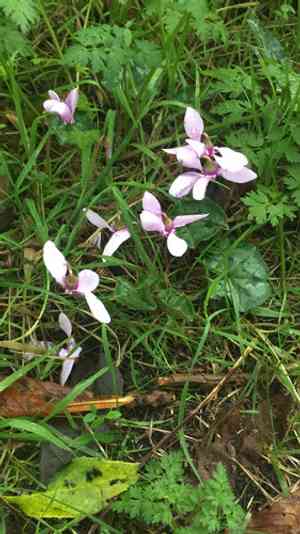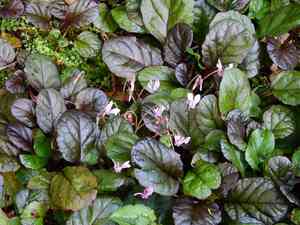
Ivy-leaved cyclamen(Cyclamen hederifolium)

Ivy-leaved cyclamen (Cyclamen hederifolium)

Also known as: Baby cyclamen

Ivy-leaved cyclamen (Cyclamen hederifolium) is a flowering plant native to the Mediterranean region from France to Turkey. The ivy-leaved cyclamen is often cultivated in gardens because it is considered the most hardy species of the cyclamens. The Latin name Cyclamen hederifolium means "ivy leaf."

Attributes of Ivy-leaved cyclamen

Lifespan
Perennial, Annual
Plant Type
Herb
Plant Height
10 cm to 15 cm
Spread
15 cm to 30 cm
Leaf Color
Green Variegated Silver Gray
Flower Size
2.5 cm
Flower Color
Pink White Purple Red

PlantJoy - Identify plants with a snap

Identify and diagnose plants, get toxicity alerts, and explore safety guides for all types of fungi.

Try for Free

Images of Ivy-leaved cyclamen

Ivy-leaved cyclamen(Cyclamen hederifolium)

Quickly Identify Ivy-leaved cyclamen

1
Heart-shaped leaves with 2-3 lobes on each side, 2-4 inches (5-10 cm) long and wide.
2
Flowers nod gracefully, 1.5-2 inches (3.8-5 cm) wide, with upswept petals and darker eye.
3
Varied leaf colors like green, silver, or variegated patterns, enhancing plant recognition.
4
Distinctive floral structure with striking color variation and intricate petal arrangements.

Scientific Classification of Ivy-leaved cyclamen

Phylum
Vascular plants
Class
Dicotyledons
Order
Ericales
Family
Primrose
Genus
Alpine violet
Species
Ivy-leaved cyclamen

Planting and Growing of Ivy-leaved cyclamen

Care Difficulty
Easy
Watering Schedule
Every 2 days
Sunlight Requirements
Partial sun
Sunshine Duration
6-10 hours
Ideal Temperature
50-68℉
Soil Type
Potting Mix, Peat Mix
Soil pH
6.5-7.5
Fertilizer Type
Balanced
Pruning Season
Spring, Summer
Pruning Area
Branches, Leaves
Pruning Frequency
2 times a year
Repotting Season
Spring
Pot Type
Plastic, Terracotta

water icon How to Water Ivy-leaved cyclamen?

When watering Cyclamen hederifolium, ensure the soil is evenly moist but never soggy. Aim for about 150 ml at a time, allowing excess water to drain. This plant prefers being slightly on the drier side between waterings, especially during dormancy.
What are the symptoms of an underwatered Ivy-leaved cyclamen?
What should I do if my Ivy-leaved cyclamen is not getting enough water?
What are the symptoms of an overwatered Ivy-leaved cyclamen?
How to save an overwatered Ivy-leaved cyclamen?

sunlight icon What Are the Sunlight Requirements for Ivy-leaved cyclamen?

Sunlight Requirements: Partial sun, Full shade
Duration of light: 2-3 hours
Partial sun/Full shade is ideal for Cyclamen hederifolium, providing balance between light and protection. This lighting supports lush growth and prolific flowering, creating a robust and visually appealing plant.
Optimal Sun Exposure
Place for Ideal Growth
Benefits of Correct Light

temperature icon What Is the Ideal Temperature Range for Ivy-leaved cyclamen?

Ideal Temperature: 50 ~ 68℉
Cyclamen hederifolium thrives best in temperatures ranging from 50°F to 68°F. This range supports optimal growth and flowering by providing a stable climate similar to its native habitat. Maintaining this temperature range ensures that the physiological processes of the plant, such as photosynthesis and respiration, proceed smoothly without stress. It is crucial for flower and foliage development, enhancing both the aesthetic appeal and health of the plant.

soil icon What Soil is Best for Ivy-leaved cyclamen?

Soil type: Loam, Sandy soil, Sandy loam
Soil PH: 6.5 ~ 7.5
Cyclamen hederifolium thrives in well-drained soils because it prevents waterlogging, which can cause root rot. Ensuring good drainage will promote healthy root systems, vital for vigorous plant growth. This plant benefits from a substrate rich in organic matter. The rich nutrients provide the essential elements needed for robust growth and prolific flowering, enhancing the vibrancy of the plant. Cyclamen requires a well-aerated soil structure to allow roots to breathe. Proper aeration ensures that roots can absorb oxygen efficiently, promoting healthier growth and resilience against disease.

fertilize icon How to Fertilize Ivy-leaved cyclamen?

Fertilizer type: Balanced
Cyclamen hederifolium prefers a balanced fertilization approach. When using liquid fertilizer, dilute it to half the recommended strength. For slow-release pellets, spread them evenly over the soil surface without burying them too deeply. This ensures the plant receives steady nutrients without the risk of over-fertilization.

prune icon How to Prune Ivy-leaved cyclamen?

Pruning Time: Summer, Autumn
Begin by carefully examining the plant for any yellowed, dead, or damaged foliage. Removing these leaves will prevent any potential disease and improve overall plant health and appearance. Prune Cyclamen hederifolium immediately after the flowering period. This is the optimal time to remove spent flowers and leaves, allowing the plant to redirect its energy efficiently. After pruning, ensure that all removed material is disposed of properly. Do not leave it around the plant, as it may attract pests or diseases that could harm the plant.

propagate icon How to Propagate Ivy-leaved cyclamen plant?

Propagate Time: Late summer, Early autumn, Autumn
1
The first step in propagation involves preparing a well-draining soil mixture. Use a mix of potting soil, sand, and perlite to create an environment that prevents root rot and encourages healthy growth.
2
For seed propagation, scatter the seeds on the soil surface and lightly press them in. Cover them with a thin layer of grit or sand to ensure good contact with the soil while allowing light to reach the seeds.
3
Division of corms involves carefully lifting mature plants from their growing medium. Use a knife to separate the corms, ensuring each section has at least one bud. Replant immediately to prevent drying out.

repot icon How to Repot Ivy-leaved cyclamen plant?

Repotting frequency: Every 2-3 years
1
Repotting Cyclamen hederifolium should be considered when you observe signs such as roots filling the entire pot or bulbs appearing cramped. These are indicators that the plant requires more space to grow efficiently. Ideally, this should be done in late spring when the plant is dormant or showing minimal new growth. Ensuring you repot during this time allows the plant to establish itself before its active growth period.
2
Select a pot that is just slightly larger than the current one, ensuring it has adequate drainage holes. Cyclamen prefers to be somewhat pot-bound rather than having excessive space. A pot that is too large may cause water retention and potential root rot. Terra cotta pots are ideal as they allow moisture to evaporate quickly, keeping the soil balanced.
3
Opt for a well-draining potting mix with components like perlite and peat. This mix prevents waterlogging, reducing the risk of root rot and fungal infections. Proper soil selection is crucial as Cyclamen roots are sensitive to overwatering and poor drainage conditions can quickly damage the plant.

PlantJoy - Identify plants with a snap

Find the best spots for them to optimize their health, simply using your phone.

Try for Free

Toxicity of Ivy-leaved cyclamen

Is Ivy-leaved cyclamen toxic to humans?

Ivy-leaved cyclamen is a poisonous plant that poses serious risks to individuals who consume it raw or inadequately prepared. Ingestion of this plant can lead to severe health complications, potentially resulting in death. The most toxic components are the tubers, and consuming them may induce symptoms such as abdominal pain, bloody stools, diarrhea, vomiting, nausea, and skin blistering. In extreme cases, it can even lead to death due to asphyxiation. Some individuals might attempt to ingest the tubers for perceived medicinal benefits, often unaware of the plant's dangers or lacking knowledge on the proper preparation methods for the roots.

Is Ivy-leaved cyclamen toxic to cat?

Ivy-leaved cyclamen is recognized as a toxic plant that presents a health hazard to cats if ingested. If a cat accidentally consumes any part of the ivy-leaved cyclamen, it could lead to signs of physical distress, indicating the necessity for prompt veterinary care. As every part of this plant poses this danger, cat owners should be attentive to ensure the plant remains out of reach. If a cat shows symptoms of illness after contact with the plant, it is crucial to take the animal to a veterinary clinic immediately for appropriate treatment.

Is Ivy-leaved cyclamen toxic to dog?

Ivy-leaved cyclamen is recognized as toxic to dogs. When dogs consume any component of this plant, they face the danger of poisoning, as every part contains harmful substances. Dogs might accidentally ingest parts of ivy-leaved cyclamen while exploring or playing outside. Symptoms of poisoning in dogs can manifest as gastrointestinal distress, which may include vomiting, diarrhea, and potentially more serious reactions depending on the quantity consumed. It is vital for dog owners to observe their pets attentively and restrict their access to ivy-leaved cyclamen. Should there be a suspicion that a dog has ingested any part of this plant, seeking immediate veterinary attention is crucial to ensure prompt treatment and the best outcome possible.

Identify toxic plants for your safety

Learn which plants are harmful to you and your pets, and make informed choices for a safer home!

Try for Free
WARNING
The judgment on toxicity and danger is for reference only. We DO NOT GUARANTEE any accuracy of such judgment. Therefore, you SHALL NOT rely on such judgment. It is IMPORTANT TO SEEK PROFESSIONAL ADVICE in advance when necessary.