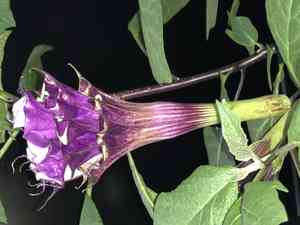
Devil's trumpet(Datura metel)

Devil's trumpet (Datura metel)

Also known as: Downy thornapple, Hindu datura, Thornapple, Sacred datura, Angel's trumpet

Devil's trumpet (Datura metel) is a highly poisonous plant. Consuming any part of it can result in severe health issues, such as confusion, hallucinations, rapid heart rate, respiratory difficulties, and even coma or death. Despite its dangerous nature, it is occasionally cultivated for its attractive flowers.

Attributes of Devil's trumpet

Lifespan
Perennial
Plant Type
Shrub
Plant Height
91 cm to 1.2 m
Spread
30 cm
Leaf Color
Green
Flower Size
8 cm to 15 cm
Flower Color
White Yellow Purple Lavender

PlantJoy - Identify plants with a snap

Identify and diagnose plants, get toxicity alerts, and explore safety guides for all types of fungi.

Try for Free

Images of Devil's trumpet

Devil's trumpet(Datura metel)

Quickly Identify Devil's trumpet

1
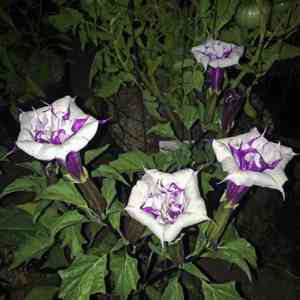
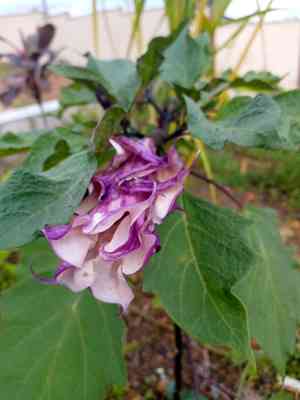
Trumpet-shaped flowers, 7 inches (18–20 cm) long and 4 inches (10 cm) wide.
2
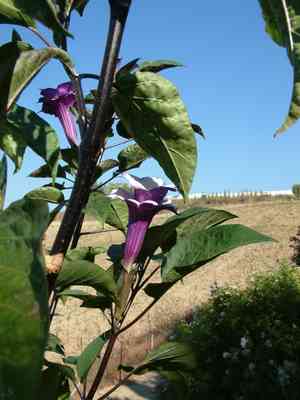
Large, ovate leaves with wavy margins, 6 to 8 inches (15 to 20 cm) long.
3
Distinctive dry capsules with spiny architecture, splitting to release 200-300 brownish yellow seeds.
4
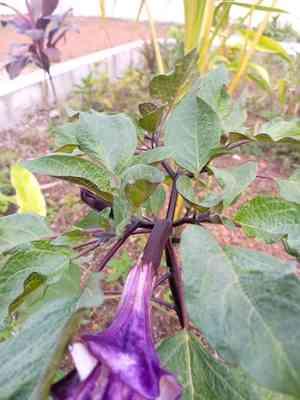
Foliage emits disagreeable odor when bruised; prominent visible vein patterns on leaves.
5
Full, shrub-like appearance reaching 3 to 4 feet (91 to 122 cm) in height and width.

Scientific Classification of Devil's trumpet

Phylum
Vascular plants
Class
Dicotyledons
Order
Nightshades, bindweeds, gooseweeds, and allies
Family
Nightshade
Genus
Thornapples
Species
Devil's trumpet

Planting and Growing of Devil's trumpet

Care Difficulty
Easy
Watering Schedule
Every 3 days
Sunlight Requirements
Full sun
Sunshine Duration
4-8 hours
Ideal Temperature
65-85℉
Soil Type
Potting Mix, Peat Mix
Soil pH
6.5-7.5
Fertilizer Type
Balanced
Pruning Season
Spring, Summer
Pruning Area
Branches, Leaves
Pruning Frequency
2 times a year
Repotting Season
Spring
Pot Type
Terracotta, Plastic

water icon How to Water Devil's trumpet?

Datura metel, known as the devil's trumpet, requires around 500 ml of water per session. The goal is to moisten the soil evenly, allowing water to reach the root zone without creating waterlogged conditions. Avoid leaving the soil too dry for extended periods.
What are the symptoms of an underwatered Devil's trumpet?
What should I do if my Devil's trumpet is not getting enough water?
What are the symptoms of an overwatered Devil's trumpet?
How to save an overwatered Devil's trumpet?
More About Watering Techniques

sunlight icon What Are the Sunlight Requirements for Devil's trumpet?

Sunlight Requirements: Full sun, Partial sun
Duration of light: 6 to 8 hours
Datura metel ideally requires full to partial sun exposure, receiving 6 to 8 hours daily. This range supports vigorous growth, abundant flowering, and maintains robust plant health, contributing to its magnificent, vibrant blossoms.
Ideal Light Source
Shading Adjustments
Seasonal Light Adjustments
More About Sunlight Requirements Techniques

temperature icon What Is the Ideal Temperature Range for Devil's trumpet?

Ideal Temperature: 65 ~ 85℉
Datura metel thrives optimally when the temperature is kept between 65°F and 85°F. This range ensures that the plant maintains healthy growth and development, as these temperatures closely mimic its native tropical and subtropical environments. It's crucial to maintain this temperature for robust foliage and flower production.

soil icon What Soil is Best for Devil's trumpet?

Soil type: Loam, Sandy loam
Soil PH: 6.5 ~ 7.5
Datura metel thrives in nutrient-rich soil. Such soils provide essential minerals that support vigorous growth and abundant flowering, ensuring your plant reaches its full potential. Well-drained soil is crucial for Datura metel to prevent root rot, which can be detrimental to its health. Ensuring soil doesn't hold excess water allows roots to breathe. While Datura metel needs well-drained soil, it also benefits from soil that retains some moisture, ensuring the plant doesn't dry out between waterings, leading to healthy blooms. More About Soil

fertilize icon How to Fertilize Devil's trumpet?

Fertilizer type: Balanced
For Datura metel, the amount of fertilizer depends on the growth stage and environmental conditions. Generally, apply a balanced liquid fertilizer at a rate of 1/4 to 1/2 teaspoon per gallon of water monthly during the growing season. Solid or slow-release fertilizers should be measured out according to the manufacturer's instructions, typically using a tablespoon or two per square foot of soil. More About Fertilizing Techniques

prune icon How to Prune Devil's trumpet?

Pruning Time: Spring, Summer, Autumn
Start by removing any dead or diseased branches with clean, sharp pruning shears. Cut back to a point just above a healthy leaf bud or branch. Trim the plant to maintain a pleasing shape and encourage more robust flowering. Aim for overall evenness while allowing for good air circulation through the branches. When shaping your Datura metel, focus on keeping a balanced silhouette. Remove any crossing or rubbing branches which can cause damage and harbor pests. This not only improves the plant's structure but also keeps it vigorous and visually appealing. More About Pruning Techniques

propagate icon How to Propagate Devil's trumpet plant?

Propagate Time: Spring, Early summer
1
Collect seeds from mature Datura metel plants after the seed pods have dried on the plant but before they split open, which usually happens in late summer to autumn.
2
Prepare a mix of sterile potting soil in a seed tray, ensuring the soil is moist but not waterlogged to provide an ideal environment for seed germination.
3
Sow the seeds evenly over the soil surface and cover them lightly with a layer of potting mix. Ensure they are evenly spaced to avoid overcrowding, which can cause seedling competition.
More About Propagating Techniques

repot icon How to Repot Devil's trumpet plant?

Repotting frequency: Every two years
1
Repotting Datura metel is best undertaken when new growth begins, typically in spring or summer. The classic signs indicating the need for repotting include roots growing through drainage holes, reduced growth, or the soil drying out in less than two days after watering. Observing these cues ensures the plant is ready for a new pot.
2
Select a pot that is only 1-2 inches larger than the current one to promote healthy growth without overwhelming the roots. Use pots with ample drainage holes to allow excess water to escape, preventing root rot. A slightly larger pot encourages growth while minimizing water logging issues.
3
Opt for a well-draining potting mix to ensure that water doesn't pool around the roots of Datura metel. The preferred soil contains a combination of peat moss, perlite, and pine bark. This composition provides the necessary drainage and aeration, allowing roots to access oxygen effectively.
More About Repotting Techniques

PlantJoy - Identify plants with a snap

Find the best spots for them to optimize their health, simply using your phone.

Try for Free

Toxicity of Devil's trumpet

Is Devil's trumpet toxic to humans?

Every component of the devil's trumpet is imbued with tropane alkaloids, which can be moderately toxic when consumed in significant amounts. Ingesting devil's trumpet may lead to varying degrees of illness, ranging from moderate to severe. Signs of poisoning from this plant include flushed and warm skin, dilated pupils, headaches, delirium, rapid but weak heart rate, seizures, and potential loss of consciousness. While it grows naturally in the wild and is also cultivated in gardens, no special precautions are required for handling it; however, it should absolutely never be consumed.

Is Devil's trumpet toxic to cat?

Devil's trumpet is a highly toxic plant for felines. If a cat inadvertently ingests any part of devil's trumpet, it faces the danger of poisoning since every part of the plant is harmful. Following consumption, a cat might show signs of distress, including gastrointestinal issues, dilated pupils, labored breathing, or an elevated heart rate. Given the serious nature of the poisoning that devil's trumpet can induce, it is crucial to obtain prompt veterinary assistance to maximize the likelihood of recovery for the affected cat.

Is Devil's trumpet toxic to dog?

The devil's trumpet is an extremely toxic plant for dogs, representing significant health dangers. Any part of this plant can poison dogs, as every component contains harmful toxins. Even minimal ingestion can trigger severe reactions. Dog owners must be alert for poisoning symptoms, which may manifest as vomiting, diarrhea, dilated pupils, excessive salivation, weakness, breathing difficulties, seizures, or tremors, along with a rapid heart rate. Due to the seriousness of these symptoms and the plant's high toxicity, it is essential for dog owners to promptly seek veterinary assistance if they believe their dog has consumed any part of this plant. Timely treatment is vital for managing poisoning effects and enhancing recovery chances.

Identify toxic plants for your safety

Learn which plants are harmful to you and your pets, and make informed choices for a safer home!

Try for Free
WARNING
The judgment on toxicity and danger is for reference only. We DO NOT GUARANTEE any accuracy of such judgment. Therefore, you SHALL NOT rely on such judgment. It is IMPORTANT TO SEEK PROFESSIONAL ADVICE in advance when necessary.
More About Toxic Techniques