Jimsonweed(Datura stramonium)

Jimsonweed (Datura stramonium)

Also known as: Moon flower, Angel's trumpet

Jimsonweed (Datura stramonium) is a nightshade plant native to Central America and is known for its toxicity and strong odor. The name "Jimsonweed" originates from Jamestown, Virginia. In 1676, British soldiers who consumed the plant during Bacon's Rebellion experienced significant hallucinogenic effects, leading to its common name. It is also considered an invasive species in temperate regions.

Attributes of Jimsonweed

Lifespan
Annual, Perennial, Biennial
Plant Type
Herb
Plant Height
60 cm to 1.5 m
Spread
30 cm to 90 cm
Leaf Color
Green
Flower Size
3 cm to 5 cm
Flower Color
White Purple Lavender

PlantJoy - Identify plants with a snap

Identify and diagnose plants, get toxicity alerts, and explore safety guides for all types of fungi.

Try for Free

Images of Jimsonweed

Jimsonweed(Datura stramonium)

Quickly Identify Jimsonweed

1
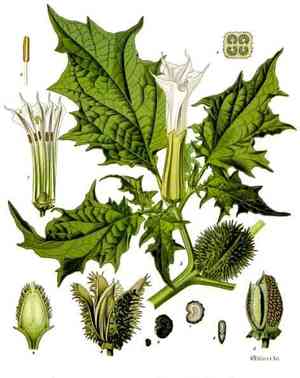
Stem color varies from green to purple, emitting an unpleasant smell.
2
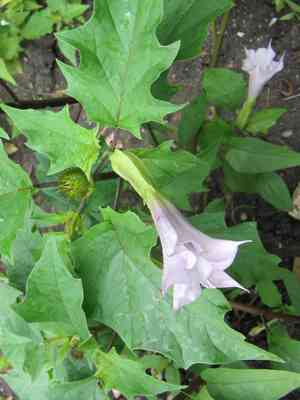
Leaves display jagged edges in a single, alternating pattern.
3
Large tubular flowers with five lobes, white or lavender.
4
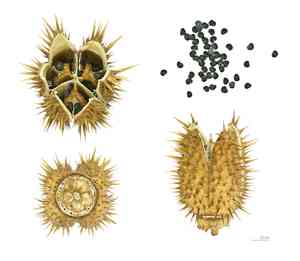
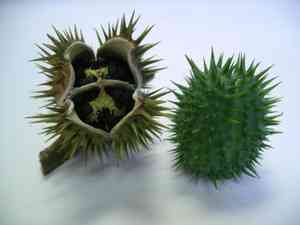
Egg-shaped fruit capsule, 2-4 inches (5-10 cm) with glossy black seeds.
5
Fruit texture may be either spiny or smooth, aiding in identification.

Scientific Classification of Jimsonweed

Phylum
Vascular plants
Class
Dicotyledons
Order
Nightshades, bindweeds, gooseweeds, and allies
Family
Nightshade
Genus
Thornapples
Species
Jimsonweed

Planting and Growing of Jimsonweed

Care Difficulty
Easy
Watering Schedule
Every 4 days
Sunlight Requirements
Full sun
Sunshine Duration
6-10 hours
Ideal Temperature
68-86℉
Soil Type
Potting Mix, Peat Mix
Soil pH
6.5-7.5
Fertilizer Type
Balanced
Pruning Season
Spring, Summer
Pruning Area
Branches, Leaves
Pruning Frequency
2 times a year
Repotting Season
Spring
Pot Type
Plastic, Ceramic

water icon How to Water Jimsonweed?

Datura stramonium, or Jimsonweed, requires carefully balanced watering. Aim for about 500 ml per session. Ensure the soil is moist, not waterlogged, to simulate their natural environment which is usually well-draining yet adequately hydrated.
What are the symptoms of an underwatered Jimsonweed?
What should I do if my Jimsonweed is not getting enough water?
What are the symptoms of an overwatered Jimsonweed?
How to save an overwatered Jimsonweed?

sunlight icon What Are the Sunlight Requirements for Jimsonweed?

Sunlight Requirements: Full sun
Duration of light: 6-8 hours daily
Datura stramonium prefers full sun, requiring an optimal range of sunlight exposure of 6-8 hours daily. Ideal lighting enhances the plant’s photosynthetic process, boosting its growth and flowering potential.
What is the ideal lighting for Jimsonweed?
How can I ensure Datura stramonium gets ideal light conditions?
What are the benefits of ideal lighting for Datura stramonium?

temperature icon What Is the Ideal Temperature Range for Jimsonweed?

Ideal Temperature: 68 ~ 86℉
The ideal temperature range for Datura stramonium growth is between 68°F and 86°F. This range allows the plant to thrive, ensuring adequate photosynthesis and metabolic activity. Maintaining this temperature helps the plant grow robustly, producing healthy foliage and blooms.

soil icon What Soil is Best for Jimsonweed?

Soil type: Loam, Sandy loam
Soil PH: 6.5 ~ 7.5
Datura stramonium thrives in well-drained soil conditions. This requirement ensures that the roots do not sit in water, preventing rot and promoting healthy growth by allowing just enough moisture retention and aeration. While this plant can tolerate poorer soils, moderately fertile soil helps to provide the essential nutrients necessary for robust growth and flowering. Fertility enhances the plant's vigor and increases blooming potential. The optimal pH range for Datura stramonium is between 6.5 to 7.5. This range helps maximize nutrient availability and absorption, allowing the plant to optimize its metabolic processes.

fertilize icon How to Fertilize Jimsonweed?

Fertilizer type: Balanced
For Datura stramonium, use a liquid fertilizer with a balanced NPK ratio of 10-10-10 at a concentration of 1 tablespoon per gallon of water. This ensures the plant receives adequate nutrition without being overwhelmed by excess nutrients.

prune icon How to Prune Jimsonweed?

Pruning Time: Spring, Summer
Before you begin pruning Datura stramonium, ensure you have a pair of sharp pruning shears and protective gloves. This plant is slightly toxic, and direct contact should be avoided to prevent skin irritation. Carefully examine the plant and identify any dead, damaged, or diseased branches. Cutting these parts off will help prevent the spread of disease and encourage new growth. Shape the plant for aesthetic purposes by cutting back upright branches to maintain a bushier appearance. This will also allow more sunlight to penetrate the inner foliage, promoting overall plant health.

propagate icon How to Propagate Jimsonweed plant?

Propagate Time: Spring, Late spring, Early spring
1
Before sowing, soak the seeds of Datura stramonium in warm water for 24 hours. Soaking helps in softening the seed coat, promoting faster germination by allowing moisture to penetrate more easily.
2
Plant the seeds in seed starting trays filled with a moist, well-draining potting mix. Cover the seeds with a thin layer of soil, and lightly mist the surface to ensure adequate moisture. Place the trays in a warm location with plenty of indirect sunlight.
3
Once the seedlings have developed a few sets of true leaves, they can be gently transferred to larger pots or directly into the garden. Dig a hole large enough to accommodate the root system and firm the soil around the base.

repot icon How to Repot Jimsonweed plant?

Repotting frequency: Every two years
1
Repot Datura stramonium when you notice roots growing through the drainage holes or if the plant appears cramped in its current pot. Spring and early summer are optimal times, taking advantage of the growing season to recover quickly from the disturbance.
2
Select a pot that is one size larger than the current one with adequate drainage holes. This ensures enough space for root expansion and prevents water stagnation, thereby reducing the risk of root rot.
3
Opt for a well-draining potting mix that mimics its natural habitat. A blend containing sand, perlite, and loamy soil works best, as it maintains proper moisture levels without becoming waterlogged.

PlantJoy - Identify plants with a snap

Find the best spots for them to optimize their health, simply using your phone.

Try for Free

Toxicity of Jimsonweed

Is Jimsonweed toxic to humans?

Jimsonweed is extremely toxic to humans. Instances of jimsonweed poisoning result from consuming any part of this plant, including its leaves, stems, flowers, and especially its seeds, and can prove to be quite severe. The symptoms manifest as flushed skin, enlarged pupils, headaches, confusion, delirium, unusual or erratic behavior, urinary retention, an intense sensitivity to sunlight, and, in severe instances, may lead to coma or even death. Jimsonweeds are characterized by their unique, spiky seed pods and distinctive flowers, making accidental ingestion quite rare.

Is Jimsonweed toxic to cat?

Jimsonweed poses a substantial health threat to cats due to its toxicity. When felines consume any portion of this plant—such as leaves, flowers, seeds, or stems—they risk experiencing poisoning. Common situations leading to this include accidental ingestion. If a cat ingests jimsonweed, it may suffer from intense physical discomfort, necessitating swift medical intervention. Therefore, it is crucial for cat owners to keep their pets away from jimsonweed and to promptly seek veterinary care if their cat exhibits signs of poisoning.

Is Jimsonweed toxic to dog?

Jimsonweed is an extremely poisonous plant for dogs, presenting significant health dangers. All parts of this plant possess toxic characteristics, and dogs can become poisoned by consuming any portion. Should a dog inadvertently ingest jimsonweed, it may display symptoms including dilated pupils, breathing difficulties, lethargy, vomiting, diarrhea, and in severe instances, could suffer from seizures or even coma. Given the extreme toxicity of jimsonweed, dog owners must take measures to keep their pets away from this plant and should promptly seek veterinary assistance if they suspect ingestion.

Identify toxic plants for your safety

Learn which plants are harmful to you and your pets, and make informed choices for a safer home!

Try for Free
WARNING
The judgment on toxicity and danger is for reference only. We DO NOT GUARANTEE any accuracy of such judgment. Therefore, you SHALL NOT rely on such judgment. It is IMPORTANT TO SEEK PROFESSIONAL ADVICE in advance when necessary.
More About Toxic Techniques