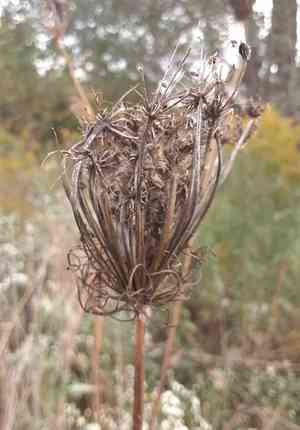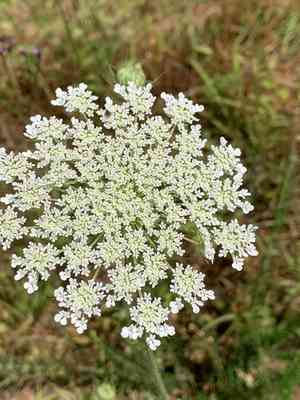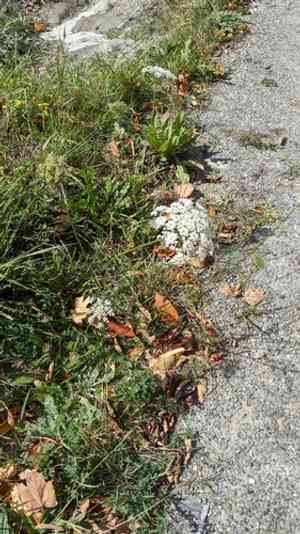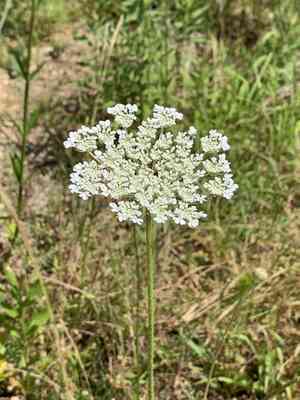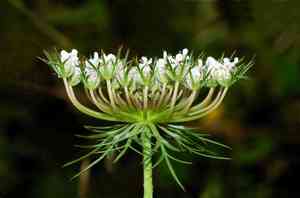
Wild carrot(Daucus carota)

Wild carrot (Daucus carota)

Also known as: Queen anne's lace, Bird's nest

The wild carrot, known for its delicate white flowers, is originally native to Europe and southwestern Asia. Over time, it has spread to regions like North America and Australia. Historical evidence indicates that it was cultivated for centuries in areas such as Turkey, Spain, and North Africa.

Attributes of Wild carrot

Lifespan
Biennial, Annual, Perennial
Plant Type
Herb
Plant Height
15 cm to 1.2 m
Spread
30 cm
Leaf Color
Green
Flower Size
3 cm to 7 cm
Flower Color
White

PlantJoy - Identify plants with a snap

Identify and diagnose plants, get toxicity alerts, and explore safety guides for all types of fungi.

Try for Free

Images of Wild carrot

Wild carrot(Daucus carota)

Quickly Identify Wild carrot

1
2-pinnately divided leaves with feathery appearance, up to 20 inches (50 cm) long.
2
Lacy white flowers in umbel clusters with central deep purple florets, 3-4 inches (7.6-10.2 cm) wide.
3
Biconvex schizocarp fruit, ribbed with bristly hairs, forming a bird's nest-like structure.
4
Robust, hairy stem reaching up to 3 feet (90 cm) with sparse branching and rough texture.
5
Distinctive biennial growth pattern with rosette in first year and tall flowering stem in second year.

Scientific Classification of Wild carrot

Phylum
Vascular plants
Class
Dicotyledons
Order
Apiales
Family
Umbellifers
Genus
Daucus
Species
Wild carrot

Planting and Growing of Wild carrot

Care Difficulty
Easy
Watering Schedule
Every 2 days
Sunlight Requirements
Full sun
Sunshine Duration
4-6 hours
Ideal Temperature
60-70℉
Soil Type
Potting Mix, Peat Mix
Soil pH
6.5-7.5
Fertilizer Type
Balanced
Pruning Season
Spring, Summer
Pruning Area
Branches, Leaves
Pruning Frequency
2 times a year
Repotting Season
Spring
Pot Type
Plastic, Ceramic

water icon How to Water Wild carrot?

For Daucus carota, the watering amount follows the principle of ensuring soil moisture without over-saturation. Water thoroughly, allowing the moisture to reach at least 6 inches into the soil. Watering should be sufficient to keep the soil consistently damp, ideally around 500 ml each session.
What are the symptoms of an underwatered Wild carrot?
What should I do if my Wild carrot is not getting enough water?
What are the symptoms of an overwatered Wild carrot?
How to save an overwatered Wild carrot?

sunlight icon What Are the Sunlight Requirements for Wild carrot?

Sunlight Requirements: Full sun, Partial sun
Duration of light: 6 to 8 hours
Carrots thrive in full sun or partial sun for about 6 to 8 hours daily. This lighting optimizes photosynthesis, enhances root development, and boosts sugar content for tastier yields.
Needed Light Intensity
Benefits of Ideal Lighting
Strategies for Achieving Ideal Light

temperature icon What Is the Ideal Temperature Range for Wild carrot?

Ideal Temperature: 60 ~ 70℉
For optimal growth, Daucus carota, commonly known as carrot, thrives best in temperatures between 60 to 70°F. This temperature range supports root development and ensures the best flavor and texture in carrots. Growing in these conditions allows for robust growth and decreases stress on the plant.

soil icon What Soil is Best for Wild carrot?

Soil type: Sandy loam, Loam
Soil PH: 6.5 ~ 7.5
Daucus carota thrives in well-drained soil which helps prevent root rot and promotes healthy root development. Well-drained conditions ensure that excess water is efficiently managed, leading to robust carrot growth. The soil should be rich in organic matter, providing essential nutrients and improving soil structure. This nutrient-rich environment encourages vigorous growth and better flavor in the carrots. Maintaining consistent moisture levels is crucial for Daucus carota as it ensures uniform growth and prevents splitting. Regular watering without waterlogging ensures optimal plant health.

fertilize icon How to Fertilize Wild carrot?

Fertilizer type: Balanced
When fertilizing Daucus carota, commonly known as the carrot, it's essential to use a balanced fertilizer with an NPK ratio of 5-10-10. Carrots require moderate nitrogen but higher phosphorus and potassium for healthy root development. Apply approximately 0.5 pounds per 100 square feet to avoid over-fertilizing and ensure robust growth.

prune icon How to Prune Wild carrot?

Pruning Time: Summer
Begin by removing any dead, damaged, or diseased leaves. Carefully cut them at the base to prevent the spread of disease. Removing these parts encourages healthier growth. Trim back overgrown areas to promote good air circulation. This is vital for reducing fungal infections. Cut away no more than one-third of the plant’s foliage at a time.

propagate icon How to Propagate Wild carrot plant?

Propagate Time: Spring, Late spring, Early spring
1
Start by selecting a location with well-draining soil that is fine-textured and free of clumps. Amend the soil with plenty of organic matter to enhance its fertility and drainage capability.
2
Sow carrot seeds directly into the soil at a depth of about half an inch. Space them approximately two inches apart, ensuring they have enough room to grow without competing for nutrients.
3
Water the seeds gently to keep the soil consistently moist but not waterlogged. Use a fine spray to avoid displacing the seeds. Monitor soil moisture regularly to prevent drying out.

repot icon How to Repot Wild carrot plant?

Repotting frequency: Annually or bi-annually
1
Watch for signs like overcrowded roots or slowed growth. If roots peek through drainage holes or the plant seems thirsty more often, it's time to repot. Early indications are crucial for healthy development.
2
Choose a pot that is one size larger than the current one, with good drainage holes. This prevents waterlogging and encourages root expansion, creating an environment conducive to vigorous plant health.
3
Opt for well-drained sandy loam soil. Its texture allows for sufficient aeration and nutrient supply, providing an ideal balance that supports root health and robust growth.

PlantJoy - Identify plants with a snap

Find the best spots for them to optimize their health, simply using your phone.

Try for Free

Toxicity of Wild carrot

Is Wild carrot toxic to cat?

Wild carrot is regarded as toxic to felines. Poisoning may take place if cats consume various components of the plant, such as leaves, sap, roots, or seeds, whether by chance or out of curiosity. After consuming wild carrot, cats may show signs of physical distress, indicating the beginning of poisoning. It is crucial for cat owners to remain alert and restrict access to wild carrot, preventing unintentional ingestion. If a cat demonstrates any worrisome symptoms of illness after exposure to wild carrot, prompt veterinary care is imperative for appropriate treatment and management.

Is Wild carrot toxic to dog?

Wild carrot is regarded as harmful to dogs. Canines may inadvertently consume various parts of this plant, leading to potential poisoning risks. The leaves, sap/juice, roots, and seeds are recognized as toxic elements of wild carrot. If a dog ingests any segment of wild carrot, it could display symptoms such as gastrointestinal distress, excessive drooling, weakness, or more serious reactions based on the quantity consumed. It is essential for dog owners to watch over their pets closely and restrict their access to wild carrot to prevent accidental ingestion. Should a dog ingest any part of wild carrot, it is vital to seek immediate veterinary assistance to ensure the best possible outcome for the animal.

Identify toxic plants for your safety

Learn which plants are harmful to you and your pets, and make informed choices for a safer home!

Try for Free
WARNING
The judgment on toxicity and danger is for reference only. We DO NOT GUARANTEE any accuracy of such judgment. Therefore, you SHALL NOT rely on such judgment. It is IMPORTANT TO SEEK PROFESSIONAL ADVICE in advance when necessary.