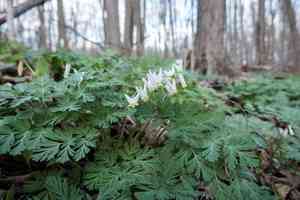
Dutchman's breeches(Dicentra cucullaria)

Dutchman's breeches (Dicentra cucullaria)

Also known as: Snowboys, White hearts, Monks head, Kitten breeches, Little boys breeches

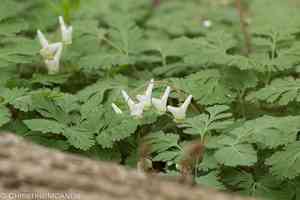
The name "Dutchman's breeches" originates from the flower's shape, which looks like traditional Dutch trousers. This woodland plant blooms in early spring, typically between March and April, providing an important early food source for bees and other pollinators. By late summer, the plant goes dormant.

Attributes of Dutchman's breeches

Lifespan
Perennial
Plant Type
Herb
Plant Height
15 cm to 46 cm
Spread
15 cm to 20 cm
Leaf Color
Green Blue
Flower Size
2.5 cm
Flower Color
White Yellow Pink

PlantJoy - Identify plants with a snap

Identify and diagnose plants, get toxicity alerts, and explore safety guides for all types of fungi.

Try for Free

Images of Dutchman's breeches

Dutchman's breeches(Dicentra cucullaria)

Quickly Identify Dutchman's breeches

1
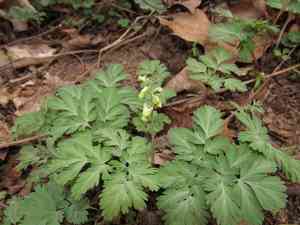
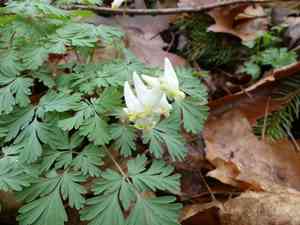
Heart-shaped, nodding flowers in white to pink shades.
2
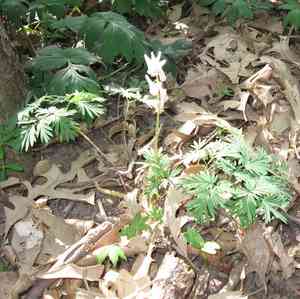
Compound, deeply dissected, fern-like leaves creating feathery backdrop.
3
White flowers with inflated petals resembling upside-down pantaloons.
4
Oval fruit capsules tapering to points at both ends like lanterns.
5
Tan to reddish-brown stem with smooth texture, unbranched and slender.

Scientific Classification of Dutchman's breeches

Phylum
Vascular plants
Class
Dicotyledons
Order
Ranunculales
Family
Poppy
Genus
Bleeding-Hearts
Species
Dutchman's breeches

Planting and Growing of Dutchman's breeches

Care Difficulty
Easy
Watering Schedule
Every 2 days
Sunlight Requirements
Partial sun
Sunshine Duration
4-6 hours
Ideal Temperature
60-70℉
Soil Type
Potting Mix, Peat Mix
Soil pH
6.5-7.5
Fertilizer Type
Balanced
Pruning Season
Spring, Summer
Pruning Area
Branches, Leaves
Pruning Frequency
2 times a year
Repotting Season
Spring
Pot Type
Terracotta, Plastic

water icon How to Water Dutchman's breeches?

Water Dicentra cucullaria until the water evenly moistens the top few inches of soil, about 200 ml per watering. Ensure the soil doesn’t become waterlogged. This amount reflects the plant's natural habitat preferences where consistent but moderate moisture levels are optimal.
What are the symptoms of an underwatered Dutchman's breeches?
What should I do if my Dutchman's breeches is not getting enough water?
What are the symptoms of an overwatered Dutchman's breeches?
How to save an overwatered Dutchman's breeches?

sunlight icon What Are the Sunlight Requirements for Dutchman's breeches?

Sunlight Requirements: Partial sun
Duration of light: 3-6 hours daily
Partial sun ensures Dicentra cucullaria receives balanced light, which promotes lush foliage and prolific blooming. This range reduces stress from overheating and provides enough energy for robust photosynthesis and growth.
Optimal Placement Outdoors
Indoor Lighting Strategy
Adjusting to Seasonal Changes
More About Sunlight Requirements Techniques

temperature icon What Is the Ideal Temperature Range for Dutchman's breeches?

Ideal Temperature: 60 ~ 70℉
Dicentra cucullaria thrives in a temperate climate. The ideal temperature range for this plant is between 60°F and 70°F. This range allows the plant to maintain healthy growth and optimal leaf development. Ensuring that the temperature stays within this range can lead to better flowering and overall plant vigor.

soil icon What Soil is Best for Dutchman's breeches?

Soil type: Loam, Sandy loam
Soil PH: 6.5 ~ 7.5
Dicentra cucullaria thrives in well-drained soil, which prevents root rot by allowing excess water to flow away quickly. This is crucial for their health as it mimics their natural habitat and keeps their roots from sitting in water. Although they need well-drained soil, maintaining sufficient moisture, especially in active growing phases, supports their growth. This balance can be achieved with organic-rich loam that retains moisture without becoming waterlogged. Rich in organic matter, this soil supports the nutrition needs of Dicentra cucullaria, ensuring adequate nutrients for optimum flowering and foliage health. Compost or well-rotted manure can enhance soil nutrient levels.

fertilize icon How to Fertilize Dutchman's breeches?

Fertilizer type: Balanced
When fertilizing Dicentra cucullaria, it's essential to apply fertilizer sparingly. Use a balanced, water-soluble fertilizer mixed to half strength to avoid nutrient burn. This ensures the delicate roots are not overwhelmed by excess nutrients, promoting steady growth without over-fertilization concerns.

prune icon How to Prune Dutchman's breeches?

Pruning Time: Spring, Summer
Ensure your pruning shears are clean and sharp. This prevents the spread of disease and makes clean cuts that heal more quickly, reducing stress on the plant. Inspect the plant for any dead, diseased, or damaged leaves or stems. These parts can draw energy away from the healthy ones and should be removed to promote overall vigor. Begin by cutting away the dead or damaged leaves at the base, where they connect to healthier stems. Avoid cutting into the healthy tissue, which can stunt growth. More About Pruning Techniques

propagate icon How to Propagate Dutchman's breeches plant?

Propagate Time: Spring, Late spring
1
Collect seeds in late spring once the pods have dried and split open. Sow them immediately on the soil surface in seed trays filled with well-drained, moist potting mix. Cover lightly with soil and place in a cool, shaded location until germination.
2
Divide the clumps of Dicentra cucullaria in early spring while the plant is still dormant. Carefully dig up the plant with a hand trowel, ensuring the delicate roots are intact. Separate the clumps ensuring each division has several roots and then replant immediately.
3
Once seeds have been sown or divisions made, water gently to settle the soil around seeds or plants. Maintain consistent moisture but avoid waterlogging, which can rot the young seedlings or new divisions. Mulching can help retain soil moisture.
More About Propagating Techniques

repot icon How to Repot Dutchman's breeches plant?

Repotting frequency: Every 2-3 years
1
Look for signs such as roots coming out of the drainage holes or the soil drying out too quickly. These indicate that Dicentra cucullaria has outgrown its current pot and is ready for a new home. Ideally, repotting should be done in the spring when the plant comes out of dormancy and begins to grow actively.
2
Select a pot that is one size larger than the current one. It should have good drainage holes to prevent waterlogging. A ceramic pot can offer the stability needed for this upright plant and helps in maintaining the moisture balance. Ensure that the new pot is sturdy and allows roots room to grow, providing stability and preventing tipping.
3
Opt for a well-draining soil mix, enriched with organic matter such as compost. This type of soil helps retain the necessary moisture while allowing excess water to drain away, preventing root rot. The soil should be light and airy to promote healthy root development, enhancing growth and blooming.

PlantJoy - Identify plants with a snap

Find the best spots for them to optimize their health, simply using your phone.

Try for Free

Toxicity of Dutchman's breeches

Is Dutchman's breeches toxic to humans?

Owing to the presence of isoquinoline alkaloids, the dutchman's breeches can result in mild to severe toxic reactions when consumed, and can also produce slight skin dermatitis upon physical contact with the plant. Although such poisoning typically does not result in fatalities, it can lead to significant health issues. The onset of symptoms following ingestion occurs rapidly and generally includes tremors, vomiting, diarrhea, unsteady movements, convulsions, and respiratory difficulties. Contact with the foliage or any other portion of the plant can lead to redness, itchiness, rashes, and irritation. Every part of the dutchman's breeches is considered toxic.

Is Dutchman's breeches toxic to cat?

Dutchman's breeches is regarded as a toxic plant for cats. If cats ingest any portion of dutchman's breeches, they face the danger of poisoning, especially if they mistakenly consume the plant while exploring or engaging in play. Post-ingestion, the cat may show signs of physical distress, which can appear through behaviors suggesting illness or discomfort. It is essential for cat owners to maintain vigilance and ensure that dutchman's breeches is kept out of their pets' reach. Should poisoning be suspected, prompt action from a veterinary clinic is crucial to safeguard the health and wellbeing of the injured cat.

Is Dutchman's breeches toxic to dog?

Dutchman's breeches is recognized as a toxic species for dogs. All parts of this plant are deemed poisonous, posing a risk of poisoning if a dog ingests any section of it. When a dog consumes dutchman's breeches, it may show symptoms including gastrointestinal distress, tremors, or cardiac issues. Therefore, it is essential for dog owners to keep their pets away from habitats where dutchman's breeches flourishes and to keep an eye out for any signs of discomfort that may suggest toxicity. Should a dog ingest dutchman's breeches, prompt veterinary assistance is vital to secure the best possible recovery for the animal.

Identify toxic plants for your safety

Learn which plants are harmful to you and your pets, and make informed choices for a safer home!

Try for Free
WARNING
The judgment on toxicity and danger is for reference only. We DO NOT GUARANTEE any accuracy of such judgment. Therefore, you SHALL NOT rely on such judgment. It is IMPORTANT TO SEEK PROFESSIONAL ADVICE in advance when necessary.
More About Toxic Techniques