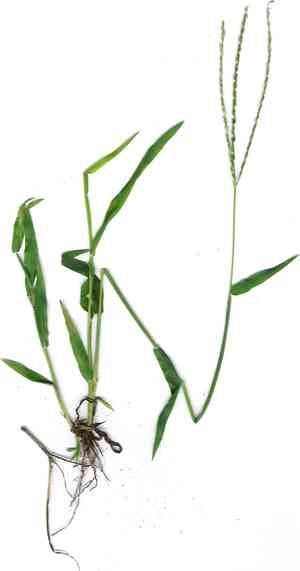
Southern crabgrass (Digitaria ciliaris)
Also known as: Manna grass, Polish millet, Henry's crabgrass
Southern crabgrass (Digitaria ciliaris) is a resilient and widespread grass, originally from Asia, now prevalent globally. Though it's often labeled as an invasive weed, particularly in regions like North America and China, it can be beneficial in non-crop areas. This grass is effective in stabilizing soil and preventing erosion, thanks to its adaptability to various soil types and conditions.
In This Article
Attributes of Southern crabgrass
Lifespan
Annual, Biennial
Plant Type
Grass
Plant Height
60 cm
Spread
15 cm to 30 cm
Leaf Color
Green
Flower Size
20 cm
Flower Color
Green Brown
Images of Southern crabgrass
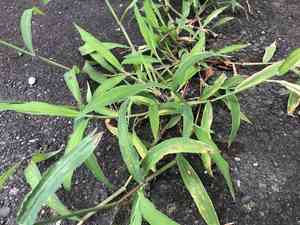

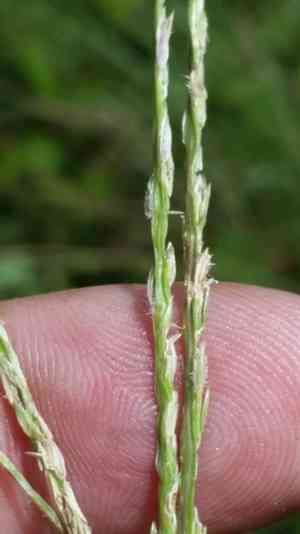

Quickly Identify Southern crabgrass
1
Linear leaves with hairy surface, 2-6 inches (5-15 cm) long.
2
Light green racemes up to 8 inches (20 cm) long, with clustered flowers.
3
Small, light brown seeds in 1-8 inch (2.5-20 cm) long spikelets.
4
Slender, green stems, 0.1-0.2 inches (2-5 mm) thick, with sparse branching.
5
Dense clumps reaching 6-24 inches (15-60 cm) in height, sprawling stems with linear leaves.
Scientific Classification of Southern crabgrass
Phylum
Vascular plants
Class
Monocotyledons
Order
Poales
Family
Grass
Genus
Crabgrasses
Species
Southern crabgrass
Planting and Growing of Southern crabgrass
Care Difficulty
Easy
Watering Schedule
Every 4 days
Sunlight Requirements
Full sun
Sunshine Duration
4-6 hours
Ideal Temperature
77-86℉
Soil Type
Potting Mix, Peat Mix
Soil pH
6.5-7.5
Fertilizer Type
Balanced
Pruning Season
Spring, Summer
Pruning Area
Branches, Leaves
Pruning Frequency
2 times a year
Repotting Season
Spring
Pot Type
Plastic, Ceramic
 How to Water Southern crabgrass?
For Digitaria ciliaris, water deeply until the surrounding soil is thoroughly moist, mimicking a moderate rainfall, but ensure it doesn't lead to waterlogging. The soil should be moist but not soggy, maintaining a delicate balance that the plant thrives in.
What are the symptoms of an underwatered Southern crabgrass?
›
What should I do if my Southern crabgrass is not getting enough water?
›
What are the symptoms of an overwatered Southern crabgrass?
›
How to save an overwatered Southern crabgrass?
›
 What Are the Sunlight Requirements for Southern crabgrass?
Digitaria ciliaris prefers full sun to partial sun, ideally getting 6 to 10 hours. This range fosters lush growth, promotes full leaf development, and supports efficient nutrient uptake.
More About Sunlight Requirements Techniques→
How much sunlight does Digitaria ciliaris require?
›
What is the solution to achieve ideal lighting?
›
What are the benefits of ideal lighting for Digitaria ciliaris?
›
 What Is the Ideal Temperature Range for Southern crabgrass?
Digitaria ciliaris thrives best in a temperature range of 77°F to 86°F. This range ensures optimal growth conditions by providing the warmth needed for metabolic activities and photosynthesis. Maintaining this ideal temperature minimizes stress and enhances the plant's ability to absorb nutrients efficiently.
 What Soil is Best for Southern crabgrass?
Digitaria ciliaris thrives best in well-drained soil, which prevents waterlogging and subsequently root rot. Well-drained soil ensures that roots receive the right amount of oxygen, enriching plant growth while maintaining essential nutrient availability. A soil rich in nutrients supports the vigorous growth needs of Digitaria ciliaris. An optimal mixture of potassium, nitrogen, and phosphorus can significantly enhance the plant's health and robustness, leading to vibrant, lush greenery. Digitaria ciliaris prefers soil with good moisture retention capacity. While too much water can be detrimental, a moderate level helps in maintaining the plant's hydration needs between watering, reducing stress and promoting resilience.
 How to Fertilize Southern crabgrass?
For Digitaria ciliaris, the fertilizer amount should be tailored to the type of soil and growth stage. Generally, a balanced NPK (nitrogen, phosphorous, potassium) fertilizer is recommended. Use about half the recommended amount on the packaging initially, ensuring the amounts don't exceed 1-2 pounds per 1,000 square feet, spread evenly to encourage healthy growth without overwhelming the grass.
 How to Prune Southern crabgrass?
Use sharp scissors or garden shears to trim Digitaria ciliaris back to the desired height. Focus on removing the older, browning blades and any parts that appear damaged or diseased. Aim for a clean cut to help prevent the spread of any potential infections. Trim the plant back by about one-third to encourage fresh, lush growth. On top of trimming for health, you may also shape the plant to fit your landscaping aesthetic. Carefully cut and shape around edges to maintain a balanced look, perhaps in borders or as ground cover. This type of pruning is crucial in keeping the plant neat and preventing it from overtaking other species in a mixed planting.
More About Pruning Techniques→
 How to Propagate Southern crabgrass plant?
1
Harvest seeds from mature Digitaria ciliaris plants when they are dry and firm. It is important to do this before they are dispersed naturally. Store them in a cool, dry place until you are ready to plant.
2
Before planting, till the soil to a fine texture, eliminating clumps and debris. It should be loose to allow for root penetration. Incorporate organic matter to improve nutrient levels and drainage.
3
Scatter seeds on the surface of prepared soil and cover lightly with a thin layer of soil or sand. This ensures they are not buried too deeply, allowing light to penetrate, which aids germination.
 How to Repot Southern crabgrass plant?
1
Repot Digitaria ciliaris when you notice it's becoming root-bound, or when growth slows despite optimal care. Check for roots growing out of drainage holes or tightly packed roots. Spring or summer is ideal, as the growing season allows it to adjust easier.
2
Select a pot that's 1-2 inches larger in diameter than the current one to give roots room to grow. A pot with ample drainage is crucial to prevent waterlogging, which could lead to root rot. Material-wise, clay pots are great for their porous nature, aiding in soil aeration.
3
Use a well-draining potting mix, possibly blended with sand or perlite, to ensure excess water flows away easily. This minimizes the risk of water stagnation, which can lead to root rot and fungal diseases. Such soil also provides ample aeration to roots.



