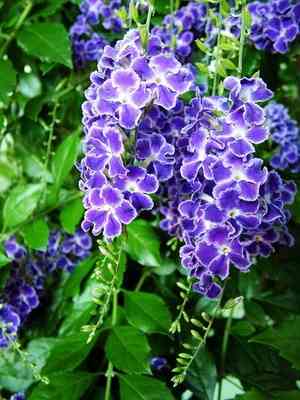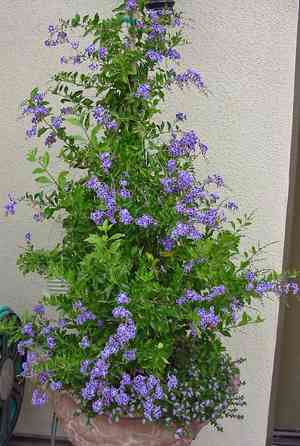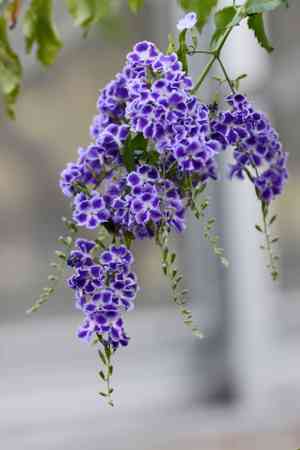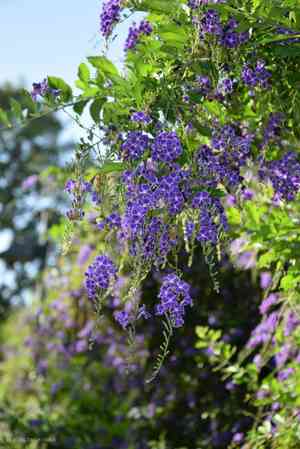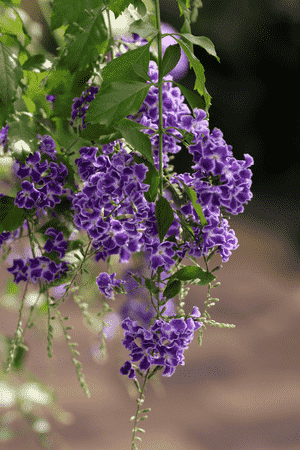
Golden dewdrops(Duranta erecta)

Golden dewdrops (Duranta erecta)

Also known as: Skyflower, Forget-me-not bush

The Butterfly Bush (Buddleja davidii) is a popular ornamental shrub found in gardens globally, especially in temperate regions. It features delicate purple flowers that attract butterflies and hummingbirds. Despite its beauty, the Butterfly Bush is deemed invasive in countries like Australia, South Africa, and various regions of East Asia.

Attributes of Golden dewdrops

Lifespan
Perennial
Plant Type
Shrub
Plant Height
1 m to 7 m
Spread
60 cm to 3 m
Leaf Color
Green
Flower Size
2.5 cm
Flower Color
Purple White Blue

PlantJoy - Identify plants with a snap

Identify and diagnose plants, get toxicity alerts, and explore safety guides for all types of fungi.

Try for Free

Images of Golden dewdrops

Golden dewdrops(Duranta erecta)

Quickly Identify Golden dewdrops

1
Vibrant yellow-orange drupes, 0.5 inches (1.3 cm) wide, cluster in pendulous bunches.
2
Ovate to obovate serrated leaves, 1-3 inches (2.5-7.5 cm), thorn on rachis underside.
3
Long, vine-like green stems, 0.2 inches (5 mm) diameter, smooth texture with slight ridges.
4
Light brown trunk with slightly furrowed bark, developing weathered appearance over time.
5
Blue to violet flowers with white edging, 0.5 inches (1.3 cm) wide, arranged in racemes.

Scientific Classification of Golden dewdrops

Phylum
Vascular plants
Class
Dicotyledons
Order
Mints plantains olives and allies
Family
Verbena
Genus
Golden dewdrops
Species
Golden dewdrops

Planting and Growing of Golden dewdrops

Care Difficulty
Easy
Watering Schedule
Every 8 days
Sunlight Requirements
Full sun
Sunshine Duration
4-8 hours
Ideal Temperature
65-85℉
Soil Type
Potting Mix, Peat Mix
Soil pH
6.5-7.5
Fertilizer Type
Balanced
Pruning Season
Spring, Summer
Pruning Area
Branches, Leaves
Pruning Frequency
2 times a year
Repotting Season
Spring
Pot Type
Plastic, Ceramic

water icon How to Water Golden dewdrops?

Water Duranta erecta until the soil becomes adequately moist but not waterlogged. Aim for about 500 ml per session, ensuring the water penetrates deeply into the soil, yet drains well. This helps in reaching the plant's roots thoroughly without sitting water in the pot, which could lead to root rot.
What are the symptoms of an underwatered Golden dewdrops?
What should I do if my Golden dewdrops is not getting enough water?
What are the symptoms of an overwatered Golden dewdrops?
How to save an overwatered Golden dewdrops?

sunlight icon What Are the Sunlight Requirements for Golden dewdrops?

Sunlight Requirements: Full sun, Partial sun
Duration of light: 6 to 8 hours daily
Duranta erecta flourishes in full sun to partial sun environments, promoting robust growth and vibrant leaf coloration by maximizing photosynthetic efficiency.
What is the ideal lighting condition for Duranta erecta?
How can you ensure Duranta erecta receives its ideal light?
What benefits does Duranta erecta experience with ideal lighting?

temperature icon What Is the Ideal Temperature Range for Golden dewdrops?

Ideal Temperature: 65 ~ 85℉
The ideal temperature range for Duranta erecta is between 65°F and 85°F. Within this range, the plant can thrive and exhibit optimal growth and flowering. Maintaining consistent temperatures in this range helps to promote vigorous foliage and bloom production, making it important for gardeners to monitor the environmental conditions to ensure they stay within these parameters.

soil icon What Soil is Best for Golden dewdrops?

Soil type: Loam, Sandy loam
Soil PH: 6.5 ~ 7.5
Duranta erecta thrives in nutrient-rich soil, which provides essential elements like nitrogen, phosphorus, and potassium that promote vigorous growth and vibrant foliage. This plant requires well-draining soil to prevent waterlogging, which can lead to root rot. Ensure the soil structure promotes aeration and moisture control for healthy root development. While good drainage is crucial, the soil should retain enough moisture to keep the plant hydrated. Balancing these aspects helps maintain optimal growth conditions.

fertilize icon How to Fertilize Golden dewdrops?

Fertilizer type: Balanced
For Duranta erecta, use a balanced fertilizer such as 10-10-10 at half the recommended strength for liquid applications, and one teaspoon per square foot for slow-release granular fertilizers. This ensures the plant receives adequate nutrients without the risk of over-fertilization.

prune icon How to Prune Golden dewdrops?

Pruning Time: Spring, Autumn
Begin by removing dead or diseased branches. Cut these back to the main stem or healthy tissue. This helps maintain the plant's overall health and aesthetics. To shape the plant, focus on cutting back overgrown branches. Aim to keep a balanced shape that allows light to penetrate the inner foliage, promoting even growth. To promote bushier growth, pinch tips of young shoots. This encourages the plant to branch out more, resulting in a fuller appearance.

propagate icon How to Propagate Golden dewdrops plant?

Propagate Time: Spring, Late spring
1
Harvest seeds from ripe berries of the Duranta erecta. Clean them thoroughly to remove any pulp, and let them dry before planting to prevent mold growth.
2
Choose healthy, non-flowering stems approximately 4-6 inches long. Remove leaves from the lower half, and immerse the cut end in rooting hormone to enhance root development.
3
Plant seeds in a well-draining soil mix, covering them lightly with soil. For cuttings, push them into a moist substrate, such as perlite or sand, ensuring there is good contact with the medium.

repot icon How to Repot Golden dewdrops plant?

Repotting frequency: Annually or biannually
1
Duranta erecta requires repotting when roots start growing out of the drainage holes or if the plant seems root-bound. The ideal time is during spring or early summer when the plant's growth is most active. Recognizing this signal ensures that the plant has ample room to grow and access to nutrients.
2
Opt for a pot that is one size larger than the current one. It should have adequate drainage holes to prevent waterlogging. The benefits of using a slightly larger pot are that it encourages healthy root expansion without overwhelming the plant with too much soil, which can retain excess moisture.
3
Select a well-draining potting mix that includes components like peat, perlite, and coarse sand. This type of soil prevents water retention and compaction, promoting proper aeration and drainage—critical for avoiding root rot in your Duranta erecta.

PlantJoy - Identify plants with a snap

Find the best spots for them to optimize their health, simply using your phone.

Try for Free

Toxicity of Golden dewdrops

Is Golden dewdrops toxic to humans?

Golden dewdrops pose a significant risk to humans if consumed, owing to their highly toxic nature. The symptoms experienced can be perilous, ranging from serious to potentially fatal. The most toxic components of the plant are the leaves and fruits, which can induce severe vomiting, diarrhea, and abdominal pain when ingested. Despite their attractive aesthetics, golden dewdrops are often cultivated as decorative plants in gardens or near homes, making them easily accessible to children, who are particularly at risk from the toxic effects of this species.

Is Golden dewdrops toxic to cat?

The Golden dewdrops plant is known to be toxic to cats. Typically, exposure happens when a cat accidentally consumes the fruit, which is the harmful portion of the plant. After ingestion, affected cats may display various symptoms that suggest they are in physical distress. It is crucial for cat owners to recognize these indications of possible poisoning and urgently seek veterinary assistance at a specialized facility to safeguard the health of their feline friends.

Is Golden dewdrops toxic to dog?

Golden dewdrops is a plant that presents a significant toxicity risk to dogs. If consumed, dogs can experience poisoning, often by inadvertently ingesting the plant. The most toxic components of golden dewdrops are its fruits, which can lead to serious health issues if eaten by dogs. Symptoms of poisoning in dogs may manifest as vomiting, diarrhea, abdominal discomfort, and in more severe cases, can include seizures or breathing difficulties, depending on the quantity consumed. It is vital for pet owners to prevent their dogs from accessing the fruits of golden dewdrops and to keep a vigilant watch for any signs of distress. Should a dog consume any part of golden dewdrops, prompt veterinary intervention is crucial to ensure effective treatment and recovery.

Identify toxic plants for your safety

Learn which plants are harmful to you and your pets, and make informed choices for a safer home!

Try for Free
WARNING
The judgment on toxicity and danger is for reference only. We DO NOT GUARANTEE any accuracy of such judgment. Therefore, you SHALL NOT rely on such judgment. It is IMPORTANT TO SEEK PROFESSIONAL ADVICE in advance when necessary.