
Southern globethistle (Echinops ritro)
Also known as: Small globe thistle
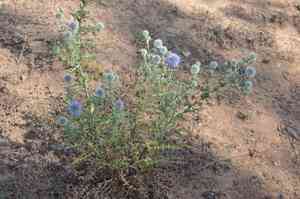
The Globe Thistle (Echinops) features spiny, weed-like foliage, but its vibrant, spherical purple flowers can create a captivating display in gardens. These resilient blooms are drought-resistant and thrive even in poor soil conditions.
In This Article
Attributes of Southern globethistle
Lifespan
Perennial, Annual
Plant Type
Herb
Plant Height
60 cm
Spread
45 cm to 60 cm
Leaf Color
Green Gray
Flower Size
2.5 cm to 4.5 cm
Flower Color
Blue Green
Images of Southern globethistle



Quickly Identify Southern globethistle
1
Spherical, steel-blue flower heads with star-shaped florets, blooming mid-summer to September.
2
Coarse, spiny, deeply dissected leaves with white tomentose undersides, prominent vein pattern.
3
Globular steel-blue to violet-gray seedheads containing small, dry achenes, turning tan in maturity.
4
Stiff, erect stem covered in grayish-white hairs, reaching 1.3 to 2.6 feet (40 to 80 cm) tall.
5
Drought-tolerant, deer-resistant plant thriving in well-drained soils, reaching 2-3 feet (60-90 cm) in height.
Scientific Classification of Southern globethistle
Phylum
Vascular plants
Class
Dicotyledons
Order
Asterales
Family
Daisy
Genus
Globe thistles
Species
Southern globethistle
Planting and Growing of Southern globethistle
Care Difficulty
Easy
Watering Schedule
Every 2 days
Sunlight Requirements
Full sun
Sunshine Duration
6-10 hours
Ideal Temperature
65-75℉
Soil Type
Potting Mix, Peat Mix
Soil pH
6.5-7.5
Fertilizer Type
Balanced
Pruning Season
Spring, Summer
Pruning Area
Branches, Leaves
Pruning Frequency
2 times a year
Repotting Season
Spring
Pot Type
Plastic, Terracotta
 How to Water Southern globethistle?
Echinops ritro thrives when its soil is adequately moistened but not waterlogged. A thorough watering of about 250 milliliters per session ensures the soil is hydrated. Water until the top layer is visibly moist, allowing any excess to drain freely.
What are the symptoms of an underwatered Southern globethistle?
›
What should I do if my Southern globethistle is not getting enough water?
›
What are the symptoms of an overwatered Southern globethistle?
›
How to save an overwatered Southern globethistle?
›
 What Are the Sunlight Requirements for Southern globethistle?
Echinops ritro thrives best in full sun to partial sun environments, as ideal light promotes optimal photosynthesis, enhancing its growth and bloom quality. Adequate sunlight allows the plant to produce energy efficiently, resulting in stronger and healthier foliage, and prolific flowering.
More About Sunlight Requirements Techniques→
How much sunlight does Echinops ritro need daily?
›
What kind of environment is best for Echinops ritro?
›
How can I create the best light conditions for Echinops ritro?
›
 What Is the Ideal Temperature Range for Southern globethistle?
The ideal temperature range for Echinops ritro is between 65°F and 75°F. This range allows the plant to photosynthesize efficiently and grow healthily. Within this temperature window, Echinops ritro is able to maintain optimal physiological processes and thrive, showcasing its full ornamental potential.
 What Soil is Best for Southern globethistle?
Echinops ritro thrives in well-drained soil, preventing root rot by allowing excess water to escape. This drainage facilitates root aeration, crucial for healthy plant growth and vibrant blooms. While not overly demanding, Echinops ritro flourishes in moderately fertile soil. Adequate nutrients support robust growth and prolonged flowering, resulting in a spectacular garden presence. Incorporating gravel or sand in the potting mix enhances permeability and emulates the plant's natural habitat, ensuring a thriving Echinops ritro in your garden.
 How to Fertilize Southern globethistle?
For Echinops ritro, use a balanced fertilizer at 1/2 the recommended strength. Over-fertilizing can lead to lush foliage with fewer blooms, while under-fertilizing might result in stunted growth. A subtle approach is best to ensure healthy development.
 How to Prune Southern globethistle?
While regular pruning is beneficial, avoid cutting more than one-third of the plant at a time. Severe pruning can stress the plant, hindering its growth and bloom potential. Perform major pruning in early Spring before the plant enters its vigorous growth phase. This timing helps the plant to recover quickly and encourages a strong bloom cycle. Echinops ritro has spiky stems and foliage. It’s advisable to wear gloves to protect your hands from injury during the pruning process.
More About Pruning Techniques→
 How to Propagate Southern globethistle plant?
1
Start by sowing the seeds in pots filled with well-draining potting mix. Lightly cover the seeds with soil and keep them warm and moist. Germination typically takes two to three weeks.
2
To propagate by division, water the plant thoroughly the day before. Carefully dig up the plant and gently separate the roots to create two or more sections, ensuring that each section has roots and foliage.
3
After division, transplant the sections into new locations or pots, making sure they are planted at the same depth as before. Water them well to settle the soil around the roots.
 How to Repot Southern globethistle plant?
1
Repot Echinops ritro when you notice roots emerging from the drainage holes or the soil dries out quicker than usual. These signs indicate that the plant is outgrowing its pot and requires more space for healthy growth. Ideally, repotting should be performed every 2 to 3 years during the growing seasons of spring or autumn.
2
Choose a pot that is 1 to 2 inches larger in diameter than the current one, with ample drainage holes. The right pot offers sufficient space for root expansion, prevents water logging, and supports the upright growth of Echinops ritro. An optimal choice ensures good airflow and reduces the risk of root rot, promoting vibrant blooms.
3
Opt for a well-draining loamy soil mix. This soil type maintains appropriate moisture levels while providing essential nutrients, preventing root suffocation. The loamy texture balances moisture and drainage effectively, ensuring that Echinops ritro flourishes with healthy roots and spectacular floral displays.



