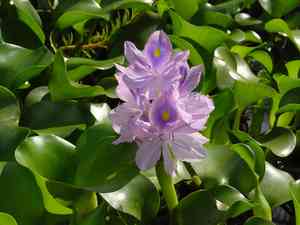
Water hyacinth (Eichhornia crassipes)
Also known as: Jamaica water-plantain, Water orchid
The water hyacinth (Eichhornia crassipes) is a rapidly growing flowering plant known for its ovular, waxy leaves. This plant is recognized as a federal noxious weed in the United States due to its invasive nature. It thrives in ponds, lakes, rivers, and wetlands, creating dense, floating mats that block sunlight from reaching underwater ecosystems.
In This Article
Attributes of Water hyacinth
Lifespan
Perennial, Annual
Plant Type
Herb
Plant Height
15 cm to 23 cm
Spread
2 m
Leaf Color
Green
Flower Size
3.5 cm to 5 cm
Flower Color
Purple
Quickly Identify Water hyacinth
1
Swollen petioles enable floating
2
Petiole length varies 6 inches to 2 feet (15 cm to 60 cm)
3
Leaves with prominent parallel veins
4
Clusters of orchid-like lilac flowers
5
May experience seasonal dieback in outdoor ponds
Scientific Classification of Water hyacinth
Phylum
Vascular plants
Class
Monocotyledons
Order
Spiderworts and allies
Family
Water-hyacinth
Genus
Water hyacinths
Species
Water hyacinth
Planting and Growing of Water hyacinth
Care Difficulty
Easy
Watering Schedule
Every 4 days
Sunlight Requirements
Full sun
Sunshine Duration
4-8 hours
Ideal Temperature
77-95℉
Soil Type
Potting Mix, Peat Mix
Soil pH
6.5-7.5
Fertilizer Type
Balanced
Pruning Season
Spring, Summer
Pruning Area
Branches, Leaves
Pruning Frequency
2 times a year
Repotting Season
Spring
Pot Type
Plastic, Terracotta
 How to Water Water hyacinth?
Eichhornia crassipes thrives in water-rich environments, so aim to provide enough water to keep the root base fully submerged. Typically, 500 ml should be sufficient per watering session, ensuring that the plant isn't dehydrated yet not overly saturated. Observing the root and leaf health will guide you in adjusting the amount if necessary.
What are the symptoms of an underwatered Water hyacinth?
›
What should I do if my Water hyacinth is not getting enough water?
›
What are the symptoms of an overwatered Water hyacinth?
›
How to save an overwatered Water hyacinth?
›
 What Are the Sunlight Requirements for Water hyacinth?
Eichhornia crassipes thrives best in full to partial sunlight, translating to 6-10 hours of light daily. Ideal lighting supports robust growth, vibrant flower production, and a resilient plant structure capable of withstanding environmental fluctuations.
Solution for Ideal Light
›
Specific Measures for Best Light
›
Benefits of Ideal Lighting
›
 What Is the Ideal Temperature Range for Water hyacinth?
Eichhornia crassipes thrives best in environments where the temperature ranges between 77°F and 95°F. This temperature range facilitates optimal growth, allowing the plant to photosynthesize efficiently and maintain its buoyancy. Consistently warm temperatures within this range are crucial for the plant to exhibit vigorous growth and reproductive activities.
 What Soil is Best for Water hyacinth?
Eichhornia crassipes thrives best in soils that have good moisture retention capabilities. This requirement is crucial because it helps the plant stay hydrated, especially in warmer climates where evaporation rates are high. A nutrient-rich environment supports the rapid growth and vibrant foliage of Eichhornia crassipes. Providing a soil rich in organic matter ensures the plant has access to all essential nutrients needed for its robust development. Adequate aeration in the soil is vital as it facilitates proper root respiration. For Eichhornia crassipes, sandy loam textures typically offer enough oxygen exchange to support healthy root growth and prevent diseases.
 How to Fertilize Water hyacinth?
Eichhornia crassipes requires a moderate amount of fertilizer. Use a balanced liquid fertilizer at the rate specified on the product label, usually 1 tablespoon per gallon of water. For slow-release fertilizers, use about 1 to 2 tablespoons per plant, ensuring an even spread around the base.
 How to Prune Water hyacinth?
Begin by gathering sharp pruning shears or scissors. Ensure tools are clean to prevent disease transmission. It's advisable to wear gloves as the plants can be slippery and sometimes irritate sensitive skin. Prune in the early morning or late afternoon to avoid stressing the plant. Identify older, yellowing, or damaged leaves and trim these off close to the base of the plant. Also, remove excessive plant clusters to prevent overcrowding. Trim stems and leaves at an angle to allow for better regrowth. Be careful not to cut too aggressively, leaving the plant enough foliage to sustain photosynthesis. After pruning, monitor plant health to ensure it shows signs of vigorous growth. Remove any floating cut-offs from the water to prevent decomposition, which can lead to unwanted algae. Apply a balanced aquatic plant fertilizer if plants show signs of nutrient deficiency.
 How to Propagate Water hyacinth plant?
1
Before propagation, ensure the Eichhornia crassipes is healthy, well-watered, and free of pests. This prepares it for either seed collection or division.
2
Harvest mature seeds from the flower heads. Ensure the seeds are dry and fully developed before planting to maximize germination rates.
3
Carefully remove the plant from its container and gently separate the root ball into smaller sections, ensuring each section has leaves and roots.
 How to Repot Water hyacinth plant?
1
Eichhornia crassipes, commonly known as water hyacinth, should be repotted when you notice significant overcrowding in its current container. This typically happens when the plant's roots start to form dense mats, and the growth becomes stunted. Ideally, repotting should occur in the Spring or Summer when the plant is actively growing, ensuring a smoother transition.
2
When choosing a pot for your water hyacinth, select one that is broad and shallow. This provides ample space for its roots to spread horizontally, mimicking its natural aquatic environment. Using a broad container also ensures stability as the plant tends to float or spread out, reducing the risk of toppling over.
3
Opt for a rich, well-drained, loamy soil mix for repotting Eichhornia crassipes. This type of soil provides essential nutrients while maintaining good drainage, crucial for preventing root rot. The loamy texture mimics the plant's natural habitat, supporting healthy root development and vigorous growth.



