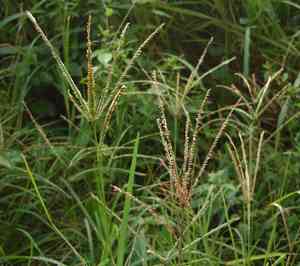
Goosegrass (Eleusine indica)
Also known as: Crowfoot grass, Indian goosegrass
During times of famine, goosegrass (Eleusine indica) seeds are consumed. This plant, often considered an agricultural weed, is used for cultivated crops, animal feed, and in maintaining golf courses. It is also recognized as an environmental weed in many countries. Additionally, parts of goosegrass are used in herbal medicine in some Asian nations.
In This Article
Attributes of Goosegrass
Lifespan
Annual, Biennial
Plant Type
Grass
Plant Height
10 cm to 90 cm
Spread
5 cm to 8 cm
Leaf Color
White
Flower Size
2.5 cm
Flower Color
White Yellow Green
Images of Goosegrass
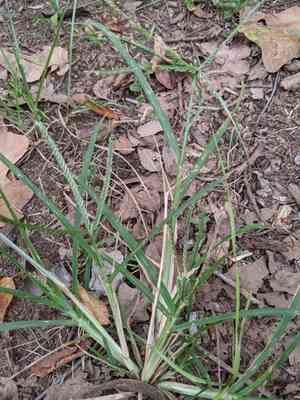
Quickly Identify Goosegrass
1
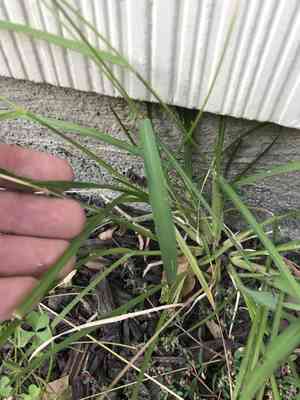
Distinct silver or whitish base of stem
2
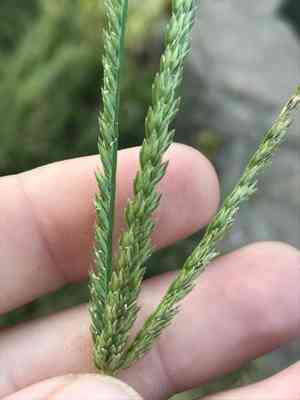
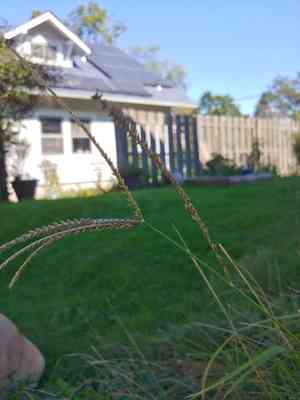
Spike inflorescences with finger-like spikes and reduced, petal-less flowers
3
Tiny, ellipsoid caryopsis fruit with wrinkled texture and black color
4
Leaves keeled, hull-shaped, with white or silver base and sparsely ciliate margins
5
Green stem, slightly flattened, glabrous, and sheathed flowering stems
Scientific Classification of Goosegrass
Phylum
Vascular plants
Class
Monocotyledons
Order
Poales
Family
Grass
Genus
Goosegrasses
Species
Goosegrass
Planting and Growing of Goosegrass
Care Difficulty
Easy
Watering Schedule
Every 3 days
Sunlight Requirements
Full sun
Sunshine Duration
4-8 hours
Ideal Temperature
75-90℉
Soil Type
Potting Mix, Peat Mix
Soil pH
6.5-7.5
Fertilizer Type
Balanced
Pruning Season
Spring, Summer
Pruning Area
Branches, Leaves
Pruning Frequency
Once a year
Repotting Season
Spring
Pot Type
Plastic, Ceramic
 How to Water Goosegrass?
Eleusine indica requires a moderate amount of water, typically around 500 ml per watering. The principle is to ensure the soil is damp but not waterlogged. It’s important to allow the top inch of soil to dry out between waterings to ensure proper root aeration.
What are the symptoms of an underwatered Goosegrass?
›
What should I do if my Goosegrass is not getting enough water?
›
What are the symptoms of an overwatered Goosegrass?
›
How to save an overwatered Goosegrass?
›
 What Are the Sunlight Requirements for Goosegrass?
Eleusine indica thrives in full sun to partial sun exposure. Ideal lighting promotes optimal photosynthesis, enhancing growth vigor, seed production, and pest resistance.
What is the ideal lighting condition for Eleusine indica?
›
How can you ensure ideal lighting for Eleusine indica?
›
What benefits does Eleusine indica get from ideal lighting?
›
 What Is the Ideal Temperature Range for Goosegrass?
The ideal temperature range for Eleusine indica, commonly known as Indian Goosegrass, is between 75°F and 90°F. Within this range, the plant can grow optimally as it supports its metabolic processes and encourages robust growth. Ensuring the temperature stays within this range helps prevent stress-related issues that can impede its growth.
 What Soil is Best for Goosegrass?
Eleusine indica thrives in well-draining soil to prevent root rot. This characteristic allows it to maintain healthy roots and efficiently absorb water and nutrients. A nutrient-rich substrate ensures that Eleusine indica gets the necessary nutrients for optimal growth. It supports robust development and enhances the plant's resilience against pests. The presence of moderate organic matter in the soil provides essential nutrients and aids in maintaining soil moisture. This condition facilitates steady growth and boosts overall plant health.
 How to Fertilize Goosegrass?
Eleusine indica requires modest fertilization. Use about 1 tablespoon per plant for slow-release fertilizers and dilute liquid fertilizers according to package directions, usually at a concentration of 1:20. Balancing nutrient supply ensures healthy growth without the risk of nutrient burn.
 How to Prune Goosegrass?
Begin by identifying and removing any dead or damaged blades of grass. Use a pair of sharp garden shears to make clean cuts close to the base. This prevents disease and encourages healthy regrowth. Ensure you maintain the grass height to prevent bare patches. To restrict the spread of Eleusine indica, focus on cutting back the sides where the grass tends to encroach. Carefully follow the natural contour and use edging tools to keep it within desired boundaries. This will enhance the appearance and control of the plant's spread.
 How to Propagate Goosegrass plant?
1
Fill seed trays with potting soil and moisten it slightly to prepare a hospitable environment for Eleusine indica seeds. Ensure good drainage to avoid waterlogging.
2
Sprinkle Eleusine indica seeds evenly over the surface of the soil in the seed trays. Lightly press the seeds into the soil, but do not bury them too deeply.
3
Place the seed trays in a warm, sunny location. Maintain a temperature between 20-25°C to promote good germination. Water lightly but regularly to keep the soil moist.
 How to Repot Goosegrass plant?
1
Eleusine indica should be repotted when you observe roots growing out of the drainage holes, the plant lacks sufficient nutrients, or when growth has noticeably slowed. These are key signals indicating that your plant requires more space and refreshment of its growing medium.
2
Choose a pot that is only slightly larger than the current one. A pot with a diameter of 1-2 inches more is ideal as it prevents waterlogging by allowing moderate room for root expansion. Ensure the pot has adequate drainage holes to facilitate excess water escape, avoiding root rot.
3
A loamy, well-draining soil mix is essential for Eleusine indica to promote healthy root aeration and prevent water-induced stress. A mix enriched with organic matter boosts nutrient availability, mimicking the plant's natural habitat conditions, fostering robust growth.



