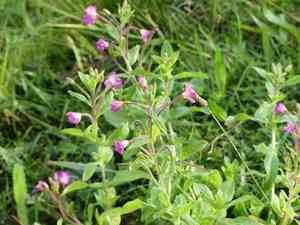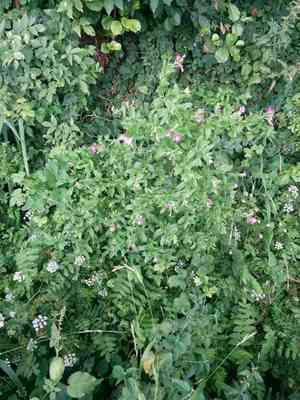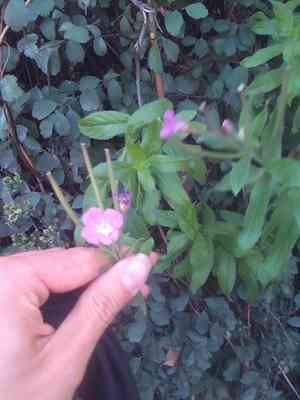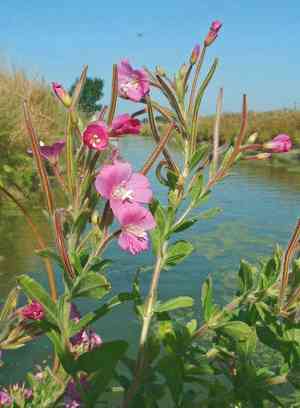
Hairy willowherb(Epilobium hirsutum)

Hairy willowherb (Epilobium hirsutum)

Also known as: Great willowherb

Hairy willowherb (Epilobium hirsutum) is a challenging weed to control. While it isn't toxic, its sale or distribution has been prohibited in certain regions. The reason for this is its rapid and dense growth, which can overtake and eliminate native plant species, thereby disrupting local ecosystems.

Attributes of Hairy willowherb

Lifespan
Perennial, Annual
Plant Type
Herb
Plant Height
50 cm to 1.8 m
Spread
1 m
Leaf Color
Green
Flower Size
2.5 cm
Flower Color
Pink Purple Red

PlantJoy - Identify plants with a snap

Identify and diagnose plants, get toxicity alerts, and explore safety guides for all types of fungi.

Try for Free

Images of Hairy willowherb

Hairy willowherb(Epilobium hirsutum)

Quickly Identify Hairy willowherb

1
Up to 6 feet tall (1.8 meters) with dense soft hairs covering stems and leaves.
2
Saucer-shaped rose-pink flowers, 3/4 inch across (1.9 cm), with white centers and distinctive 8 stamens.
3
Dehiscent seed pods, 1-3 inches long (2.54-7.62 cm), releasing wind-dispersed seeds with white hair tufts.
4
Opposite lanceolate leaves, 2-4 inches long (5-10 cm), densely hairy, toothed, and serrated.
5
Erect, highly branched stems up to 5 feet tall (150 cm) with abundant soft hairs and reddish color.

Scientific Classification of Hairy willowherb

Phylum
Vascular plants
Class
Dicotyledons
Order
Myrtales
Family
Evening primrose
Genus
Willowherbs
Species
Hairy willowherb

Planting and Growing of Hairy willowherb

Care Difficulty
Easy
Watering Schedule
Every 2 days
Sunlight Requirements
Full sun
Sunshine Duration
6-10 hours
Ideal Temperature
60-75℉
Soil Type
Potting Mix, Peat Mix
Soil pH
6.5-7.5
Fertilizer Type
Balanced
Pruning Season
Spring, Summer
Pruning Area
Branches, Leaves
Pruning Frequency
2 times a year
Repotting Season
Spring
Pot Type
Plastic, Ceramic

water icon How to Water Hairy willowherb?

For optimal growth, Epilobium hirsutum prefers being well-hydrated but not waterlogged. Water until the soil is damp but not soggy, ensuring at least 500 milliliters per session to sufficiently reach the root system.
What are the symptoms of an underwatered Hairy willowherb?
What should I do if my Hairy willowherb is not getting enough water?
What are the symptoms of an overwatered Hairy willowherb?
How to save an overwatered Hairy willowherb?

sunlight icon What Are the Sunlight Requirements for Hairy willowherb?

Sunlight Requirements: Full sun, Partial sun
Duration of light: 4-6 hours daily
Epilobium hirsutum thrives in full sun to partial sun, benefiting from 4-6 hours of sunlight daily. This light range ensures vibrant foliage, optimum growth conditions, and abundant flowering, reflecting its natural habitat preferences.
Optimal light amount
Utilizing natural sunlight
Benefits of ideal lighting

temperature icon What Is the Ideal Temperature Range for Hairy willowherb?

Ideal Temperature: 60 ~ 75℉
The ideal temperature range of 60 to 75 °F for Epilobium hirsutum is crucial for optimal growth and flowering. Within this range, the plant can efficiently photosynthesize and maintain its metabolic processes. This range ensures that enzymes and cellular structures remain functional, promoting healthy development. Deviating from this range might result in decreased growth rate and sub-optimal health.

soil icon What Soil is Best for Hairy willowherb?

Soil type: Loam, Sandy loam, Clay soil, Peat soil
Soil PH: 6.5 ~ 7.5
Epilobium hirsutum thrives in soils with good moisture retention properties, which help keep the roots hydrated even in drier conditions. This prevents wilting and supports lush growth. Rich in organic matter, the ideal soil promotes robust growth and vibrant blooms by supplying essential nutrients continuously. This nutrient supply is crucial for the plant's overall health. While it enjoys moisture, the plant also needs soil that prevents waterlogging, which can lead to root rot. Well-draining soil ensures root systems stay healthy and oxygenated.

fertilize icon How to Fertilize Hairy willowherb?

Fertilizer type: Balanced
Epilobium hirsutum, commonly known as Great Willowherb, requires balanced fertilization. A general-purpose liquid fertilizer should be diluted to half strength, with approximately 100 ml per plant during the growing season to avoid nutrient burn.

prune icon How to Prune Hairy willowherb?

Pruning Time: Spring, Summer, Autumn
Focus on removing dead, damaged, or diseased stems by cutting them back to their base. This encourages regrowth and helps the plant maintain a tidy and vigorous appearance. Regularly shape the plant by trimming back overgrown sections to control its size and promote air circulation. This helps to prevent fungal infections and maintain aesthetic appeal. After the flowering season, cut back spent flower stalks to encourage further blooming and manage seed dispersal, keeping the plant's vigor and enhancing garden tidiness.

propagate icon How to Propagate Hairy willowherb plant?

Propagate Time: Spring, Early summer, Autumn
1
Sow the seeds directly onto the surface of moistened compost in the seed trays. Gently press them into the soil, but do not cover them completely, as they need light to germinate. Keep the soil consistently moist but not waterlogged.
2
Select healthy, non-flowering stems and make a clean cut using pruning shears. Remove the lower leaves and dip the cut end into a rooting hormone to encourage root growth. Plant the cuttings in a well-draining potting mix and water them lightly.
3
Carefully dig up mature plants, taking care not to damage the root system. Separate the root clump into smaller sections, ensuring each section has a portion of roots attached. Replant the divisions at the same depth at which they were growing originally.

repot icon How to Repot Hairy willowherb plant?

Repotting frequency: Every 2-3 years
1
Look for signs like roots growing out of the drainage holes or soil drying out more quickly than usual. These indicate that the plant is outgrowing its current pot and needs more space to thrive.
2
Select a pot that is one size larger than the current one, which helps the plant to expand and improves aeration. A pot with drainage holes is essential to prevent waterlogging, as this plant enjoys moist but not soggy conditions.
3
Opt for a moisture-retentive, fertile soil mix which provides adequate nutrients and holds moisture well. This is ideal as the plant thrives in moist conditions and rich soil that supports vigorous growth.

PlantJoy - Identify plants with a snap

Find the best spots for them to optimize their health, simply using your phone.

Try for Free

Toxicity of Hairy willowherb

Is Hairy willowherb toxic to humans?

The hairy willowherb is recognized as an extremely toxic plant, capable of inducing severe health issues when consumed. While the leaves are noted for their toxicity, it is possible that the entire plant could also pose a risk. Although the specific toxic agent remains unidentified, multiple reports have highlighted its hazardous nature. One report details a case involving a 3-year-old boy who fell into a coma and experienced epileptiform seizures after ingesting the leaves of the hairy willowherb. Furthermore, research has indicated that this plant can accumulate toxins and heavy metals from its surroundings.

Is Hairy willowherb toxic to cat?

Hairy willowherb exhibits a moderate degree of toxicity, potentially posing health risks to feline companions. If cats inadvertently consume any parts of the plant, especially the leaves, they are at risk of poisoning. After ingestion, affected cats may display signs of physical distress that require urgent attention. Since the toxic effects can lead to various detrimental impacts on a cat's health, it is essential to monitor for any indications of illness and to promptly obtain veterinary assistance. Swift and suitable medical treatment is crucial to alleviate symptoms and safeguard the wellbeing of the affected feline.

Is Hairy willowherb toxic to dog?

Hairy willowherb presents a moderate toxicity hazard for dogs. Canines could inadvertently consume various parts of the plant, especially the leaves, which are recognized for their toxic properties. If a dog ingests hairy willowherb, it may display symptoms that suggest poisoning. Dog owners must be attentive and restrict their pets from entering regions where hairy willowherb flourishes to prevent accidental ingestion. Should a dog exhibit signs of poisoning after eating hairy willowherb, it is vital to obtain immediate veterinary assistance since swift treatment is essential for recovery.

Identify toxic plants for your safety

Learn which plants are harmful to you and your pets, and make informed choices for a safer home!

Try for Free
WARNING
The judgment on toxicity and danger is for reference only. We DO NOT GUARANTEE any accuracy of such judgment. Therefore, you SHALL NOT rely on such judgment. It is IMPORTANT TO SEEK PROFESSIONAL ADVICE in advance when necessary.