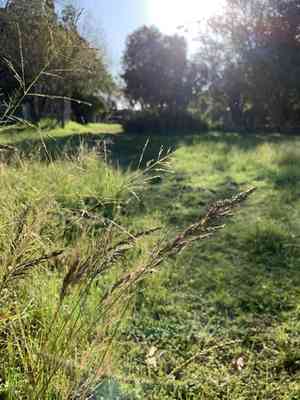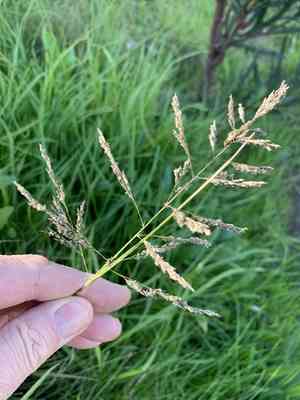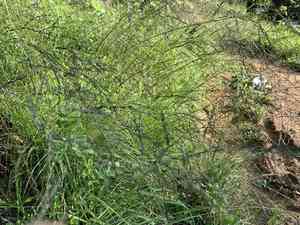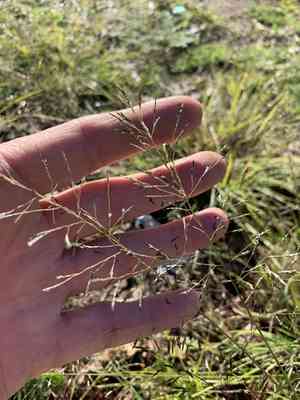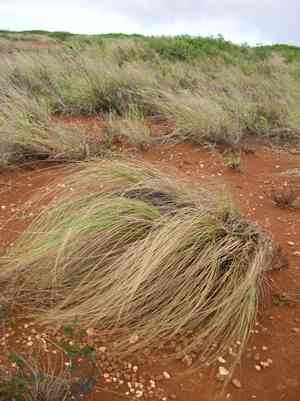
Weeping lovegrass(Eragrostis curvula)

Weeping lovegrass (Eragrostis curvula)

Also known as: Boer lovegrass, Catalina lovegrass

**Benefits of Eragrostis curvula (Weeping Lovegrass) in Non-Native Regions:**
1. **Erosion Control**: Its rapid growth and dense root system make it effective for preventing soil erosion.
2. **Drought Tolerance**: It thrives in dry climates, making it a valuable plant in arid regions.
3. **Forage Resource**: Provides nutritious forage for grazing animals.
4. **Versatility**: Grows well in various soil types and environmental conditions.

**Drawbacks of Eragrostis curvula in Non-Native Regions:**
1. **Invasive Nature**: It can spread aggressively, outcompeting native flora and altering local ecosystems.
2. **Biodiversity Reduction**: Its dominance can lead to a decrease in native plant diversity.
3. **Management Challenges**: Controlling its spread requires significant effort and resources.
4. **Ecosystem Disruption**: Can change habitat structures, affecting wildlife that depend on native plants.

In summary, while Eragrostis curvula is beneficial for erosion control and forage production, its invasive potential and impact on local biodiversity make it a species that requires careful management in non-native regions.

Attributes of Weeping lovegrass

Lifespan
Perennial
Plant Type
Grass
Plant Height
1.9 m
Spread
38 cm
Leaf Color
Green
Flower Size
6 cm to 9 cm
Flower Color
Green Silver White Yellow Purple

PlantJoy - Identify plants with a snap

Identify and diagnose plants, get toxicity alerts, and explore safety guides for all types of fungi.

Try for Free

Images of Weeping lovegrass

Weeping lovegrass(Eragrostis curvula)

Quickly Identify Weeping lovegrass

1
Erect, unbranched stem with bright green coloration, growing up to 3 feet (90 cm) tall.
2
Long, narrow leaves with a tubular appearance, growing up to 2 feet (60 cm) long.
3
Arching, open lavender-gray flowers in panicles measuring 10-16 inches (25-40 cm) long.
4
Delicate flowers with spikelets along stems, housing up to 15 tiny flowers each.
5
Fine, silky texture of dense tufts forming clumps with a gentle aesthetic.

Scientific Classification of Weeping lovegrass

Phylum
Vascular plants
Class
Monocotyledons
Order
Poales
Family
Grass
Genus
Lovegrasses
Species
Weeping lovegrass

Planting and Growing of Weeping lovegrass

Care Difficulty
Easy
Watering Schedule
Every 2 days
Sunlight Requirements
Full sun
Sunshine Duration
4-6 hours
Ideal Temperature
60-85℉
Soil Type
Potting Mix, Peat Mix
Soil pH
6.5-7.5
Fertilizer Type
Balanced
Pruning Season
Spring, Summer
Pruning Area
Branches, Leaves
Pruning Frequency
2 times a year
Repotting Season
Spring
Pot Type
Plastic, Ceramic

water icon How to Water Weeping lovegrass?

When watering Eragrostis curvula, it is important to ensure that the soil is adequately moist but not waterlogged. A good rule of thumb is to water until you see some drainage from the bottom of the pot, ensuring that the entire root system receives moisture. This usually equates to around 500 milliliters.
What are the symptoms of an underwatered Weeping lovegrass?
What should I do if my Weeping lovegrass is not getting enough water?
What are the symptoms of an overwatered Weeping lovegrass?
How to save an overwatered Weeping lovegrass?

sunlight icon What Are the Sunlight Requirements for Weeping lovegrass?

Sunlight Requirements: Full sun, Partial sun
Duration of light: 6-8 hours per day
Partial to full sunlight is optimal, enhancing Eragrostis curvula's photosynthetic effectiveness, promoting lush growth, and improving resilience to environmental stressors.
What is the ideal sunlight exposure?
How to achieve ideal sunlight conditions?
What are the benefits of ideal sunlight exposure?

temperature icon What Is the Ideal Temperature Range for Weeping lovegrass?

Ideal Temperature: 60 ~ 85℉
The ideal temperature range for growing Eragrostis curvula, commonly known as Weeping Lovegrass, is between 60°F and 85°F. This range provides the most conducive environment for its growth and development, ensuring optimal photosynthesis and metabolic activities.

soil icon What Soil is Best for Weeping lovegrass?

Soil type: Sandy soil, Loam, Sandy loam
Soil PH: 6.5 ~ 7.5
Eragrostis curvula thrives in well-drained soils. Proper drainage prevents waterlogging, which can cause root rot and hinder the plant's growth. Ensuring good drainage supports the plant's health and increases its resilience. This plant favors moderately fertile soil but can tolerate poorer conditions. Adequate nutrients support lush growth and resilience in varying environmental conditions, enhancing the plant's adaptability. The plant grows best in soils with a pH between 6.5 and 7.5. This range supports nutrient availability and optimum growth conditions, ensuring the plant remains healthy and vigorous.

fertilize icon How to Fertilize Weeping lovegrass?

Fertilizer type: Balanced
Eragrostis curvula benefits from moderate fertilization. When using a liquid fertilizer, dilute it at half the strength recommended on the label. For solid fertilizers, apply approximately 50 grams per square meter. This balance ensures the plant gets essential nutrients without the risk of over-fertilization.

prune icon How to Prune Weeping lovegrass?

Pruning Time: Spring, Summer, Autumn
Start by using sharp pruning shears to cut back any dead or damaged stems close to the base. Trim the plant to your desired shape, ensuring good airflow. If the grass is overgrown, cut it back by up to two-thirds to encourage lush growth. If the Eragrostis curvula has become too leggy or sparse, consider a rejuvenation prune. Cut back the entire plant to a height of about 4-6 inches from the ground. This drastic cut stimulates vigorous regrowth and helps rejuvenate the plant.

propagate icon How to Propagate Weeping lovegrass plant?

Propagate Time: Spring, Early spring, Late spring
1
Begin by collecting seeds from mature Eragrostis curvula plants. Clean them thoroughly and let them dry naturally. This ensures that they are free of pathogens and suitable for planting.
2
Prepare a well-draining soil mix using equal parts of sand, perlite, and potting soil. This type of soil accommodates good root development and prevents waterlogging, which is critical for seed propagation.
3
Scatter the prepared seeds over the surface of the prepared seed tray filled with soil mix. Cover them lightly with a thin layer of soil, ensuring they are not buried too deep.

repot icon How to Repot Weeping lovegrass plant?

Repotting frequency: Every 2-3 years
1
Eragrostis curvula signals its need for re-potting when its roots begin circling the pot, pushing out from drainage holes, or when growth appears stunted. Observe its growth behavior each season for the ideal time, which typically aligns with spring or early summer.
2
Choose a pot that's one size larger with ample drainage. A breathable material like terracotta is ideal, as it prevents waterlogging. The advantage of a well-chosen pot is optimal root health and growth promotion.
3
A well-draining sandy soil mix is ideal for Eragrostis curvula. Ensure the soil is loose enough to allow excess water to escape while retaining sufficient moisture for the roots. This soil choice prevents root rot and enhances vibrant growth.

PlantJoy - Identify plants with a snap

Find the best spots for them to optimize their health, simply using your phone.

Try for Free