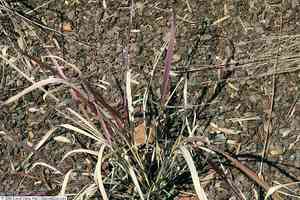
Purple lovegrass(Eragrostis spectabilis)

Purple lovegrass (Eragrostis spectabilis)

Also known as: Canegrass, Tumblegrass, Spectacular Love Grass

Purple lovegrass (Eragrostis spectabilis) is a native perennial grass known for its clump-forming habit and ability to spread through rhizomes and self-seeding. The plant showcases striking purplish-blue flowers in August, which later turn brown in the fall, releasing seeds that are carried by the wind. Ideal growing conditions include:

1. **Sunlight:** Prefers full sun.
2. **Soil:** Best in dry, sandy, or rocky soils.
3. **Water:** Requires moderate watering and is drought-resistant once established.
4. **Temperature:** Grows well in warm climates, suitable for USDA zones 5-9.
5. **pH:** Adaptable to a variety of soil pH levels, from acidic to slightly alkaline.

Avoid overly rich or poorly drained soils to ensure optimal growth.

Attributes of Purple lovegrass

Lifespan
Perennial
Plant Type
Grass
Plant Height
30 cm to 85 cm
Spread
30 cm to 60 cm
Leaf Color
Green Blue
Flower Size
15 cm to 35 cm
Flower Color
Red Brown Purple Violet

PlantJoy - Identify plants with a snap

Identify and diagnose plants, get toxicity alerts, and explore safety guides for all types of fungi.

Try for Free

Images of Purple lovegrass

Purple lovegrass(Eragrostis spectabilis)

Quickly Identify Purple lovegrass

1
Fine-textured narrow leaves form tidy tufts, 12-18 inches (30-45 cm) tall.
2
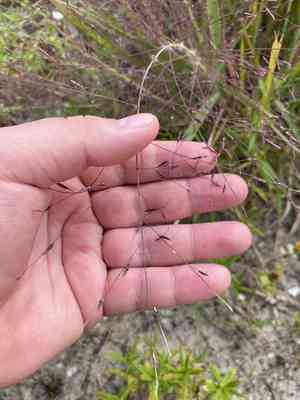
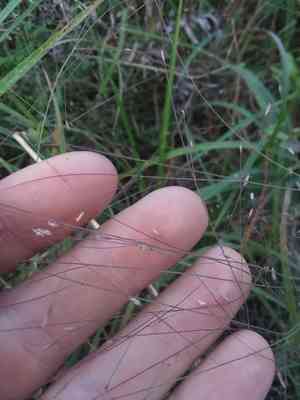
Airy reddish-purple inflorescences rise above foliage, turning wheat-like in fall.
3
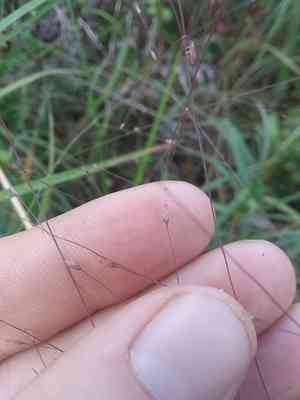
Messy panicle inflorescence shifts from reddish-purple to soft brown, 8-12 inches (20-30 cm) long.
4
Unique dark brown caryopsis fruit, 0.03 inches (0.8 mm) long, with pink-purple hues in autumn.
5
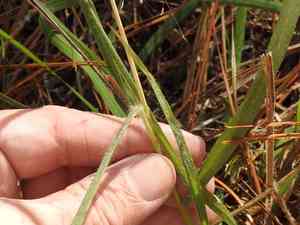
Dull green, hairy, flat leaves up to 10 inches (25 cm) long, 3/8 inch (1 cm) wide.

Scientific Classification of Purple lovegrass

Phylum
Vascular plants
Class
Monocotyledons
Order
Poales
Family
Grass
Genus
Lovegrasses
Species
Purple lovegrass

Planting and Growing of Purple lovegrass

Care Difficulty
Easy
Watering Schedule
Every 2 days
Sunlight Requirements
Full sun
Sunshine Duration
4-8 hours
Ideal Temperature
65-75℉
Soil Type
Potting Mix, Peat Mix
Soil pH
6.5-7.5
Fertilizer Type
Balanced
Pruning Season
Spring, Summer
Pruning Area
Branches, Leaves
Pruning Frequency
2 times a year
Repotting Season
Spring
Pot Type
Plastic, Ceramic

water icon How to Water Purple lovegrass?

For Eragrostis spectabilis, the watering amount should be around 250 ml per session. Ensure the soil is moist, but not waterlogged. The best practice is to water it thoroughly until the water starts draining out of the bottom of the pot, indicating that the soil is adequately hydrated.
What are the symptoms of an underwatered Purple lovegrass?
What should I do if my Purple lovegrass is not getting enough water?
What are the symptoms of an overwatered Purple lovegrass?
How to save an overwatered Purple lovegrass?

sunlight icon What Are the Sunlight Requirements for Purple lovegrass?

Sunlight Requirements: Full sun, Partial sun
Duration of light: 6-8 hours bright sun
This plant prefers full to partial sun. Ideal light exposure promotes gorgeous purple flowers, heightens photosynthetic activity, and sustains robust growth dynamics throughout the season.
What is the ideal sunlight exposure for Eragrostis spectabilis?
How can I ensure optimal light for Eragrostis spectabilis?
What benefits does ideal sunlight bring to Eragrostis spectabilis?

temperature icon What Is the Ideal Temperature Range for Purple lovegrass?

Ideal Temperature: 65 ~ 75℉
The ideal temperature range for Eragrostis spectabilis is between 65°F and 75°F. This range provides optimal conditions for photosynthesis and growth. Maintaining these temperatures ensures that the plant remains healthy and vibrant by facilitating nutrient uptake and enzymatic activity.

soil icon What Soil is Best for Purple lovegrass?

Soil type: Sandy soil, Loam, Sandy loam
Soil PH: 6.5 ~ 7.5
Eragrostis spectabilis thrives in well-drained soils, which prevent water from accumulating around its roots. This drainage ensures the plant does not suffer from root rot, which can hinder growth and vitality. While not overly demanding, E. spectabilis prefers soils with moderate fertility. Adequate nutrients support healthy foliage and vibrant blooms without overwhelming the plant's natural resilience. For optimal growth, E. spectabilis benefits from aerated soils. Aeration helps promote healthy root development by allowing oxygen to reach roots, enhancing water penetration and nutrient uptake.

fertilize icon How to Fertilize Purple lovegrass?

Fertilizer type: Balanced
Eragrostis spectabilis, or Purple Love Grass, thrives with minimal fertilization. Apply liquid fertilizer at half the recommended strength for houseplants; about one teaspoon per gallon of water per application. Solid fertilizers should be slow-release granules, sprinkled sparingly at a rate of one teaspoon per square foot.

prune icon How to Prune Purple lovegrass?

Pruning Time: Spring, Summer
Start by removing dead or damaged stems to improve air circulation. Cut back to about two-thirds of the plant's height during spring or early summer. This encourages fresh, robust growth and also enhances flowering. Use sharp shears for clean cuts. To maintain an attractive shape, trim the grass lightly around its edges. Ensure you follow the plant's natural contour to achieve a more pleasing appearance without sacrificing its health.

propagate icon How to Propagate Purple lovegrass plant?

Propagate Time: Spring, Early Summer
1
Allow the flower heads to mature and dry on the plant before collecting seeds. Ensure the seeds are completely dry before storage to prevent mold growth, which can spoil the seeds.
2
Sow seeds in a well-draining seed mix, lightly covering them with soil. Ensure they are kept warm and moist, ideally in a greenhouse or under a cloche to promote germination.
3
In early spring, dig up mature plants and gently separate the root ball into smaller sections with at least a few stems each. Replant the sections in well-prepared soil and water thoroughly to help them establish.

repot icon How to Repot Purple lovegrass plant?

Repotting frequency: Annually or biannually
1
Eragrostis spectabilis should be repotted when you notice roots growing out of the drainage holes or when it becomes root-bound, which means the roots have filled the pot and are circling around the edge. This typically occurs annually or every other year. Early spring is an ideal time as the plant enters its growth phase, allowing it to establish quickly in a new pot. Being proactive before the growing season starts ensures robust development.
2
Choosing the right pot for Eragrostis spectabilis is crucial. Opt for a pot that is one size larger than the current one to give ample room for root growth. Ensure the pot has sufficient drainage holes to prevent water accumulation, which could lead to root rot. A pot that is slightly wider and shallower is great, as it mimics the plant’s natural environment, encouraging healthier foliage spread and optimal water utilization.
3
For Eragrostis spectabilis, select a well-draining sandy soil mixture. A blend that includes sand, perlite, and a bit of organic compost ensures the roots have the aeration they require while having access to nutrients and retaining just enough moisture. The benefits of such soil include minimized risks of root rot, better growth, and a structure that supports striking panicles, characteristic of this beautiful grass.

PlantJoy - Identify plants with a snap

Find the best spots for them to optimize their health, simply using your phone.

Try for Free