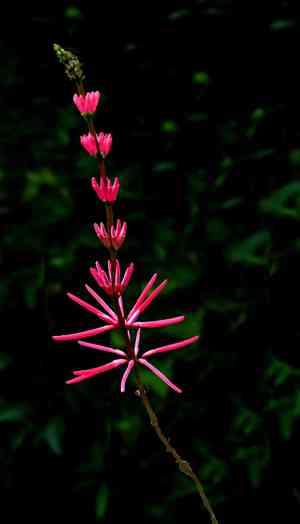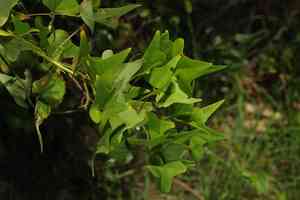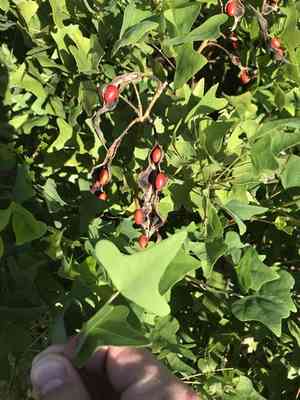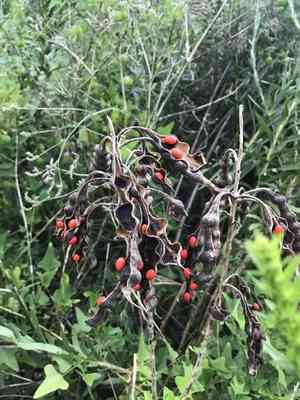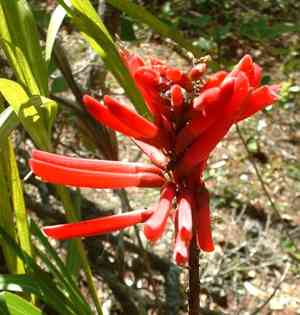
Coral bean(Erythrina herbacea)

Coral bean (Erythrina herbacea)

Also known as: Cherokee bean, Mamou plant

The Coral bean (Erythrina herbacea) is a small tree or shrub known for its striking red tubular flowers that bloom in the spring. By late summer, its pods turn black and split open, revealing bright red seeds that are highly toxic.

Attributes of Coral bean

Lifespan
Perennial
Plant Type
Shrub
Plant Height
1.8 m to 3.5 m
Spread
90 cm to 1.8 m
Leaf Color
Green Yellow
Flower Size
2.5 cm to 8 cm
Flower Color
Red

PlantJoy - Identify plants with a snap

Identify and diagnose plants, get toxicity alerts, and explore safety guides for all types of fungi.

Try for Free

Images of Coral bean

Coral bean(Erythrina herbacea)

Quickly Identify Coral bean

1
Coral-red, crescent-shaped flowers, attracting hummingbirds.
2
Distinctive black bean pod, up to 8.5 inches (21.5 cm) long.
3
Alternate leaves with three pinnately divided leaflets, prickly underneath.
4
Multi-stemmed green stems with curved spines, turning woody.
5
Irregular branching pattern on stems, ranging from 0.5 to 2 inches (1.3 to 5 cm) in diameter.

Scientific Classification of Coral bean

Phylum
Vascular plants
Class
Dicotyledons
Order
Legumes, milkworts and allies
Family
Legume
Genus
Coral trees
Species
Coral bean

Planting and Growing of Coral bean

Care Difficulty
Easy
Watering Schedule
Every 3 days
Sunlight Requirements
Full sun
Sunshine Duration
6-12 hours
Ideal Temperature
65-80℉
Soil Type
Potting Mix, Peat Mix
Soil pH
6.5-7.5
Fertilizer Type
Balanced
Pruning Season
Spring, Summer
Pruning Area
Branches, Leaves
Pruning Frequency
2 times a year
Repotting Season
Spring
Pot Type
Plastic, Ceramic

water icon How to Water Coral bean?

When watering Erythrina herbacea, ensure the soil is thoroughly moistened without becoming waterlogged. The key is to maintain a balance, allowing the soil to dry out slightly between waterings to promote healthy roots.
What are the symptoms of an underwatered Coral bean?
What should I do if my Coral bean is not getting enough water?
What are the symptoms of an overwatered Coral bean?
How to save an overwatered Coral bean?

sunlight icon What Are the Sunlight Requirements for Coral bean?

Sunlight Requirements: Full sun, Partial sun
Duration of light: 6-8 hours daily
Erythrina herbacea thrives in full sun to partial sun environments. Adequate sunlight encourages optimal flowering and healthy growth, reinforcing the plant's natural defenses against pests and diseases.
What is the ideal location for planting Erythrina herbacea?
How can I enhance sunlight exposure for Erythrina herbacea?
What benefits does Erythrina herbacea gain from ideal light conditions?

temperature icon What Is the Ideal Temperature Range for Coral bean?

Ideal Temperature: 65 ~ 80℉
The ideal temperature range for Erythrina herbacea, also known as coral bean, is between 65°F and 80°F. This range is considered optimal for the plant's growth and development, providing the warmth it needs without risking the stress from overheating or chilling.

soil icon What Soil is Best for Coral bean?

Soil type: Sandy soil, Loam, Sandy loam
Soil PH: 6.5 ~ 7.5
Erythrina herbacea thrives in well-draining soil that prevents water from pooling around the roots, which can lead to root rot. This benefit is crucial for maintaining healthy root systems and promoting vigorous growth. This plant benefits from soil with moderate fertility. While it doesn't demand rich soil, a balanced nutrient profile supports healthy foliage and flowering. This ensures the plant remains vibrant without excessive leaf growth at the expense of flowering. A soil pH between 6.5 and 7.5 is ideal for Erythrina herbacea, as it allows nutrient availability while preventing issues with mineral toxicity or deficiency. This pH range facilitates optimal nutrient uptake, promoting robust plant health.

fertilize icon How to Fertilize Coral bean?

Fertilizer type: Balanced
For Erythrina herbacea, use a balanced 10-10-10 liquid fertilizer, applying at a rate of one tablespoon diluted in one gallon of water per feeding session. This ratio ensures the plant receives all essential nutrients without risk of over-fertilization.

prune icon How to Prune Coral bean?

Pruning Time: Spring, Autumn
Start by sterilizing your pruning shears to prevent the spread of disease. Begin with dead, diseased, or broken branches—these should be removed all the way back to the parent stem. Next, focus on thinning out crowded spots to improve air flow and light penetration, which reduces the risk of fungus and other plant diseases. Shape the shrub by trimming back longer shoots to create a uniform appearance.

propagate icon How to Propagate Coral bean plant?

Propagate Time: Spring,Summer
1
Begin by soaking seeds overnight in warm water to soften their hard coat. Sow them in seed trays filled with well-draining soil mix. Maintain consistent moisture by regularly misting the soil surface and placing the trays in a warm, sunny spot.
2
Cuttings should be taken in the morning when plants are turgid. Use sharp pruning shears to take a 6-8 inch cutting from a healthy stem, just below a node. Remove the bottom leaves and dip the cut end in rooting hormone to promote root development.
3
Place the cuttings in a pot with a sterile potting mix, burying the cut end halfway into the soil. Cover with a plastic bag to maintain humidity, and place in indirect sunlight. Ensure the soil remains moist, but not waterlogged, to support root growth.

repot icon How to Repot Coral bean plant?

Repotting frequency: Every 2-3 years
1
Erythrina herbacea signals its need for repotting through signs like crowded roots erupting from drainage holes or stunted growth. Repot during Spring or Summer when the plant is energetic; this timing allows better adaptation.
2
Select a pot with drainage holes slightly larger than the current one. The extra size supports root growth yet prevents waterlogging. A pot too large might cause root rot due to excess soil moisture retention.
3
Use a well-draining, sandy soil mix aiding root oxygenation and preventing waterlogging. Adding organic materials improves fertility and structure, crucial for nutrient uptake and vibrant growth.

PlantJoy - Identify plants with a snap

Find the best spots for them to optimize their health, simply using your phone.

Try for Free

Toxicity of Coral bean

Is Coral bean toxic to humans?

Ingestion of any part of the coral bean plant, known for its toxicity, is the most common cause of poisoning, as all parts are mildly poisonous to humans. The seeds are particularly hazardous; consuming them can lead to mild to moderate symptoms like vomiting and diarrhea. This plant is usually found in coastal regions as well as sandy woodlands and clearings. Certain individuals may have a heightened sensitivity to the toxic effects of coral bean, and children face an increased risk of poisoning owing to their smaller body size.

Is Coral bean toxic to cat?

The coral bean plant carries a slight risk of toxicity for cats, especially when consumed in significant quantities. Every part of the coral bean is deemed toxic, posing a hazard if an inquisitive cat chews or swallows the leaves, seeds, or any other component of the plant. Following ingestion, a cat may show signs of physical distress or sickness, which should prompt pet owners to be vigilant about the possibility of poisoning. If poisoning is suspected, it is crucial to immediately seek veterinary care to secure the best possible outcome for the affected cat.

Is Coral bean toxic to dog?

The coral bean plant presents a mild toxicity threat to dogs. High consumption of this plant can lead to poisoning in canines, which may occur if they wander into areas where coral bean flourishes. All sections of the coral bean are toxic, and ingestion may result in a range of symptoms that pet owners need to recognize. These symptoms can include gastrointestinal distress, vomiting, diarrhea, lethargy, or more serious effects depending on the quantity consumed. It is vital for dog owners to keep a close watch on their pets and prevent them from chewing or ingesting any parts of the coral bean. Should a dog be suspected of having ingested coral bean, prompt veterinary attention is crucial to secure appropriate treatment and facilitate recovery.

Identify toxic plants for your safety

Learn which plants are harmful to you and your pets, and make informed choices for a safer home!

Try for Free
WARNING
The judgment on toxicity and danger is for reference only. We DO NOT GUARANTEE any accuracy of such judgment. Therefore, you SHALL NOT rely on such judgment. It is IMPORTANT TO SEEK PROFESSIONAL ADVICE in advance when necessary.