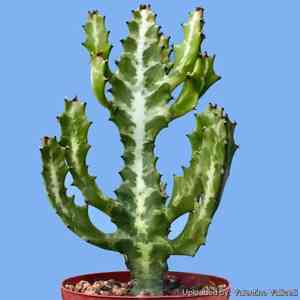
Mottled spurge(Euphorbia lactea)

Mottled spurge (Euphorbia lactea)

Also known as: Candelabrum tree, Mottled candlestick, Frilled fan, Candelabra spurge

Mottled spurge (Euphorbia lactea), native to tropical Asia, especially India, is a spurge species often used as an ornamental plant in tropical areas and as a houseplant in temperate climates. Also known as dragon bones, this species is highly toxic if ingested.

Attributes of Mottled spurge

Lifespan
Perennial
Plant Type
Succulent, Shrub
Plant Height
61 cm to 4.5 m
Spread
60 cm to 1.5 m
Leaf Color
Green Variegated
Flower Size
2.5 cm
Flower Color
Gold Yellow

PlantJoy - Identify plants with a snap

Identify and diagnose plants, get toxicity alerts, and explore safety guides for all types of fungi.

Try for Free

Images of Mottled spurge

Mottled spurge(Euphorbia lactea)

Quickly Identify Mottled spurge

1
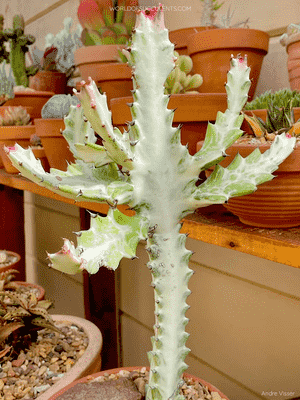
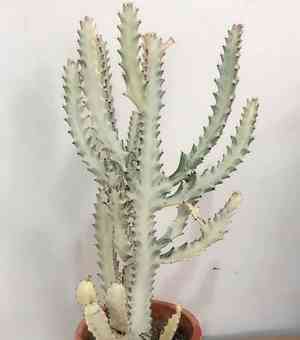
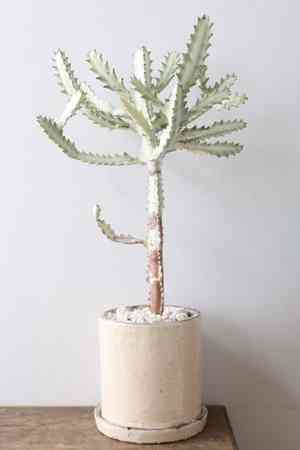
Angular, spiny stems with green and white patterns.
2
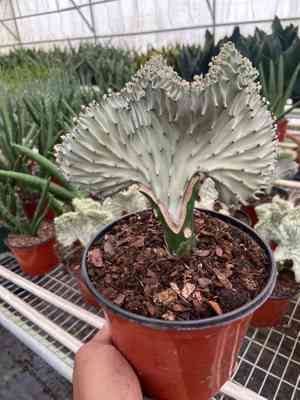
Distinctive crested shape in stem growth.
3
Small, lanceolate light green leaves that drop off quickly.
4
Pairs of inconspicuous yellow flowers near stem tips.
5
Robust stems with cristate growth form and milky sap when damaged.

Scientific Classification of Mottled spurge

Phylum
Vascular plants
Class
Dicotyledons
Order
Malpighiales
Family
Spurge
Genus
Spurges
Species
Mottled spurge

Planting and Growing of Mottled spurge

Care Difficulty
Easy
Watering Schedule
Every 2 days
Sunlight Requirements
Full sun
Sunshine Duration
6-10 hours
Ideal Temperature
65-85℉
Soil Type
Potting Mix, Peat Mix
Soil pH
6.5-7.5
Fertilizer Type
Balanced
Pruning Season
Spring, Summer
Pruning Area
Branches, Leaves
Pruning Frequency
2 times a year
Repotting Season
Spring
Pot Type
Plastic, Ceramic

water icon How to Water Mottled spurge?

When watering Euphorbia lactea, it's important to follow the principle of thorough but infrequent watering. Ensure the soil is completely dry before watering. This succulent prefers a dry spell between waterings, mimicking its natural arid environment. Pour water evenly around the plant until you see water draining from the bottom of the pot, approximately 100 milliliters each time.
What are the symptoms of an underwatered Mottled spurge?
What should I do if my Mottled spurge is not getting enough water?
What are the symptoms of an overwatered Mottled spurge?
How to save an overwatered Mottled spurge?

sunlight icon What Are the Sunlight Requirements for Mottled spurge?

Sunlight Requirements: Full sun, Partial sun
Duration of light: 6 to 8 hours daily
The ideal light range for Euphorbia lactea is full to partial sun, about 6 to 8 hours daily. Proper light access supports strong growth, vibrant colors, and helps in maintaining the plant's health and structural integrity.
What type of lighting is best?
How can I achieve ideal lighting for my plant?
What are the benefits of optimal lighting?

temperature icon What Is the Ideal Temperature Range for Mottled spurge?

Ideal Temperature: 65 ~ 85℉
For optimal growth, Euphorbia lactea prefers a temperature range between 65°F and 85°F. This warm environment mimics its natural habitat, ensuring that the plant can carry out photosynthesis efficiently and maintain healthy growth.

soil icon What Soil is Best for Mottled spurge?

Soil type: Sandy loam, Loam
Soil PH: 6.5 ~ 7.5
Euphorbia lactea thrives best in well-draining soil types. This requirement ensures that excess water does not accumulate, preventing root rot and promoting healthy growth. A mix that allows proper aeration is crucial. This plant prefers soils that are not overly rich in nutrients. Moderation in nutrient content prevents rapid, weak growth and supports the development of its succulent structure. Euphorbia lactea does not require high organic matter content. This aligns with its natural desert habitat, where the soil is typically low in organic composition, ensuring stability in structure.

fertilize icon How to Fertilize Mottled spurge?

Fertilizer type: Balanced
For Euphorbia lactea, use a balanced liquid fertilizer diluted to half-strength. Apply approximately 100 ml per plant during the active growing season, ensuring not to over-saturate the soil.

prune icon How to Prune Mottled spurge?

Pruning Time: Spring, Summer, Autumn
Identify any dead, diseased, or damaged branches as your first targets. Look for branches that don't contribute positively to the plant's shape, or are crossing and rubbing against others, as these can create wounds that may invite disease. Use pruning shears to make clean cuts at an angle about a quarter of an inch above a node or bud. This encourages new growth and prevents water from collecting on the cut surface, reducing the risk of rot. As you prune, aim to maintain a pleasing and balanced shape that allows light to reach the inner branches. Remove any sections that are overly dense to improve airflow, which can help prevent mold and other issues.

propagate icon How to Propagate Mottled spurge plant?

Propagate Time: Spring, Early summer
1
Choose a healthy, mature stem to take a cutting from. The cutting should be about 4-6 inches long and free of any disease or pest issues.
2
Let the cutting dry for a few days after taking it to allow the cut end to form a callus, which helps prevent rot when planted.
3
Once the callus has formed, plant the cutting in a well-draining potting mix. Ensure the pot has adequate drainage holes to avoid waterlogging.

repot icon How to Repot Mottled spurge plant?

Repotting frequency: Every 2-3 years
1
Euphorbia lactea requires repotting when you notice it's root-bound, with roots emerging from drainage holes or the plant becoming unstable. Another signal is when the soil loses its ability to retain moisture or becomes overly compacted. Typically, you should consider repotting in the warmer months, namely Spring or Summer, when the plant enters its active growth phase, ensuring it adapts more efficiently to its new environment.
2
Select a pot that is slightly larger than the current one, ensuring it has adequate drainage holes. Opt for materials like clay or terra cotta, which allow the soil to dry more efficiently, preventing root rot. The larger pot size gives room for root expansion without overwhelming the plant, promoting healthier growth and providing stability to the top-heavy structure of Euphorbia lactea.

PlantJoy - Identify plants with a snap

Find the best spots for them to optimize their health, simply using your phone.

Try for Free

Toxicity of Mottled spurge

Is Mottled spurge toxic to humans?

Mottled spurge is considered a plant with moderate toxicity. Every part of this succulent, including the roots, the sap found within its thick stem, and its crown, is toxic. The sap, referred to as latex, can cause skin irritation upon contact, leading to redness and inflammation. Additionally, affected skin may experience itching and heightened sensitivity to sunlight. If the sap gets into open wounds, it can be quite painful and may hinder the healing process. This plant is not suitable for consumption. Consuming any part of the succulent can result in gastrointestinal issues. Its distinctive shape may attract small children, who could inadvertently come into contact with the harmful latex.

Is Mottled spurge toxic to cat?

Mottled spurge, commonly referred to as Mottled spurge, exhibits moderate toxicity levels for cats. The primary route of exposure is ingestion; however, direct contact with the plant’s sap or juices can also cause poisoning. Affected cats might show signs of physical malaise or illness, which require urgent care. Should a cat owner suspect their feline has ingested mottled spurge, it is crucial to obtain immediate veterinary assistance to ensure the well-being of their pet.

Is Mottled spurge toxic to dog?

Mottled spurge presents a moderate toxicity threat to dogs. Poisoning often happens when a dog consumes any part of the plant, especially its sap or juice. After ingesting mottled spurge, a dog might display signs like vomiting, diarrhea, lethargy, or mouth irritation. It is vital for dog owners to be observant and keep their pets away from mottled spurge. If a dog does ingest this plant, it is imperative to obtain immediate veterinary assistance to ensure appropriate treatment and symptom management.

Identify toxic plants for your safety

Learn which plants are harmful to you and your pets, and make informed choices for a safer home!

Try for Free
WARNING
The judgment on toxicity and danger is for reference only. We DO NOT GUARANTEE any accuracy of such judgment. Therefore, you SHALL NOT rely on such judgment. It is IMPORTANT TO SEEK PROFESSIONAL ADVICE in advance when necessary.