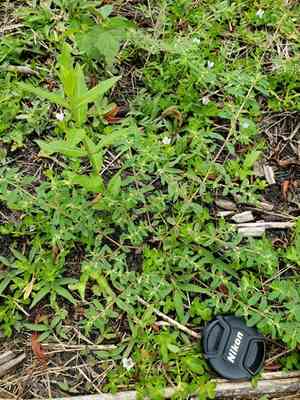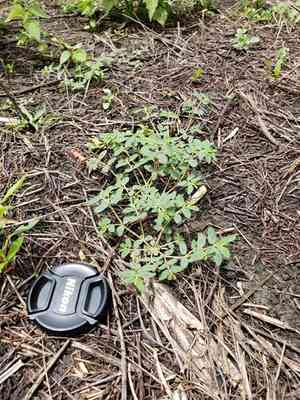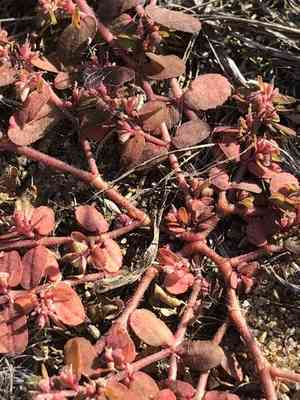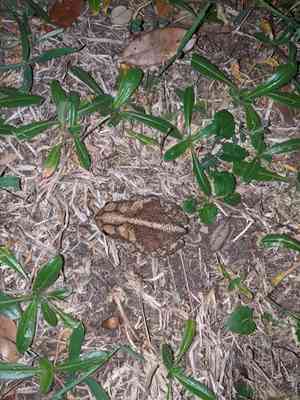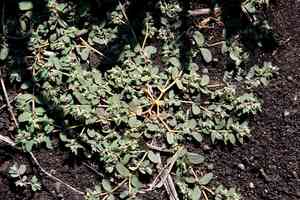
Spotted spurge(Euphorbia maculata)

Spotted spurge (Euphorbia maculata)

Also known as: Spotted sandmat, Milk purslane

Spotted spurge (Euphorbia maculata) is a low-growing summer annual weed that thrives in various open spaces. Its stems release a milky sap that can cause skin irritation and is toxic to sheep. To manage its growth:

1. **Hand Pulling**: Uproot the entire plant, including the roots, to prevent it from regrowing.
2. **Mulching**: Apply a thick layer of mulch (around 3-4 inches) to block sunlight and inhibit seed germination.
3. **Herbicides**: Utilize pre-emergent herbicides to stop seeds from sprouting or post-emergent herbicides to eliminate existing plants. Make sure the herbicide is suitable for spurge.
4. **Lawn Maintenance**: Keep your lawn healthy and dense with regular mowing, watering, and fertilizing to outcompete the weed.
5. **Solarization**: Cover infested areas with clear plastic during hot months to kill the weeds through solar heat.

Additionally, spotted spurge naturally dies off with the onset of frost. Early and consistent efforts are essential for effective control.

Attributes of Spotted spurge

Lifespan
Annual
Plant Type
Herb
Plant Height
30 cm
Spread
15 cm to 45 cm
Leaf Color
Green Red Purple
Flower Size
2.5 cm
Flower Color
White Pink Green

PlantJoy - Identify plants with a snap

Identify and diagnose plants, get toxicity alerts, and explore safety guides for all types of fungi.

Try for Free

Images of Spotted spurge

Spotted spurge(Euphorbia maculata)

Quickly Identify Spotted spurge

1
Oppositely arranged elongated leaves with maroon blemish.
2
Milky sap produced by injured stems.
3
Robust taproot reaching up to 2 feet (60 cm) deep.
4
Inconspicuous greenish-white flowers with subtle pink tinge.
5
Small, dark green leaves with prominent dark spot and teeth.

Scientific Classification of Spotted spurge

Phylum
Vascular plants
Class
Dicotyledons
Order
Malpighiales
Family
Spurge
Genus
Spurges
Species
Spotted spurge

Planting and Growing of Spotted spurge

Care Difficulty
Easy
Watering Schedule
Every 2 days
Sunlight Requirements
Full sun
Sunshine Duration
6-10 hours
Ideal Temperature
65-80℉
Soil Type
Potting Mix, Peat Mix
Soil pH
6-7.5
Fertilizer Type
Balanced
Pruning Season
Spring, Summer
Pruning Area
Branches, Leaves
Pruning Frequency
2 times a year
Repotting Season
Spring
Pot Type
Plastic, Ceramic

water icon How to Water Spotted spurge?

Euphorbia maculata requires careful attention to watering. This plant prefers a well-drained soil and benefits from a light touch when it comes to moisture. Water should be applied until the soil is damp but never soggy, approximately 100 ml per session.
What are the symptoms of an underwatered Spotted spurge?
What should I do if my Spotted spurge is not getting enough water?
What are the symptoms of an overwatered Spotted spurge?
How to save an overwatered Spotted spurge?

sunlight icon What Are the Sunlight Requirements for Spotted spurge?

Sunlight Requirements: Full sun, Partial sun
Duration of light: 6 to 8 hours
Euphorbia maculata ideally requires full sun to partial sun. This exposure enhances its vitality, promoting more vibrant foliage and better flowering performance.
What is the optimal light intensity?
How can I ensure my plant gets enough light indoors?
What are the benefits of providing ideal lighting?

temperature icon What Is the Ideal Temperature Range for Spotted spurge?

Ideal Temperature: 65 ~ 80℉
The ideal temperature range for Euphorbia maculata is between 65°F and 80°F. This range provides optimal conditions for growth, helping the plant to photosynthesize efficiently and maintain its overall health. Within this range, physiological processes occur smoothly, supporting robust development.

soil icon What Soil is Best for Spotted spurge?

Soil type: Sandy soil, Loam, Sandy loam
Soil PH: 6 ~ 7.5
Euphorbia maculata thrives in well-drained soils. This prevents waterlogging, which can lead to root rot. Well-drained soils enhance aeration, allowing roots to access enough oxygen for optimal plant health. The plant prefers soils with moderate nutrient content. Balanced nutrients support healthy growth and vibrant foliage, making it less prone to deficiencies that can impact its vigor and aesthetic appeal. Euphorbia maculata benefits from soils with good moisture retention. While it doesn't tolerate waterlogged conditions, sufficient moisture supports steady growth and helps withstand periods of drought.

fertilize icon How to Fertilize Spotted spurge?

Fertilizer type: Balanced
When fertilizing Euphorbia maculata, it’s best to use a balanced approach. For liquid fertilizers, a diluted half-strength solution is ideal. Apply about 1 gallon for every 10 square feet of growth area. Avoid over-saturating the soil, as this can lead to nutrient leakage and potential plant damage.

prune icon How to Prune Spotted spurge?

Pruning Time: Spring, Summer, Autumn
Begin by identifying the parts of the plant that are overgrown or appear unhealthy. Use sharp, sterilized pruning shears to cut back these areas. It's important to cut just above a leaf node to promote new growth. As you prune, try to maintain an even and natural shape by stepping back occasionally to assess your work. Finish by disposing of the clippings to prevent the spread of any potential diseases.

propagate icon How to Propagate Spotted spurge plant?

Propagate Time: Spring, Late spring, Early summer
1
Gather seeds from mature Euphorbia maculata plants once they've dried on the plant. Ensure the seeds are collected before they are dispersed naturally. This step is crucial for seed propagation to ensure you have viable seeds to start with.
2
Use a well-draining soil mix for both seeds and cuttings. For seeds, the soil should be lightly moistened before placing them on the surface. For cuttings, the soil needs to be sterilized to prevent fungal growth.
3
After cutting a healthy stem, allow the cut end to dry and callus for a few days. Once callused, plant the cutting in the prepared soil mix and water lightly, ensuring the soil remains slightly moist but not wet.

repot icon How to Repot Spotted spurge plant?

Repotting frequency: Every 1-2 years
1
Euphorbia maculata should be repotted when you notice roots crowding out of the drainage holes or when the growth seems stunted. This typically signals that the plant needs more room to grow. Spring and summer are the best seasons for repotting as the plant is actively growing.
2
Choose a pot that is one size larger than the current pot. The pot should have drainage holes to allow excess water to escape, preventing root rot. Opting for a terracotta pot is beneficial as it is breathable, promoting healthy root systems.
3
Select well-draining cactus or succulent soil mix for Euphorbia maculata. These soil types prevent water retention, reducing the risk of root rot. The soil should be gritty, allowing for sufficient aeration and mimicking the natural dry environment of the plant.

PlantJoy - Identify plants with a snap

Find the best spots for them to optimize their health, simply using your phone.

Try for Free

Toxicity of Spotted spurge

Is Spotted spurge toxic to humans?

Ingestion of any part of the spotted spurge plant can lead to poisoning, while physical contact with its latex can result in skin irritation (dermatitis). This irritation is typically mild and temporary, lasting only a few minutes. A delayed reaction may occur, where symptoms such as redness, swelling, and blisters manifest after the latex has made contact and the affected skin is subsequently exposed to sunlight. Consuming spotted spurge may provoke symptoms including nausea, vomiting, and diarrhea. Spotted spurge can be found in a variety of habitats, such as cracks in sidewalks, roadsides, gardens, and wooded areas.

Is Spotted spurge toxic to cat?

Spotted spurge represents a poisonous danger to cats. If felines inadvertently consume any portion of this plant, they may be susceptible to poisoning. Contact with the plant can result in various symptoms that may signal physical distress or illness. Therefore, it is essential for cat owners to promptly pursue veterinary assistance to tackle any possible health issues. Quick intervention by a veterinarian at a clinic is vital for the welfare of the impacted cat.

Is Spotted spurge toxic to dog?

Spotted spurge is recognized as toxic to dogs. Dogs can inadvertently consume various parts of the plant, resulting in poisoning. Any part of the plant poses a threat when ingested. Following consumption, a dog may display signs such as vomiting, diarrhea, and lethargy. It is imperative for pet owners to remain alert and safeguard their pets from regions where spotted spurge can be found. If poisoning is suspected, prompt veterinary attention is vital to protect the well-being and safety of the affected dog.

Identify toxic plants for your safety

Learn which plants are harmful to you and your pets, and make informed choices for a safer home!

Try for Free
WARNING
The judgment on toxicity and danger is for reference only. We DO NOT GUARANTEE any accuracy of such judgment. Therefore, you SHALL NOT rely on such judgment. It is IMPORTANT TO SEEK PROFESSIONAL ADVICE in advance when necessary.
More About Toxic Techniques