
Crown of thorns (Euphorbia milii)
Also known as: Christ thorn
*Euphorbia milii*, also called the crown of thorns or Christ thorn, is thought to be linked to the biblical crown of thorns. This plant requires full sunlight and temperatures above 10°C to thrive.
Attributes of Crown of thorns
Images of Crown of thorns
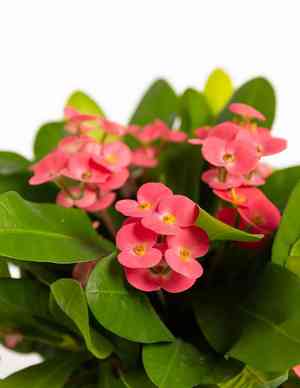

Quickly Identify Crown of thorns
Scientific Classification of Crown of thorns
Planting and Growing of Crown of thorns
 How to Water Crown of thorns?
 What Are the Sunlight Requirements for Crown of thorns?
 What Is the Ideal Temperature Range for Crown of thorns?
 What Soil is Best for Crown of thorns?
 How to Fertilize Crown of thorns?
 How to Prune Crown of thorns?
 How to Propagate Crown of thorns plant?
 How to Repot Crown of thorns plant?
Toxicity of Crown of thorns
Is Crown of thorns toxic to humans?
Despite being a favored houseplant, the crown of thorns is highly toxic, with the ingestion of any part leading to moderate toxicity. The sap of this plant contains harmful substances that can result in irritation to both the eyes and skin if not handled carefully. Exposure to the eyes may lead to swelling and puffiness, while contact with the skin is likely to result in dermatitis. Ingesting any part of the plant can lead to mouth and throat irritation, blistering, vomiting, and abdominal pain. Ingestion of the sap may even cause temporary blindness. Poisoning incidents primarily arise in children, drawn in by the crown of thorns' bright and appealing flowers.
Is Crown of thorns toxic to cat?
The crown of thorns presents a danger of toxicity to felines. If cats inadvertently consume any portion of the plant, they may suffer from poisoning. Contact with crown of thorns can result in a variety of troubling symptoms, such as gastrointestinal disturbances, vomiting, and excessive drooling. Given these possible signs of distress, it is essential to promptly seek veterinary assistance if there is any suspicion that a cat has ingested crown of thorns. Timely and expert care is crucial for addressing any adverse reactions linked to the toxic nature of this plant.
Is Crown of thorns toxic to dog?
The crown of thorns is recognized as toxic to dogs. If dogs happen to ingest any component of the crown of thorns, they face the risk of poisoning due to the plant's toxic nature. Every part of the plant, encompassing leaves, stems, and flowers, harbors harmful substances that can induce detrimental health effects in dogs. Signs of poisoning in dogs may manifest as vomiting, diarrhea, excessive drooling, or more serious symptoms such as lethargy and abdominal discomfort. It is essential for dog owners to remain alert and prevent their pets from accessing crown of thorns. Should a dog consume any part of this plant, it is vital to obtain prompt veterinary assistance to ensure the best possible outcome for the affected animal.



