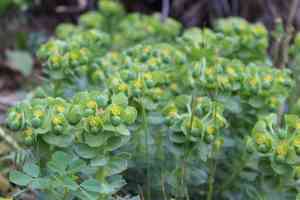
Myrtle spurge(Euphorbia myrsinites)

Myrtle spurge (Euphorbia myrsinites)

Also known as: Creeping spurge, Blue spurge

The myrtle spurge (*Euphorbia myrsinites*) is a succulent plant native to Southeastern Europe and Western Asia. Its milky sap is highly toxic and can cause significant skin irritation and eye injuries, particularly in children. Additionally, its invasive nature can inhibit the growth of nearby plants. Consequently, it is essential to handle this plant with great caution.

Attributes of Myrtle spurge

Lifespan
Perennial, Biennial
Plant Type
Herb
Plant Height
20 cm to 40 cm
Spread
45 cm
Leaf Color
Green Blue Gray Silver
Flower Size
10 cm
Flower Color
Yellow Green

PlantJoy - Identify plants with a snap

Identify and diagnose plants, get toxicity alerts, and explore safety guides for all types of fungi.

Try for Free

Images of Myrtle spurge

Myrtle spurge(Euphorbia myrsinites)

Quickly Identify Myrtle spurge

1
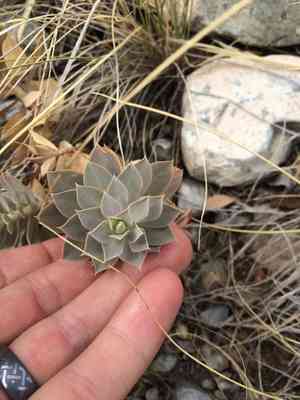
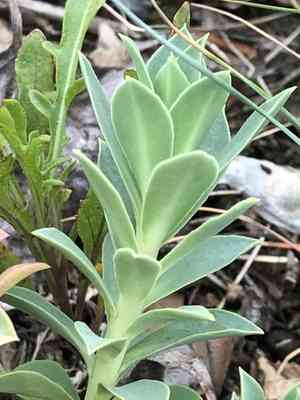
Dense spirals of blue-gray succulent leaves
2
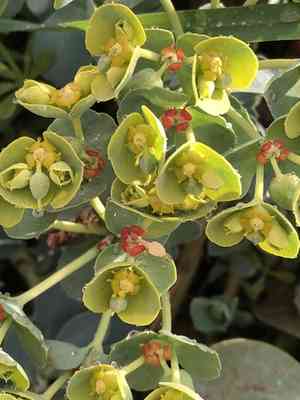
Vibrant yellow inflorescences with greenish tones
3
Unique explosive dehiscence mechanism in fruit
4
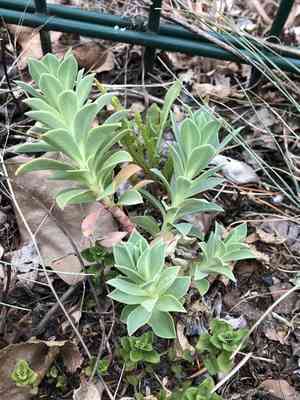
Prostrate wood base with trailing stems rising at tips
5
Smooth, firm, fleshy stems with green-gray hue

Scientific Classification of Myrtle spurge

Phylum
Vascular plants
Class
Dicotyledons
Order
Malpighiales
Family
Spurge
Genus
Spurges
Species
Myrtle spurge

Planting and Growing of Myrtle spurge

Care Difficulty
Easy
Watering Schedule
Every 2 days
Sunlight Requirements
Full sun
Sunshine Duration
6-10 hours
Ideal Temperature
50-75℉
Soil Type
Potting Mix, Peat Mix
Soil pH
6.5-7.5
Fertilizer Type
Balanced
Pruning Season
Spring, Summer
Pruning Area
Branches, Leaves
Pruning Frequency
2 times a year
Repotting Season
Spring
Pot Type
Plastic, Ceramic

water icon How to Water Myrtle spurge?

Euphorbia myrsinites prefers well-drained soil with good aeration. The ideal watering amount is 250 ml per session, which ensures that the roots have enough moisture without being waterlogged. Pour slowly until you see water coming out of the drainage holes, then stop.
What are the symptoms of an underwatered Myrtle spurge?
What should I do if my Myrtle spurge is not getting enough water?
What are the symptoms of an overwatered Myrtle spurge?
How to save an overwatered Myrtle spurge?
More About Watering Techniques

sunlight icon What Are the Sunlight Requirements for Myrtle spurge?

Sunlight Requirements: Full sun, Partial sun
Duration of light: 6 to 8 hours
Euphorbia myrsinites thrives in full to partial sun; this ideal light range provides it the energy to flourish. Adequate sunlight helps maintain its structural integrity, vibrant leaf color, and rich blooms, thereby enhancing its ornamental appeal and overall health.
How to Achieve Ideal Sunlight Exposure?
What are the Solutions to Limited Sunlight?
Benefits of Ideal Lighting Conditions
More About Sunlight Requirements Techniques

temperature icon What Is the Ideal Temperature Range for Myrtle spurge?

Ideal Temperature: 50 ~ 75℉
For optimal growth, Euphorbia myrsinites thrives in temperatures ranging from 50 to 75°F. Within this range, the plant can efficiently perform photosynthesis and maintain its metabolic processes without stress, resulting in healthy foliage and robust blooming.

soil icon What Soil is Best for Myrtle spurge?

Soil type: Sandy soil, Loam, Calcareous soil
Soil PH: 6.5 ~ 7.5
Euphorbia myrsinites thrives in well-drained soil, which is crucial to prevent root rot. This type of soil ensures that excess water can easily drain away, keeping the plant's roots healthy and strong. Although it can tolerate poor soils, Euphorbia myrsinites benefits from a nutrient-rich substrate. This encourages vigorous growth and enhances the plant's vibrant foliage and flowering potential. This plant prefers dry conditions and does not require frequent watering. A soil that retains minimal moisture and quickly dries out is ideal, preventing issues related to overwatering. More About Soil

fertilize icon How to Fertilize Myrtle spurge?

Fertilizer type: Balanced
Euphorbia myrsinites is a hardy succulent that requires minimal fertilization. For liquid fertilizer, use a diluted solution at half the recommended strength to avoid nutrient burn. For slow-release granular fertilizers, apply sparingly in small amounts to prevent over-fertilization.

prune icon How to Prune Myrtle spurge?

Pruning Time: Spring, Summer
Begin by assessing your Euphorbia myrsinites for any dead, damaged, or overly leggy stems. These stems often appear brown and may detract from the plant's aesthetic. Use sharp, clean pruning shears to remove unwanted stems at their base or at leaf nodules, ensuring to make clean cuts to reduce stress on the plant. To promote a bushier appearance, pinch back the tips of growing stems, which will encourage new side shoots to form and make the plant fuller and more vibrant.

propagate icon How to Propagate Myrtle spurge plant?

Propagate Time: Spring, Early Summer
1
For seed propagation, collect seeds from mature plants in the late spring. For cuttings, use a sharp knife to cut healthy stems, ensuring at least two inches in length.
2
Use a well-draining soil mix containing sand and perlite to ensure good drainage. This mix supports root development and prevents waterlogging, which can inhibit growth.
3
Plant seeds or cuttings in the prepared growing medium. Water gently to moisten the soil but avoid overwatering, which can cause rot. Keep at a consistent temperature for optimal growth.
More About Propagating Techniques

repot icon How to Repot Myrtle spurge plant?

Repotting frequency: Every 2-3 years
1
Euphorbia myrsinites should be repotted when you notice roots growing through the drainage holes, or if growth seems stunted. Springtime is ideal as the plant awakens from dormancy and gearing up for active growth. These are telltale signs that the plant is running out of room and nutrients.
2
Select a pot that is one size larger than the current one, with drainage holes to prevent waterlogging. Clay pots are excellent as they allow moisture to evaporate more easily, reducing the risk of root rot, which this plant is particularly susceptible to.
3
Opt for a well-draining cactus mix, often composed of a mixture of peat, sand, and perlite or pumice. This blend ensures proper drainage and aeration, which mimics the plant's native rocky habitat, thereby minimizing the likelihood of root rot.
More About Repotting Techniques

PlantJoy - Identify plants with a snap

Find the best spots for them to optimize their health, simply using your phone.

Try for Free

Toxicity of Myrtle spurge

Is Myrtle spurge toxic to cat?

Euphorbia myrsinites, commonly referred to as Myrtle spurge, presents a moderate toxicity risk for cats. Incidents of exposure usually happen when a cat consumes any portion of the plant, especially its sap or juice. When a cat is poisoned, it may show signs of physical discomfort that require urgent care. While the specific toxic substances are not detailed in this summary, it is important for cat owners to be aware of the associated hazards. It is crucial that any cat displaying adverse reactions after coming into contact with myrtle spurge is taken to a veterinary clinic without delay for appropriate treatment.

Is Myrtle spurge toxic to dog?

Euphorbia myrsinites, widely known as Myrtle spurge, presents a moderate toxicity risk to dogs. The primary danger arises when dogs ingest any part of this plant. The sap and juice contain harmful compounds that can lead to various symptoms upon consumption. Dog owners need to be alert for potential poisoning signs such as vomiting, diarrhea, excessive drooling, or more serious reactions that could indicate systemic issues. If you believe your dog has consumed Myrtle spurge, it is crucial to obtain immediate veterinary attention to secure the best outcome for your furry friend.

Identify toxic plants for your safety

Learn which plants are harmful to you and your pets, and make informed choices for a safer home!

Try for Free
WARNING
The judgment on toxicity and danger is for reference only. We DO NOT GUARANTEE any accuracy of such judgment. Therefore, you SHALL NOT rely on such judgment. It is IMPORTANT TO SEEK PROFESSIONAL ADVICE in advance when necessary.
More About Toxic Techniques