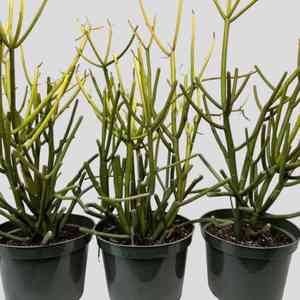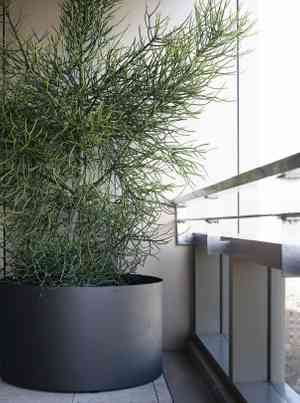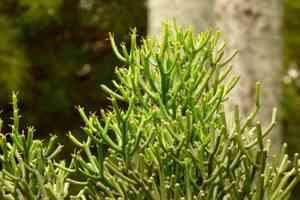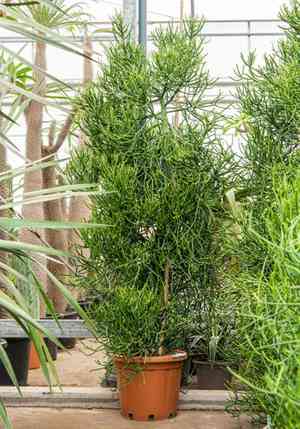
Pencil cactus(Euphorbia tirucalli)

Pencil cactus (Euphorbia tirucalli)

Also known as: Aveloz, Pencil tree, Naled lady

The Pencil cactus (Euphorbia tirucalli), characterized by its slender, pencil-like branches, flourishes in warm, arid environments. Originally from Africa's black clay soils, this plant prefers locations with plenty of direct sunlight and well-draining soil, such as cactus or succulent mixes. While it can withstand high temperatures, it should be kept away from frost. Additionally, it's important to note that the plant's milky sap is toxic and can cause skin irritation or blindness if it comes into contact with the eyes.

Attributes of Pencil cactus

Lifespan
Perennial
Plant Type
Succulent, Shrub, Tree
Plant Height
2 m to 9 m
Spread
10 cm to 25 cm
Leaf Color
Green
Flower Size
2 mm
Flower Color
Green Yellow

PlantJoy - Identify plants with a snap

Identify and diagnose plants, get toxicity alerts, and explore safety guides for all types of fungi.

Try for Free

Images of Pencil cactus

Pencil cactus(Euphorbia tirucalli)

Quickly Identify Pencil cactus

1
Cylindrical green branchlets turn bright orange in sunlight.
2
Tiny oblanceolate leaves cluster at branch ends, dropping off later.
3
Dry dehiscent capsules contain variegated ovoid seeds with distinctive markings.
4
Inconspicuous yellow flowers emerge in clusters atop branchlets with showy bracts.
5
Robust trunk branches into woody primary limbs and fragile green secondary stems.

Scientific Classification of Pencil cactus

Phylum
Vascular plants
Class
Dicotyledons
Order
Nances, spurges, willows and allies
Family
Spurge
Genus
Spurges
Species
Pencil cactus

Planting and Growing of Pencil cactus

Care Difficulty
Easy
Watering Schedule
Every day
Sunlight Requirements
Full sun
Sunshine Duration
6-10 hours
Ideal Temperature
65-75℉
Soil Type
Potting Mix, Peat Mix
Soil pH
6.5-7.5
Fertilizer Type
Balanced
Pruning Season
Spring, Summer
Pruning Area
Branches, Leaves
Pruning Frequency
Once a year
Repotting Season
Spring
Pot Type
Plastic, Ceramic

water icon How to Water Pencil cactus?

Euphorbia tirucalli requires minimal watering due to its succulent nature. Water approximately 250 milliliters each time, ensuring the soil is thoroughly dampened but not waterlogged. The soil should be allowed to dry out completely between waterings, mimicking its native arid environment.
What are the symptoms of an underwatered Pencil cactus?
What should I do if my Pencil cactus is not getting enough water?
What are the symptoms of an overwatered Pencil cactus?
How to save an overwatered Pencil cactus?

sunlight icon What Are the Sunlight Requirements for Pencil cactus?

Sunlight Requirements: Full sun, Partial sun
Duration of light: 4-6 hours daily
For optimal health, Euphorbia tirucalli benefits from full to partial sun exposure. This light range supports strong growth and vibrant colors by enhancing photosynthesis and plant vigor.
What is the best light condition for Euphorbia tirucalli?
How can you achieve ideal lighting for Euphorbia tirucalli indoors?
What benefits does ideal light bring to Euphorbia tirucalli?

temperature icon What Is the Ideal Temperature Range for Pencil cactus?

Ideal Temperature: 65 ~ 75℉
The ideal temperature range for growing Euphorbia tirucalli is between 65°F and 75°F. This temperature range simulates the plant’s native tropical climate and promotes optimal growth and development. Maintaining this range helps in ensuring that the plant remains healthy and continues to flourish without experiencing heat stress or cold damage.

soil icon What Soil is Best for Pencil cactus?

Soil type: Sandy soil, Loam, Sandy loam
Soil PH: 6.5 ~ 7.5
Euphorbia tirucalli thrives in soil that offers excellent drainage. This prevents water from stagnating and causing root rot, ensuring the health and longevity of the plant. A sandy or loamy texture is ideal as it provides air circulation to the roots while facilitating efficient nutrient uptake, which is crucial for growth. While not very nutrient-demanding, occasional addition of organic matter can benefit this plant, enriching the soil and promoting vibrant growth over time.

fertilize icon How to Fertilize Pencil cactus?

Fertilizer type: Balanced
For Euphorbia tirucalli, it is critical to use a balanced, water-soluble fertilizer at half the recommended strength. Over-fertilizing can harm the plant more than under-fertilizing. For a plant in a 6-inch pot, utilize approximately one teaspoon of liquid fertilizer mixed with a gallon of water.

prune icon How to Prune Pencil cactus?

Pruning Time: Spring, Summer
Begin by assessing the plant for any dead or damaged branches that need removal. Check for any irregular growth patterns that may benefit from shaping to enhance the aesthetic appeal and health of the plant. Start by cutting back any dead or damaged stems to the base of the plant. When pruning for shape, aim to make cuts just above a lateral branch or node to encourage new growth. Make each cut at a 45-degree angle to prevent water from pooling on the cut surface, which can lead to rot. After pruning, observe the plant for signs of stress or injury. Provide adequate water, but avoid overwatering, as Euphorbia tirucalli prefers dry conditions. Encourage recovery with a light fertilizer designed for succulents, ensuring the plant has the nutrients it needs to thrive after pruning.

propagate icon How to Propagate Pencil cactus plant?

Propagate Time: Spring, Early summer
1
Choose healthy, non-flowering stems for cuttings about 10-15 cm long. Remove the lower leaves, and let the cutting dry for a few days to form a callous over the cut surface before planting.
2
Once the callous has formed, dip the cut end in rooting hormone, and plant it in a well-draining cactus or succulent soil mix. Ensure that the cuttings are upright and firm in the soil.
3
Water the cuttings sparingly to avoid rot. Ensure they are in a warm area with bright, indirect sunlight. Overexposure to direct sunlight may dry or burn the cuttings.

repot icon How to Repot Pencil cactus plant?

Repotting frequency: Every two years
1
Euphorbia tirucalli should be repotted when you notice its roots start to emerge from the drainage holes of its current pot, or when its growth becomes stunted. Early signs can also include a noticeable lack of space for the plant's expanding root system, which can occur after two or more growing seasons. Think of this as akin to needing a new pair of shoes when your feet have outgrown the old ones. Keep a close eye on your plant, and if it seems snug in its pot during the active growing season, it's probably time to repot.
2
Select a pot that is 2-3 inches larger in diameter than the current one. This size allows the plant sufficient room for root expansion and prevents over-watering by maintaining good drainage. Clay pots are a great option because they are breathable and reduce the risk of root rot. Ensure the pot has drainage holes to facilitate the outflow of excess water, maintaining ideal soil moisture levels.
3
Opt for a well-draining cactus mix supplemented with sand or perlite. This soil mixture is ideal as it mimics the plant's natural desert habitat, preventing water from pooling around the roots. The well-draining nature of this mix allows for optimal aeration and moisture retention tailored to meet the Euphorbia tirucalli's specific needs. By replicating its native soil conditions, you enhance the plant's overall health and vitality.

PlantJoy - Identify plants with a snap

Find the best spots for them to optimize their health, simply using your phone.

Try for Free

Toxicity of Pencil cactus

Is Pencil cactus toxic to humans?

The pencil cactus is exceedingly poisonous to humans. This plant excretes a milky sap that can result in intense itchiness, burns, and potentially even temporary blindness if it comes into contact with the eyes. Given that pencil cactus are favored house and garden plants, individuals may occasionally find themselves exposed to the sap while gardening or caring for a compromised houseplant. Consuming any part of this plant may induce nausea, vomiting, and diarrhea. Fortunately, incidents of human consumption are remarkably uncommon, as this species is primarily cultivated for decoration and does not have any edible imitations.

Is Pencil cactus toxic to cat?

When the leaves and stems of the pencil cactus (Euphorbia tirucalli) are damaged, the milky sap that seeps from it can cause skin irritation. Symptoms of ingestion are typically mild and may consist of oral discomfort and gastrointestinal upset. While they are not seen as extremely toxic, it is advisable to prevent cats from interacting with them.

Is Pencil cactus toxic to dog?

The pencil cactus is considered to be mildly to moderately toxic to dogs. Reactions typically occur when dogs consume or come into contact with the milky sap that the plant exudes when it is cut or injured. Ingesting this sap can lead to gastrointestinal issues or damage to the intestines, often resulting in symptoms such as diarrhea or vomiting. Additionally, if the sap touches the skin, it may trigger painful rashes that can cause the dog to scratch excessively. In severe cases, if a considerable amount of sap enters a dog's eye(s), it may lead to temporary blindness.

Identify toxic plants for your safety

Learn which plants are harmful to you and your pets, and make informed choices for a safer home!

Try for Free
WARNING
The judgment on toxicity and danger is for reference only. We DO NOT GUARANTEE any accuracy of such judgment. Therefore, you SHALL NOT rely on such judgment. It is IMPORTANT TO SEEK PROFESSIONAL ADVICE in advance when necessary.