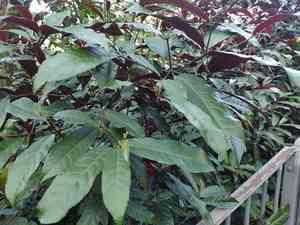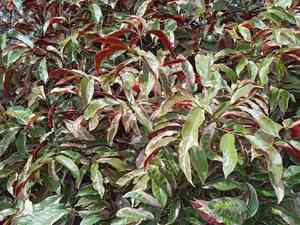
Blindness tree(Excoecaria cochinchinensis)

Blindness tree (Excoecaria cochinchinensis)

Also known as: Blindness Tree, Variegated Leaf Excoecaria

The blindness tree, also known as the manchineel or beach apple (Hippomane mancinella), is native to the coastal regions of the Caribbean, Central America, and northern parts of South America. It is not to be confused with subtropical shrubs from Southeast Asia and China. Key features of this highly toxic tree include:

1. **Appearance**: It has glossy green leaves that are oval to elliptical in shape, not long and narrow. The leaves do not have a dual color; they are uniformly dark green.
2. **Toxic Sap**: The tree's sap is extremely toxic and can cause severe skin irritation, blistering, and even blindness if it comes into contact with the eyes.
3. **Fruit**: The small, greenish-yellow fruit resembles apples but is highly poisonous.
4. **Habitat**: It thrives in coastal regions, often found near beaches and mangroves.

**Risks**:
- **Skin Contact**: The sap can cause severe dermatitis and blistering upon contact with the skin.
- **Eye Contact**: Exposure to the sap can lead to temporary or permanent blindness.
- **Ingestion**: Eating the fruit can result in severe gastrointestinal distress and can be fatal.
- **Environmental Exposure**: Even standing beneath the tree during rainfall can result in sap-induced burns from water dripping off its leaves.

Awareness and caution are essential to avoid the dangers posed by this hazardous tree.

Attributes of Blindness tree

Lifespan
Perennial
Plant Type
Shrub
Plant Height
91 cm to 1.8 m
Spread
60 cm to 90 cm
Leaf Color
Green Red
Flower Size
2.5 cm
Flower Color
Green Yellow

PlantJoy - Identify plants with a snap

Identify and diagnose plants, get toxicity alerts, and explore safety guides for all types of fungi.

Try for Free

Images of Blindness tree

Blindness tree(Excoecaria cochinchinensis)

Quickly Identify Blindness tree

1
Bicolored leaves: Shiny olive green upper surfaces and glossy blood-red undersides distinguish blindness tree.
2
Lanceolate leaves: Measure 3-5 inches (7.6-12.7 cm) long with prominent veins.
3
Small green flowers: Clustered in inconspicuous racemes, approximately 2-3 mm across.
4
Dioecious shrub: Reaches 3-5 feet (91-152 cm) in height with irritating sap.
5
Globose fruit: Approximately 8 mm (0.31 inches) in diameter, may change color upon maturity.

Scientific Classification of Blindness tree

Phylum
Vascular plants
Class
Dicotyledons
Order
Nances, spurges, willows and allies
Family
Spurge
Genus
Excoecaria
Species
Blindness tree

Planting and Growing of Blindness tree

Care Difficulty
Moderate
Watering Schedule
Every 8 days
Sunlight Requirements
Partial sun
Sunshine Duration
6-10 hours
Ideal Temperature
65-75℉
Soil Type
Potting Mix, Peat Mix
Soil pH
6.5-7.5
Fertilizer Type
Balanced
Pruning Season
Spring, Summer
Pruning Area
Branches, Leaves
Pruning Frequency
2 times a year
Repotting Season
Spring
Pot Type
Plastic, Ceramic

water icon How to Water Blindness tree?

For Excoecaria cochinchinensis, it's essential to provide 500 ml of water during each watering session. This amount ensures the soil remains adequately moist without becoming waterlogged. The goal is to achieve a consistent level of moisture that allows the roots to breathe while still receiving sufficient hydration.
What are the symptoms of an underwatered Blindness tree?
What should I do if my Blindness tree is not getting enough water?
What are the symptoms of an overwatered Blindness tree?
How to save an overwatered Blindness tree?

sunlight icon What Are the Sunlight Requirements for Blindness tree?

Sunlight Requirements: Partial sun, Full shade
Duration of light: 4-6 hours daily
Ideally, Excoecaria cochinchinensis should be in partial to full shade. Such conditions prevent sun stress, ensure vibrant foliage, and contribute to robust growth.
What is the ideal lighting situation?
How can I achieve ideal lighting conditions?
What are the benefits of ideal lighting?

temperature icon What Is the Ideal Temperature Range for Blindness tree?

Ideal Temperature: 65 ~ 75℉
The ideal temperature range for Excoecaria cochinchinensis is between 65°F and 75°F. This range allows the plant to photosynthesize effectively and maintain robust growth. Conditions within this temperature bracket support optimal physiological processes, minimizing stress and promoting vibrant foliage. Outside this range, the plant may experience reduced growth and diminished health.

soil icon What Soil is Best for Blindness tree?

Soil type: Loam, Sandy loam
Soil PH: 6.5 ~ 7.5
Excoecaria cochinchinensis thrives in well-drained soil which prevents waterlogging that can lead to root rot. Ensuring a balance between moisture retention and drainage helps the plant maintain its health and vibrant foliage. This plant benefits from nutrient-rich soil, providing essential minerals and nutrients for robust growth. Amending the soil with organic matter enhances fertility and promotes sustainable growth. The plant requires soil that retains some moisture but drains excess water away. This characteristic ensures that the plant's roots remain hydrated without being submerged, fostering a healthy root environment.

fertilize icon How to Fertilize Blindness tree?

Fertilizer type: Balanced
For Excoecaria cochinchinensis, the recommended fertilizer amount should be balanced. When using liquid fertilizers, it is advisable to dilute them to half strength to avoid any risk of root burn. For solid fertilizers, apply cautiously at a rate according to product instructions, usually around 20 grams per square foot.

prune icon How to Prune Blindness tree?

Pruning Time: Spring, Summer, Autumn
Firstly, check for any dead or diseased stems and remove them to promote healthy growth. This involves cutting the stem back to a healthy part of the plant to prevent further spreading of any issues. Trim back overgrown branches to maintain the desired shape and size. This not only keeps the plant tidy but also allows light to penetrate through, encouraging a lush, even growth. Cut just above a leaf node to encourage branching. This technique helps in making the plant denser and bushier, enhancing its ornamental appeal with fuller foliage.

propagate icon How to Propagate Blindness tree plant?

Propagate Time: Spring, Early Summer
1
Select healthy stems from the parent plant. Cut a 4-6 inch piece, ensuring to make the cut below a node. Strip the leaves from the bottom half to prevent rot.
2
Choose a well-draining mix comprising peat and perlite. Moisten the mix before use, ensuring it is damp but not waterlogged. Fill small pots with the mix, ready to receive the cuttings.
3
Collect seeds from mature plants and sow them in a seed-starting tray filled with light, well-draining soil. Cover seeds lightly and mist the soil to provide moisture, placing the tray in a warm, well-lit area.

repot icon How to Repot Blindness tree plant?

Repotting frequency: Once every 1-2 years
1
Excoecaria cochinchinensis shows signs of needing repotting when its roots start circling the pot or growing out of the drainage holes. Yellowing leaves and stunted growth are clear indicators that it requires more room. Spring and early summer are ideal times for repotting, as the plant enters its active growth phase, allowing it to recover swiftly from the transplant shock.
2
Select a pot that's one size larger and has good drainage. The material should ideally be breathable, like terracotta, allowing moisture to evaporate and air to circulate around the roots. A well-draining pot ensures that root rot doesn't set in, keeping your plant healthy and thriving.
3
A well-draining potting mix with a blend of organic material such as peat and perlite or sand works best. This mix provides adequate aeration and drainage which prevents root rot by allowing excess water to escape quickly. Maintaining the right soil conditions is crucial for the overall health of Excoecaria cochinchinensis.

PlantJoy - Identify plants with a snap

Find the best spots for them to optimize their health, simply using your phone.

Try for Free

Toxicity of Blindness tree

Is Blindness tree toxic to humans?

The blindness tree is a shrub characterized by its toxic sap, which frequently leads to skin irritation, redness, and dermatitis; however, ingestion of the sap can also be poisonous. This plant earned the name 'blindness tree' because its toxic sap is known to induce temporary blindness. Frequently utilized as an ornamental plant in numerous gardens, it heightens the risk of skin contact poisonings for both gardeners and children. When consumed, the tree's sap produces a powerful purgative effect, though it does not typically present a significant health risk.

Identify toxic plants for your safety

Learn which plants are harmful to you and your pets, and make informed choices for a safer home!

Try for Free
WARNING
The judgment on toxicity and danger is for reference only. We DO NOT GUARANTEE any accuracy of such judgment. Therefore, you SHALL NOT rely on such judgment. It is IMPORTANT TO SEEK PROFESSIONAL ADVICE in advance when necessary.