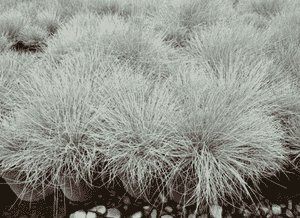
Blue fescue (Festuca glauca)
Also known as: Blue Fescue, Blue Sheep Fescue
Mondo grass (*Ophiopogon japonicus*) is an evergreen perennial that forms clumps and is commonly used for ornamental groundcover. While it adds aesthetic value to gardens, it can become invasive if not properly managed. The Latin name *Ophiopogon japonicus* refers to its Japanese origin.
In This Article
Attributes of Blue fescue
Lifespan
Perennial
Plant Type
Grass
Plant Height
14 cm to 18 cm
Spread
45 cm
Leaf Color
Green Blue
Flower Size
15 cm
Flower Color
Green Purple Yellow Blue Brown
Images of Blue fescue
Quickly Identify Blue fescue
1
Distinct blue-green coloration on fine narrow foliage
2
Forms dense tufted clumps measuring 6-10 inches (15-25 cm) in height
3
Can spread to a width of 8-12 inches (20-30 cm)
4
Retains color best in well-drained soils
5
Requires division every few years for compact growth
Scientific Classification of Blue fescue
Phylum
Vascular plants
Class
Monocotyledons
Order
Grasses, sedges and allies
Family
Grass
Genus
Festuca
Species
Blue fescue
Planting and Growing of Blue fescue
Care Difficulty
Easy
Watering Schedule
Every 2 days
Sunlight Requirements
Full sun
Sunshine Duration
4-8 hours
Ideal Temperature
60-70℉
Soil Type
Potting Mix, Peat Mix
Soil pH
6.5-7.5
Fertilizer Type
Balanced
Pruning Season
Spring, Summer
Pruning Area
Branches, Leaves
Pruning Frequency
2 times a year
Repotting Season
Spring
Pot Type
Plastic, Ceramic
 How to Water Blue fescue?
Festuca glauca, commonly known as blue fescue, requires about 250 milliliters of water per session. Watering should be thorough but infrequent, allowing the soil to dry out between sessions. Ensure the water reaches the root zone, but avoid waterlogging.
What are the symptoms of an underwatered Blue fescue?
›
What should I do if my Blue fescue is not getting enough water?
›
What are the symptoms of an overwatered Blue fescue?
›
How to save an overwatered Blue fescue?
›
 What Are the Sunlight Requirements for Blue fescue?
Festuca glauca prospers best in full sun but can handle partial sun. Receiving optimal light ensures a robust, healthy plant with vibrant foliage, enhancing its aesthetic appeal in garden settings.
More About Sunlight Requirements Techniques→
How much sun does Festuca glauca need?
›
Can Festuca glauca tolerate shade?
›
What are the solutions to optimize sunlight exposure?
›
 What Is the Ideal Temperature Range for Blue fescue?
The ideal temperature range for growing Festuca glauca is between 60°F and 70°F. This range ensures optimal growth, maintaining the plant's health and ensuring it achieves its vibrant blue-green coloration. Within this bracket, the plant experiences minimal stress and maintains consistent growth rates.
 What Soil is Best for Blue fescue?
Festuca glauca thrives in well-drained soils. Proper drainage prevents waterlogging, which can lead to root rot. Ensuring good drainage is crucial as it allows for adequate oxygen supply to the roots, promoting healthy growth and vibrant foliage. While Festuca glauca doesn't demand highly fertile soil, moderate nutrient levels support its optimal growth. Soils with a balanced mix of essential nutrients help the plant develop robust root systems and maintain its striking blue-grey foliage. The plant prefers a light soil texture that allows easy root penetration and development. Such a soil structure supports the plant's exploratory root growth, allowing it to establish quickly and resist drought.
More About Soil→
 How to Fertilize Blue fescue?
When fertilizing Festuca glauca, a conservative approach is recommended. Use a balanced, slow-release granular fertilizer, applying approximately 50 grams per square meter. For liquid fertilizers, dilute to half the recommended concentration to avoid root damage. Adjust based on plant response.
More About Fertilizing Techniques→
 How to Prune Blue fescue?
Ensure you are using sharp, clean scissors or shears to avoid pulling on the plant, which can cause damage. Cutting with a clean motion also prevents the spread of diseases between plants. Before you start pruning, examine the festuca and identify which parts are dead or discolored. Trim away these sections to make room for new growth. This practice not only improves appearance but also helps airflow and reduces the chances of disease. While it's essential to remove dead or long blades, avoid cutting the plant back too far. Over-pruning can stress Festuca glauca, resulting in poor growth and vitality. Make sure to leave some foliage intact to encourage healthy regeneration.
More About Pruning Techniques→
 How to Propagate Blue fescue plant?
1
Collect seeds from mature Festuca glauca plants. Clean and dry the seeds to prevent mold growth. Store them in a cool, dry place until you are ready to plant.
2
Fill trays with a well-draining seed-starting mix. Sow the seeds on the surface, pressing them gently into the soil. Keep the soil consistently moist until germination occurs.
3
Carefully dig up established clumps of Festuca glauca in spring or early summer. Use a garden spade to divide the clump into smaller sections ensuring each has a portion of the root system.
 How to Repot Blue fescue plant?
1
Festuca glauca needs repotting when its roots start poking out of the drainage holes, or the soil becomes too compacted, hindering water drainage. Early spring or autumn is ideal, as cooler temperatures and less intense sunlight minimize transplant shock, allowing your grass time to settle in its new container before its growth phase begins.
2
When selecting a pot for Festuca glauca, opt for one slightly larger than the previous, with ample drainage holes to prevent waterlogging. A terracotta pot is ideal as it allows the soil to air-dry more easily, reducing the risk of root rot. Its material and size should accommodate the root ball comfortably while encouraging healthy air circulation.
3
The ideal soil for Festuca glauca is a well-draining gritty mix, which mimics its natural rocky habitat. A blend of garden soil, sand, and perlite ensures quick drainage and adequate aeration. This choice prevents water retention, reducing root rot risk, and promotes healthier growth by allowing roots to access oxygen easily.



