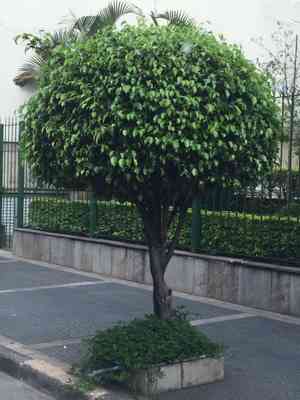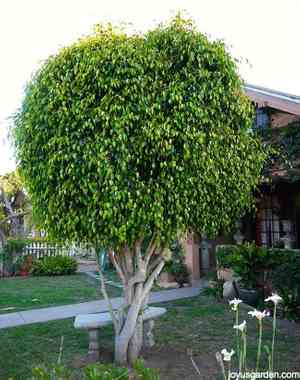
Weeping fig(Ficus benjamina)

Weeping fig (Ficus benjamina)

Also known as: Benjamin fig, Benjamina ficus

The weeping fig, or Ficus benjamina, is an evergreen tree native to Asia and Australia. Renowned for its shiny, elegant leaves, it is a popular houseplant worldwide. However, due to its potential to release indoor allergens, it is not suitable for individuals with allergies. Additionally, it’s important to note that all parts of the plant, except for the fruits, are toxic.

Attributes of Weeping fig

Lifespan
Perennial
Plant Type
Tree
Plant Height
7 m to 30 m
Spread
1.5 m
Leaf Color
Green
Flower Size
2.5 cm
Flower Color
Green Purple Red Orange Black

PlantJoy - Identify plants with a snap

Identify and diagnose plants, get toxicity alerts, and explore safety guides for all types of fungi.

Try for Free

Images of Weeping fig

Weeping fig(Ficus benjamina)

Quickly Identify Weeping fig

1
Elliptic, dark green leaves with pointed tips (2-5 inches; 5-13 cm).
2
Distinctive, small spherical figs in pairs, changing from green to purple-black.
3
Slender stems with a weeping silhouette, some featuring braided trunks.
4
Smooth stem with pendulous aerial roots, creating a cascading effect.
5
Fig flowers enclosed in a fleshy receptacle, maturing from orange-red to purplish black.

Scientific Classification of Weeping fig

Phylum
Vascular plants
Class
Dicotyledons
Order
Roses, elms, figs, and allies
Family
Mulberry
Genus
Fig trees
Species
Weeping fig

Planting and Growing of Weeping fig

Care Difficulty
Hard
Watering Schedule
Every 4 days
Sunlight Requirements
Partial sun
Sunshine Duration
4-6 hours
Ideal Temperature
65-75℉
Soil Type
Potting Mix, Peat Mix
Soil pH
6-7.5
Fertilizer Type
Balanced
Pruning Season
Spring, Summer
Pruning Area
Branches, Leaves
Pruning Frequency
2 times a year
Repotting Season
Spring
Pot Type
Plastic, Ceramic

water icon How to Water Weeping fig?

For Ficus benjamina, the watering volume should always aim to saturate the soil without causing water to pool at the bottom of the pot. Water until the top 2-3 inches of the soil are moist. This often equates to around 250ml, but it can vary depending on pot size and environmental conditions.
What are the symptoms of an underwatered Weeping fig?
What should I do if my Weeping fig is not getting enough water?
What are the symptoms of an overwatered Weeping fig?
How to save an overwatered Weeping fig?
More About Watering Techniques Group

sunlight icon What Are the Sunlight Requirements for Weeping fig?

Sunlight Requirements: Partial sun, Full shade
Duration of light: 4 to 6 hours
Ficus benjamina should ideally receive partial sun to full shade, benefiting from bright, indirect light for optimal growth. This balance encourages healthy foliage and sustained growth while preventing environmental stress.
What type of sunlight is best?
How can you achieve ideal lighting?
What are the benefits of providing ideal light conditions?
More About Sunlight Requirements Techniques Group

temperature icon What Is the Ideal Temperature Range for Weeping fig?

Ideal Temperature: 65 ~ 75℉
The ideal temperature range for Ficus benjamina is between 65°F and 75°F. Maintaining these temperatures ensures optimal growth and health of the plant, as it replicates the warm, tropical environments it is native to.

soil icon What Soil is Best for Weeping fig?

Soil type: Loam, Sandy loam
Soil PH: 6 ~ 7.5
Ficus benjamina thrives in well-draining soil to prevent root rot. Proper drainage ensures the roots get enough oxygen, maintaining plant health and avoiding waterlogging issues. The plant prefers soil enriched with organic matter to provide essential nutrients. This enhances growth and ensures the foliage remains lush and vibrant. This plant requires soil that retains moderate moisture levels to keep the roots consistently hydrated, supporting steady growth and thriving leaves. More About Soil Group

fertilize icon How to Fertilize Weeping fig?

Fertilizer type: Balanced
For Ficus benjamina, the fertilizer amount should be finely balanced. When using liquid fertilizers, a diluted concentration at one-half the recommended strength is ideal. For slow-release fertilizers, use approximately one tablespoon per six inches of pot diameter. This ensures that the plant receives nutrients without risk of root burn. More About Fertilizing Techniques Group

prune icon How to Prune Weeping fig?

Pruning Time: Spring, Summer
Begin your pruning by removing any dead or diseased branches. Look for discolored or dry foliage, carefully trimming them down to healthy green parts. Use the pruning shears to trim back branches to shape the canopy of your Ficus benjamina. Aim for a balanced and symmetrical appearance, enhancing its natural form. Focus on areas where branches overlap or are too dense. Thinning these sections will improve air circulation and light penetration, promoting overall plant health.

propagate icon How to Propagate Weeping fig plant?

Propagate Time: Spring, Early summer
1
Choose a healthy branch with several leaves and cut a section approximately 4-6 inches long. Remove the leaves from the bottom half, leaving a few at the top. This reduces water loss and encourages successful rooting.
2
Dip the cut end of the stem into a rooting hormone to stimulate root growth. This step is optional but increases the chances of successful propagation. Tap off any excess hormone to ensure it does not stunt growth.
3
Place the cutting into a prepared pot of well-draining soil, ensuring it is planted about 2 inches deep. Water the soil lightly to settle it around the cutting. Keep the cutting in a bright, indirect light location for optimal growth.

repot icon How to Repot Weeping fig plant?

Repotting frequency: Every 2-3 years
1
Ficus benjamina needs repotting when you notice roots growing out of the drainage holes, the soil dries out too quickly, or the growth slows down significantly. These are signs that the plant has outgrown its pot, and it's time to give it some extra room and fresh soil to thrive.
2
Select a new pot that is only slightly larger than the current one—about 2 to 4 inches wider in diameter. A pot that is too large can lead to overwatering issues, as the excess soil retains more moisture than the plant needs. Ensure the pot has adequate drainage holes to prevent waterlogging.
3
Choose a well-draining potting mix, ideally one that contains peat, pine bark, and perlite or sand. This will provide the necessary aeration and prevent root rot by allowing excess water to escape. A quality potting mix ensures the roots have plenty of oxygen and nutrients for healthy growth.
More About Repotting Techniques Group

PlantJoy - Identify plants with a snap

Find the best spots for them to optimize their health, simply using your phone.

Try for Free

Toxicity of Weeping fig

Is Weeping fig toxic to cat?

The Weeping Fig (Ficus benjamina) poses a moderate toxicity risk to cats, irrespective of the parts of the plant consumed. It is essential to exercise caution, particularly regarding the leaves, which this species commonly sheds. Contact with the plant may lead to dermatitis, while ingestion can result in vomiting and irritation of the mouth. If needed, veterinary assistance should be obtained.

Is Weeping fig toxic to dog?

The Weeping fig (Ficus benjamina) poses a mild to moderate toxicity risk to dogs. Contact with any part of this plant may lead to skin rashes and irritation. If your dog ingests it, they might experience excessive drooling, irritation in the mouth and throat, as well as vomiting. Since the leaves and fruit may attract your dog, exercise caution when around this widely loved plant.

Identify toxic plants for your safety

Learn which plants are harmful to you and your pets, and make informed choices for a safer home!

Try for Free
WARNING
The judgment on toxicity and danger is for reference only. We DO NOT GUARANTEE any accuracy of such judgment. Therefore, you SHALL NOT rely on such judgment. It is IMPORTANT TO SEEK PROFESSIONAL ADVICE in advance when necessary.
More About Toxic Techniques Group