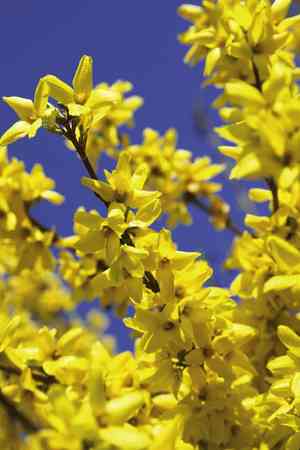
Weeping forsythia (Forsythia suspensa)
Also known as: Hanging golden-bell
Forsythia suspensa, often referred to as the golden bell due to its vibrant yellow flowers, is native to Asia and has been cultivated in China for hundreds of years. The plant was named in honor of Scottish botanist William Forsyth.
In This Article
Attributes of Weeping forsythia
Lifespan
Perennial
Plant Type
Shrub
Plant Height
3 m
Spread
1.8 m to 3 m
Leaf Color
Green
Flower Size
2 cm to 3 cm
Flower Color
Yellow
Images of Weeping forsythia



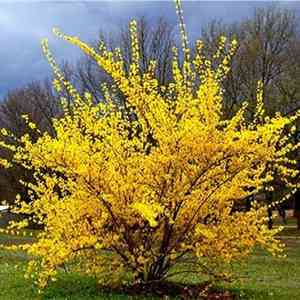
Quickly Identify Weeping forsythia
1
Golden yellow flowers with deeply lobed, drooping petals, about 1 inch (2.5 cm) across.
2
Opposite dark green leaves, serrate margin, 4 inches (10 cm) long, pronounced vein pattern.
3
Rugged grey-brown bark with deeply fissured texture, consistent color and pattern throughout the year.
4
Two-celled fruit capsule with winged seeds, transitioning from green to brown hue, aids wind dispersal.
5
Graceful, weeping growth habit with arching stems rooting upon touch, early spring blooms less intensely colored.
Scientific Classification of Weeping forsythia
Phylum
Vascular plants
Class
Dicotyledons
Order
Mints plantains olives and allies
Family
Olive
Genus
Easter tree
Species
Weeping forsythia
Planting and Growing of Weeping forsythia
Care Difficulty
Easy
Watering Schedule
Every 4 days
Sunlight Requirements
Full sun
Sunshine Duration
6-12 hours
Ideal Temperature
60-70℉
Soil Type
Potting Mix, Peat Mix
Soil pH
6.5-7.5
Fertilizer Type
Balanced
Pruning Season
Spring, Summer
Pruning Area
Branches, Leaves
Pruning Frequency
2 times a year
Repotting Season
Spring
Pot Type
Plastic, Ceramic
 How to Water Weeping forsythia?
For Forsythia suspensa, aim to water so that the soil is thoroughly moist but not waterlogged. Generally, 500 ml of water should suffice for each watering session, ensuring the moisture reaches the root zone without leaving the topsoil soggy.
More About Watering Techniques→
What are the symptoms of an underwatered Weeping forsythia?
›
What should I do if my Weeping forsythia is not getting enough water?
›
What are the symptoms of an overwatered Weeping forsythia?
›
How to save an overwatered Weeping forsythia?
›
 What Are the Sunlight Requirements for Weeping forsythia?
Forsythia suspensa flourishes best under full to partial sun. Ideally, exposure to a mix of direct and filtered light benefits its growth, resulting in a vibrant display of blooms.
More About Sunlight Requirements Techniques→
What is the best lighting condition for Forsythia suspensa?
›
How to ensure Forsythia suspensa receives ideal lighting conditions?
›
What are the benefits of ideal lighting conditions for Forsythia suspensa?
›
 What Is the Ideal Temperature Range for Weeping forsythia?
Forsythia suspensa thrives best within an ideal temperature range of 60°F to 70°F. This range can provide optimal conditions for growth and blooming. It ensures that the plant has adequate energy for photosynthesis while maintaining its structural integrity.
 What Soil is Best for Weeping forsythia?
Forsythia suspensa requires soil that offers excellent drainage to prevent root rot. A well-aerated environment helps in healthy root development, ensuring robust growth and vibrant flowering. The soil should be rich in organic matter to supply essential nutrients. This nutritional abundance supports the plant's rapid growth and its ability to produce lavish blooms in spring. While Forsythia appreciates well-drained soil, a moderate capacity to retain moisture is necessary to sustain the plant during dry spells. This balance prevents stress and fosters continuous growth.
More About Soil→
 How to Fertilize Weeping forsythia?
Forsythia suspensa typically requires a balanced supply of nutrients to thrive. A suitable approach is to administer a half-strength liquid fertilizer bi-weekly during the growing season. Solid fertilizers, ideally a 10-10-10 granular formula, can be applied at a rate of 1 cup per 10 square feet of soil area, evenly spread around the base of the plant. This ensures a steady nutrient supply for optimal growth and flowering.
More About Fertilizing Techniques→
 How to Prune Weeping forsythia?
Always use clean and sharp pruning shears to prevent the spread of diseases. Clean tools will make precise cuts and reduce tearing or damaging stems. Forsythia blooms on old wood, so be careful not to cut all flowering stems in late fall if you wish to have blooms in spring. Instead, prune just after flowering when the risk to next year's blooms is minimized.
More About Pruning Techniques→
 How to Propagate Weeping forsythia plant?
1
Choose healthy, disease-free stems for cutting. Ideally, select semi-hardwood cuttings about 4 to 6 inches long from the current season's growth. Avoid stems with flowers or fruiting bodies as they are less likely to root.
2
Remove the lower leaves to prevent them from rotting in the soil, leaving two or three leaves at the top. Dip the cutting's end in rooting hormone to facilitate root formation.
3
Plant the prepared cuttings in a pot with a well-draining soil mix or directly into the ground if conditions are favorable. Keep the soil moist, but not waterlogged, and maintain consistent humidity around the cuttings.
 How to Repot Weeping forsythia plant?
1
Forsythia suspensa benefits from repotting when you notice signs of root bound, evident from roots peeking through drainage holes or a noticeable slowdown in growth. Spring and early autumn are best times, allowing the plant to settle without extreme heat or cold.
2
Select a pot that is 1-2 inches larger in diameter than the current one for Forsythia suspensa. Ensure it has adequate drainage holes to prevent waterlogging. This will provide ample space for root expansion and promote healthy growth by preventing water buildup.
3
Use a well-draining loamy soil mix, perhaps with added perlite or peat moss, for repotting Forsythia suspensa. This composition ensures that the roots receive both adequate moisture and aeration, supporting robust growth and preventing root rot.



