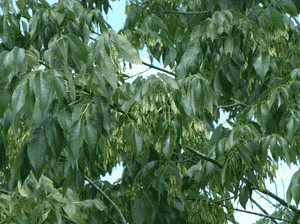
White ash (Fraxinus americana)
Also known as: Cane ash
Green ash, scientifically known as *Fraxinus pennsylvanica*, is a native North American ash tree. In autumn, its leaves transform into striking shades of yellow or red. This fast-growing species is commonly found in riparian areas and disturbed environments. It bears a resemblance to white ash (*Fraxinus americana*), making it difficult to distinguish between the two at times.
In This Article
Attributes of White ash
Lifespan
Perennial
Plant Type
Tree
Plant Height
20 m to 25 m
Spread
15 m
Leaf Color
Yellow Green Purple
Flower Size
2.5 cm
Flower Color
Purple Green
Images of White ash
Quickly Identify White ash
1
Robust tree reaching up to 90 feet (27 meters) in height with wide canopy.
2
Dioecious flowers in purplish, apetalous clusters blooming before foliage emergence.
3
Dry flattened samaras, tan to brown, in drooping clusters up to 2 inches (5 cm).
4
Odd-pinnate compound leaves with 7 leaflets, yellow with purple shading in fall.
5
Stout twigs with smooth gray bark aging to furrowed, U-shaped leaf scars.
Scientific Classification of White ash
Phylum
Vascular plants
Class
Dicotyledons
Order
Mints plantains olives and allies
Family
Olive
Genus
Ashes
Species
White ash
Planting and Growing of White ash
Care Difficulty
Easy
Watering Schedule
Every 2 days
Sunlight Requirements
Full sun
Sunshine Duration
6-10 hours
Ideal Temperature
50-75℉
Soil Type
Potting Mix, Peat Mix
Soil pH
6.5-7.5
Fertilizer Type
Balanced
Pruning Season
Spring, Summer
Pruning Area
Branches, Leaves
Pruning Frequency
2 times a year
Repotting Season
Spring
Pot Type
Plastic, Terracotta
 How to Water White ash?
Fraxinus americana, commonly known as the white ash tree, requires moderate watering. Each watering session should provide approximately 1000 milliliters. Ensure the soil is moist but not waterlogged, replicating the natural environment of this tree which typically thrives in well-drained soils. Watering too little can dry out the roots, while over-saturation can drown them.
More About Watering Techniques→
What are the symptoms of an underwatered White ash?
›
What should I do if my White ash is not getting enough water?
›
What are the symptoms of an overwatered White ash?
›
How to save an overwatered White ash?
›
 What Are the Sunlight Requirements for White ash?
Fraxinus americana is optimized for full to partial sun exposure, ideally receiving 6-8 hours of sunlight. This facilitates robust photosynthetic activity, enhancing plant growth and resilience.
More About Sunlight Requirements Techniques→
What is the ideal sunlight exposure for Fraxinus americana?
›
How can one ensure Fraxinus americana receives its ideal sunlight exposure?
›
What benefits does Fraxinus americana gain from ideal sun exposure?
›
 What Is the Ideal Temperature Range for White ash?
The ideal temperature range for Fraxinus americana, commonly known as white ash, is between 50°F and 75°F. In this range, the tree can photosynthesize effectively, facilitating proper growth and development. Maintaining this temperature ensures that the tree grows at an optimal rate, producing healthy leaves and structural growth with fewer chances of disease.
 What Soil is Best for White ash?
Fraxinus americana thrives best in soils that retain moisture without becoming waterlogged. The ideal soil offers excellent drainage to prevent root rot while maintaining adequate moisture to support healthy growth. Nutrient-rich soil is crucial for the American ash tree. The presence of essential nutrients supports its robust growth, providing the necessary elements for its lush foliage and sturdy trunk development. A soil pH within the range of 6.5 to 7.5 is ideal, as it allows for optimal nutrient absorption while preventing potential nutrient deficiencies or toxicities that may impede the plant's growth.
More About Soil→
 How to Fertilize White ash?
For Fraxinus americana, the fertilizer amount depends on the tree's size and growth stage. Generally, apply a balanced granular fertilizer, such as 10-10-10, at a rate of 1 pound per inch of trunk diameter in early spring. For liquid fertilizers, dilute according to the package instructions and apply around the drip line.
More About Fertilizing Techniques→
 How to Prune White ash?
Use sharp, clean pruning shears or a saw for larger branches. Clean tools help prevent the spread of disease. Remove any dead, diseased, or damaged branches first. This promotes tree health by preventing disease spread and allowing more air circulation. To shape the canopy, select a central leader and remove any competing branches. This ensures a balanced structure and supports strong growth. Make cuts at a 45-degree angle just above a bud, ensuring you do not cut too close or too far from it. This helps the tree heal efficiently.
More About Pruning Techniques→
 How to Propagate White ash plant?
1
Harvest seeds from mature Fraxinus americana fruits during early autumn. Ensure seeds are mature and dry them before storage to prevent mold and ensure successful germination in the following season.
2
Select healthy shoots for cuttings during late spring. Cut 10-15 cm lengths from a branch and remove leaves from the lower half to improve rooting success. Dip cut ends in rooting hormone before planting.
3
Choose compatible rootstock and scion from healthy plants. Make clean cuts and align the cambium layers to ensure proper graft union. Secure the graft with grafting tape and cover to maintain humidity.
 How to Repot White ash plant?
1
Repot Fraxinus americana when roots start growing through the drainage holes or a noticeable slowdown in growth occurs. Another signal is soil compacting significantly, suggesting a need for fresh medium.
2
Opt for a pot that is one size larger than the current one, with sufficient drainage holes to prevent waterlogging. The slightly larger space allows root expansion while avoiding excess soil that retains too much moisture.
3
Use a loamy, well-draining soil mix to ensure proper aeration and moisture retention. This balance prevents root rot and supports robust growth, contributing to the overall health of your plant.



